Broomfield Wood Flooring brings more than 20 years of work to wood-flooring in Westminster, and a good share of our calls here begin with a repair somewhere else in the house. A water heater gives out, a supply line splits under a sink, or a furnace gets replaced, and the floor around it is left carrying the damage once the tradespeople have packed up.
That sequence matters because the repair and the floor are usually paid for in different ways. We plan the wood floor as its own project, with its own measurements and its own budget, so a homeowner knows what the plumbing fix handled and what still needs our attention before anyone pulls up a board.
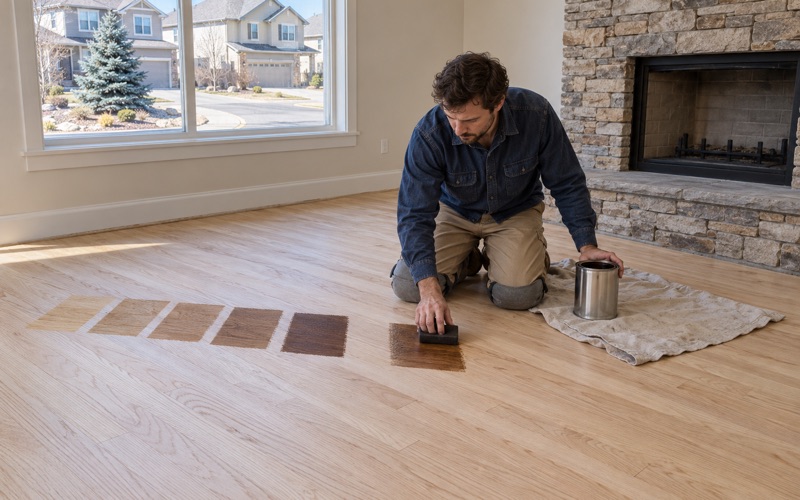
Most of our work here is repair, refinishing and replacement in owner-occupied houses from the 1970s through the 1990s. We take moisture readings, sort out what can be saved, and put stain samples on your own floor before a color is chosen, so the finished room matches the rest of the house.
What Westminster’s Home Repair Program Covers, and What It Leaves to You

The City of Westminster runs an Emergency and Essential Home Repair program, known as EEHR, for income-qualified homeowners. It is open to residents who earn up to 80 percent of Area Median Income, which the city puts at just under $104,320 a year for a family of four. It provides up to $10,000 in eligible repairs to owner-occupied households.
The Repairs on the City’s List
The eligible repairs the city lists are plumbing, electrical, furnace repair or replacement, water heater repair or replacement, and accessibility improvements such as wheelchair ramps and hand railings. Flooring is not on that list. We say so plainly because homeowners sometimes assume a floor ruined by a covered leak rides along with the leak repair.
In practice, the program can fix the failed water heater while the swollen oak in the hallway beside it stays your decision. Knowing that early helps. You can line up the floor work to follow the repair directly, instead of discovering the gap after the plumber leaves and the boards have sat wet for another week.
Which Side of Sheridan Boulevard You Live On
Westminster is a home rule city that sits in both Adams and Jefferson counties, and Sheridan Boulevard is the dividing line. The city’s own rule of thumb: west of Sheridan Boulevard is Jefferson County, and east of Sheridan Boulevard is Adams County. Each side has a different nonprofit delivering the repair program.
Brothers Redevelopment handles the Adams County side, and Foothills Regional Housing handles the Jefferson County side. The city says repairs happen within weeks, and emergencies within days if needed. When we know the repair is coming, we can plan our moisture checks and board work around that timeline rather than guessing.
Budgeting the Floor as Its Own Project
A floor after a repair is rarely one number. It can be a few board replacements near the water heater closet, a full sand and refinish so the patch blends, or new solid hardwood through a whole run of rooms. We price those options separately so you can see what each one buys.
For many owners, the sensible path is staged: dry and stabilize now, replace damaged boards next, and refinish the connected rooms when the budget allows. We will tell you which steps can wait and which ones cannot, because a floor left cupped over damp subfloor gets harder to save each month.
Looking for wood-flooring closer to Superior? See Wood-Flooring Services in Superior.
Floors After a Water Heater or Plumbing Failure
Plumbing and water heater failures are two of the eligible repair categories, and they are also a frequent reason we are standing in a Westminster laundry room or hall closet. The fix to the pipe can take an afternoon. The water that already moved under the boards is a separate problem with its own timeline.
Tracing Water Before Any Board Replacement
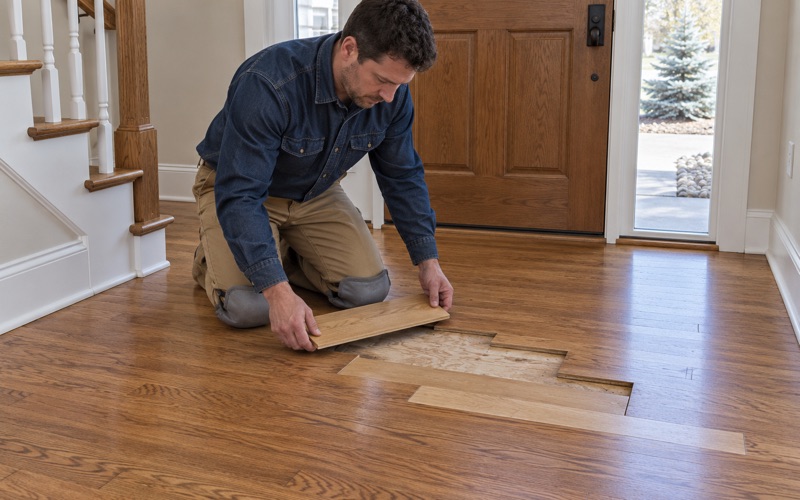
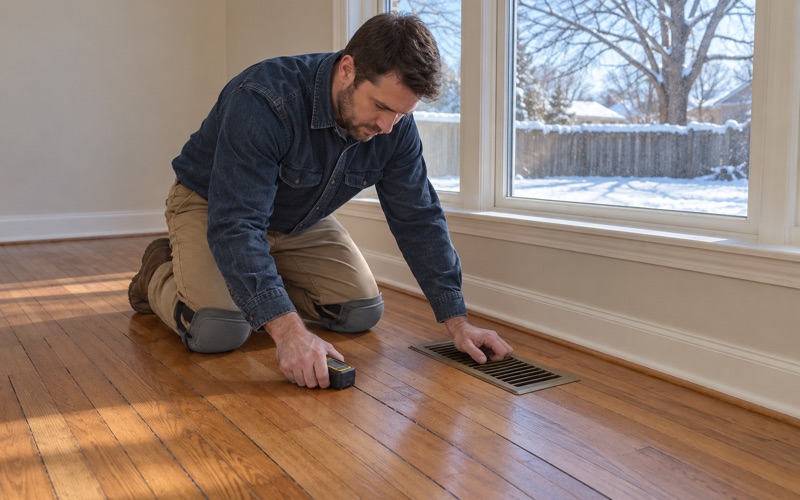
Water from a burst pipe, a washer, or a supply line travels farther than the stain suggests. We follow it with a moisture meter across the boards and into the subfloor, mark where the readings drop back to normal, and only then decide which boards come out. Replacing boards over wet wood just moves the problem.
Drying comes first, and it takes patience. We measure again before any new tongue and groove goes in, comparing the repair area against dry rooms elsewhere in the house. Boards that return to equilibrium moisture content can often stay. Boards that stay high, or that have split at the tongue, get replaced.
Reading Cupping, Crowning and Water Stains
Cupping, where the edges of each board rise above the center, usually means moisture is still coming from below. Crowning, the reverse, often shows up when a cupped floor was sanded flat too early. Dark water stains in red oak or white oak can sit deep in the grain and may not sand out.
We explain what each sign means before recommending anything. Mild cupping sometimes settles once the source is dry, and a sand and refinish finishes the job. Buckling that has lifted boards off the fasteners, or black staining that runs through the wood, points toward board replacement instead of a surface fix.
Documenting Room by Room for the Adjuster
When homeowner’s insurance is involved, we document the floor room by room: moisture readings, photos, the affected square footage, and what we recommend in each space. Adjusters work from records, and a clear one keeps the conversation about the floor rather than about what happened three weeks ago.
That record also helps when the plumbing repair and the floor repair come from different sources. It shows what the leak did to the wood and when, so the floor can be planned and paid for on its own terms while the fix to the pipe or water heater moves forward separately.
Accessibility Changes and the Floors Around Them
Accessibility improvements such as ramps and hand railings are on the city’s eligible list, and they often change how a floor gets used. A wheelchair, a walker or a cane puts different wear on wood than foot traffic does, and new thresholds can leave uneven transitions between rooms.
Thresholds, Reducers and Smooth Transitions
A ramp at the door solves the step outside, but the inside still has to roll smoothly. We look at every transition where wood meets tile, carpet or luxury vinyl plank, and replace tall saddles with low reducers where the heights allow. Small lips that a walking foot ignores can catch a wheel or a walker.
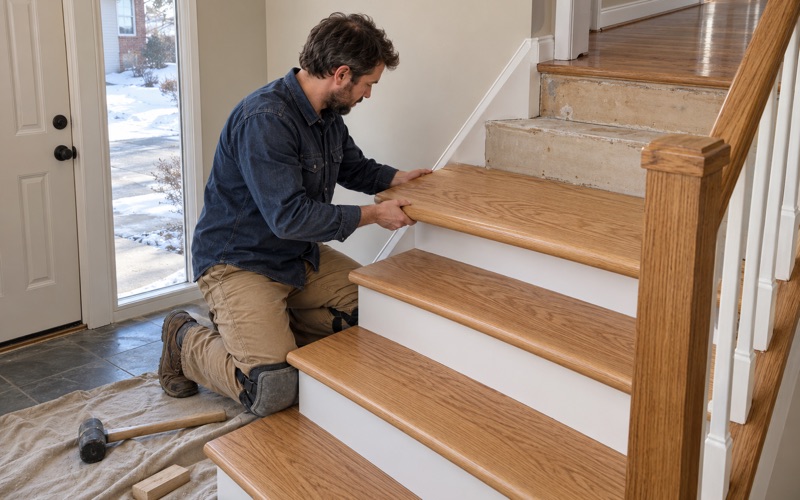
Stairs deserve the same attention. We quote stair treads one at a time and check the landing so any new floor there does not throw off the riser height. An uneven step height is a trip hazard for anyone, and more so for someone relying on a railing and careful footing.
Species and Finish Choices for Wheel Traffic
Wheels concentrate weight on a narrow line, and softer woods show traffic lanes quickly. Janka hardness is a useful guide here: hickory and maple resist denting better than red oak. When we recommend a wood for a room that will see a wheelchair daily, we weigh hardness against the look of the rest of the house.
Finish matters as much as species. A durable waterborne polyurethane at a lower sheen level hides scuffs and wheel marks better than a high gloss, and it can be recoated as wear builds up. We put stain samples and sheen options down in your own light before anything is decided.
Refinishing Floors in 1970s, 1980s and 1990s Westminster Homes
Westminster’s housing leans heavily toward a single span of years. Census figures show 63.5 percent of the city’s housing units were built between 1970 and 1999, with the 1980s the largest single decade at 22.6 percent. Owners occupy 61.9 percent of the occupied units, so many of these floors belong to the people who live on them.
Checking Build Year and Painted Surfaces Before Sanding
A home built before 1978 gets a check before any sanding starts. We confirm the build year and look at painted surfaces near the floor, such as baseboards, stair risers and door casings. Plenty of Westminster’s 1970s houses fall on that side of the line, and the check comes before the drum sander does.
That step shapes how we set up the room, what we contain, and which trim comes off first. It also affects whether dustless sanding is the right choice, and how we protect the rest of the house while the work area is open. We would rather spend an hour confirming than guess on a house of that age.
Sanding and Refinishing Site-Finished Oak
Many homes from the 1990s carry site-finished oak that has dulled, faded or gone orange under an older oil-modified polyurethane. We check how much wood remains above the tongue first. If there is enough, a full sand through the grit sequence and a new finish usually beats tearing it out.
When the wear is only in the finish, a screen and recoat may be enough. Surface scratches and dull traffic lanes can be refreshed without removing wood at all. We tell you which approach the floor actually needs, based on what we measure, not on which job is larger.
Replacing Carpet in the Hallways and Bedrooms
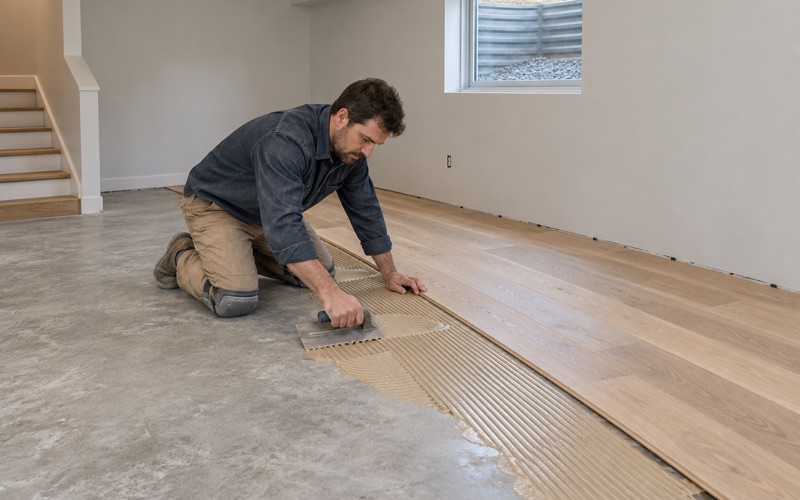
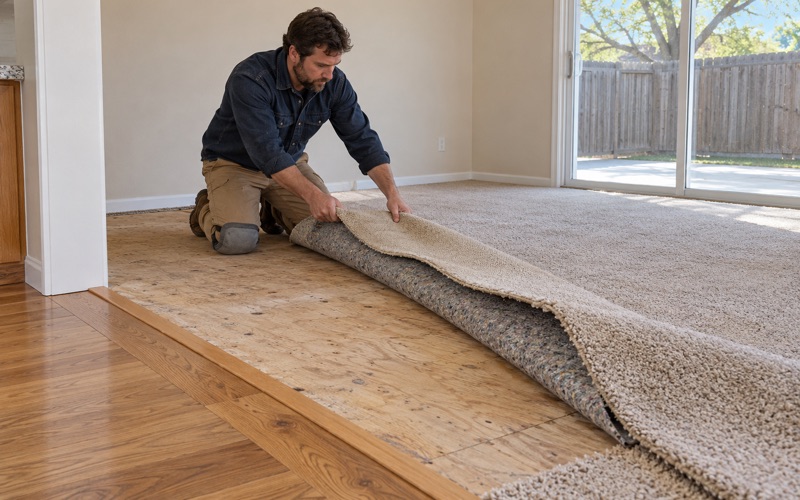
Some 1980s houses still have carpet over the subfloor in bedrooms and hallways. When owners want wood instead, we pull the carpet pad and tack strip, check the subfloor for squeaks and popping, and fasten it down before new boards go in. Hidden squeaks get traced to their cause, not covered over.
We also talk through indoor humidity before a new floor goes down. A heated Front Range winter dries the air well below where new boards arrived, so acclimation and a proper expansion gap matter. Some seasonal gaps between boards are normal in winter, and we read them against the furnace season before filling anything.
- 20+ Years on Wood Floors
- Moisture Readings Before Repairs
- Stain Samples on Your Own Floor