Broomfield Wood Flooring has spent more than 20 years on wood-flooring in West Pleasant View, and most calls from this community fall into two groups. One is a floor that took on water and now cups, buckles or smells damp. The other is an older floor under carpet or a worn finish that an owner wants brought back rather than torn out.
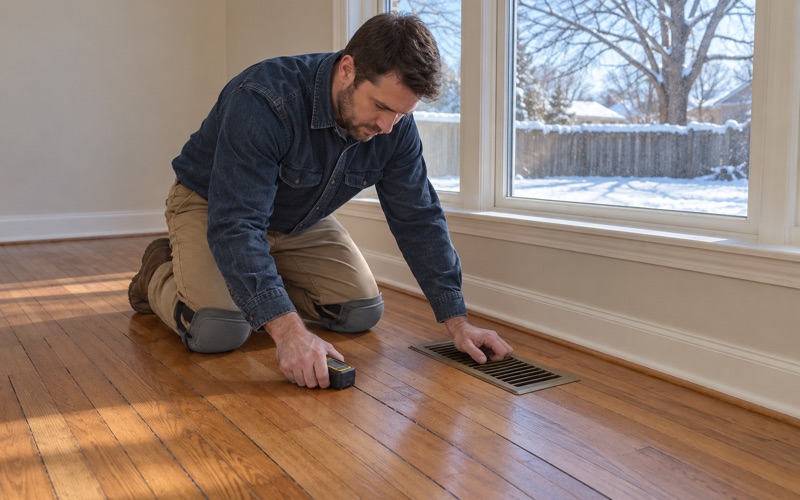
Both jobs start the same way for us: with measurement before opinion. We take moisture meter readings across the room, look at how the boards sit against each other, and find out what is under them before quoting anything. A floor that looks ruined is sometimes a sanding job, and a floor that looks fine sometimes hides wet subfloor that will fail later.
This page covers what we look for here specifically: water damage, the refinishing questions that come with houses built between the 1940s and the 1970s, and the paperwork side of working in a community without its own city hall. Sanding, board replacement, stairs and new installs all run through the same process, from a first reading to a final coat.
Lena Gulch, the 1987 Flood and West Pleasant View Floors
Lena Gulch cuts through Westblade Park, the largest park in West Pleasant View, and its history shapes how we think about the floors near it. A gulch can go from quiet to fast after a hard summer storm, and that is the pattern that turns a finished lower level into a flooring problem in a single evening.
The June 8, 1987 Storm
On June 8, 1987, rain fell hard over the Lena Gulch basin between about 8:00 and 10:30 p.m. The Urban Drainage and Flood Control District, now the Mile High Flood District, reported heavy damage to residential property immediately upstream of the West 20th Avenue crossing, and part of West 20th Avenue washed out and closed.
Trailer courts near Camp George West were hit too, and the Golden and Pleasant View fire departments evacuated residents. The report lists no addresses, so we never tell anyone their house flooded that night. It does show floodwater and finished floors meeting along Lena Gulch, and a June 18 follow-up noted at least one residence upstream of West 20th Avenue with water in its basement.
Westblade Park and the Five Drop Structures
In 2021 Jefferson County Open Space, the Mile High Flood District and the Pleasant View Metropolitan District partnered on a Lena Gulch project inside Westblade Park. Crews removed approximately 5,500 cubic yards of soil and rock from the waterway and installed five drop structures, which the county described as work to prevent future flooding.
We read that project as good news, not a guarantee. The county’s announcement did not address individual homes or floodplain designations, and neither do we. For a floor, the practical point is that water can just as easily come from a burst pipe, a washer, a supply line or a roof, and we handle each source with the same tracing, drying and measuring.
Looking for wood-flooring closer to Berthoud? See Wood-Flooring in Berthoud.
Water-Damaged Wood Floors: What Can Be Saved
The first question after any water event is whether the wood can come back. Often it can, but only after the boards and the subfloor underneath them have dried to steady readings. Rushing that step is a common reason a repaired floor fails a second time, so we would rather wait a week than refinish twice.
Cupping, Crowning and Buckling in Solid Hardwood
Wet solid hardwood tells you what happened by its shape. Cupping, where board edges rise above the centers, means moisture came from below and the undersides swelled first. Buckling, where boards lift off the subfloor entirely, means the floor ran out of expansion gap and pushed against itself. Water stains and dark gray streaks along the seams point to where the water sat longest.
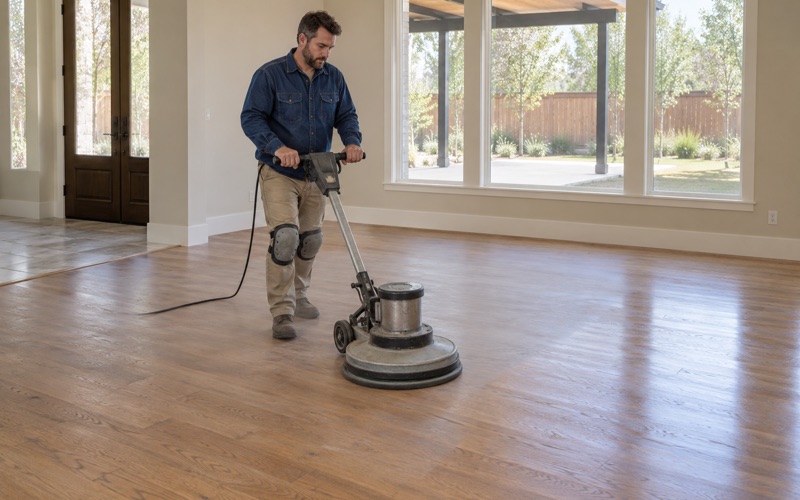
Crowning is the trap. A cupped floor often flattens as it dries, and someone who sands it while the boards are still wet cuts the raised edges down. When the wood finishes drying, the centers end up higher than the edges, and that crown is permanent. We sand only after moisture meter readings match the equilibrium moisture content of the rest of the house.
Tracing, Drying and Board Replacement
Before any board comes out, we trace the water to its source and map how far it traveled under the floor, which is often well past the visible stain. Readings go on a room-by-room record with photos, so an insurance adjuster sees the same evidence we do instead of a single number on a quote.
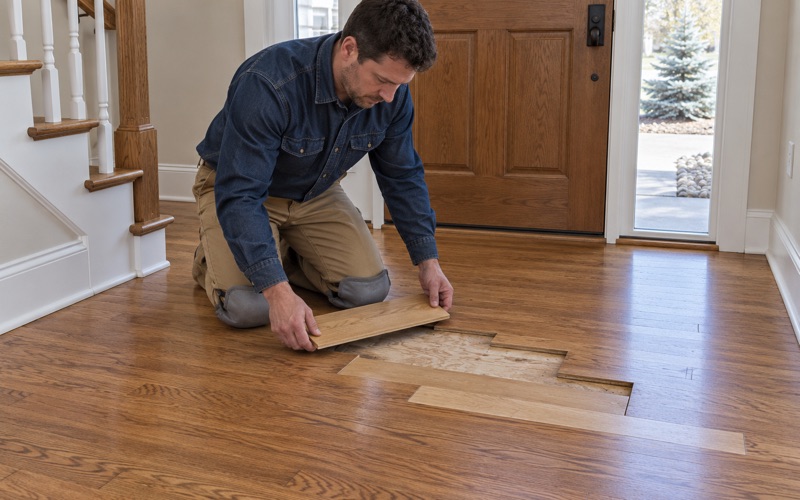
When boards do need to go, we cut them out and weave in new tongue and groove stock so the repair runs with the existing layout rather than across it. Matching species, width and grain matters more than matching color on day one, because the new boards take the same stain and finish when the whole room is sanded together.
Engineered Wood for Lower Levels
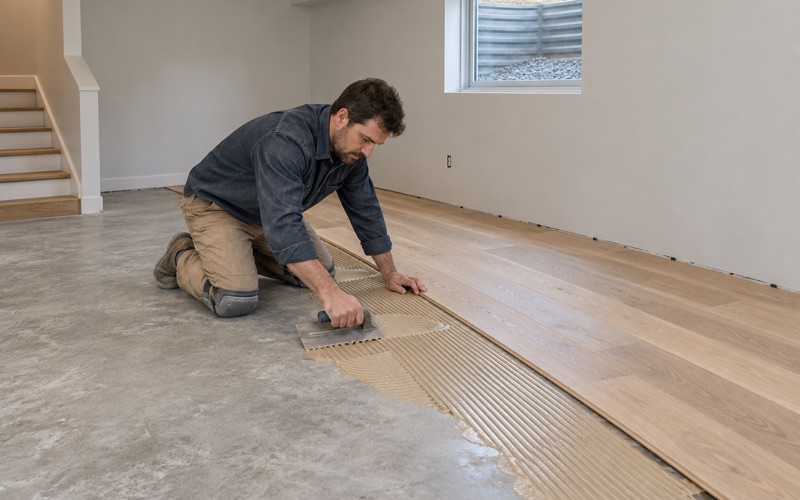
Some water-damaged floors should not be rebuilt the way they were. Solid hardwood on a below-grade concrete floor is a poor match for any home near a flash-flood gulch, and we say so. Glue-down engineered wood with a proper vapor retarder, or a floating floor, handles lower-level moisture better and costs less to put right if water returns.
We decide that house by house. A basement floor can sit directly on concrete, on a wood-framed system over a space below, or on a concrete deck, and each calls for a different product. We check which one you have before recommending anything, and we keep solid wood out of places where it does not belong.
Refinishing Floors in 1940s to 1970s Houses
Census estimates show 63.0 percent of West Pleasant View’s housing predates 1980. That includes 285 units built during the 1940s, with the 1960s and 1970s standing as the two busiest building decades on record here. A floor from any of those years may have been sanded more than once, covered with carpet for decades, or both.
Checking Solid Hardwood Above the Tongue
Every sanding removes wood, and a solid hardwood floor can only be sanded down to the tongue before nails and gaps start to show. We pull a vent cover or a threshold to see how much wood remains above the tongue before we promise a full sand. When the margin is thin, a screen and recoat may be the better call.
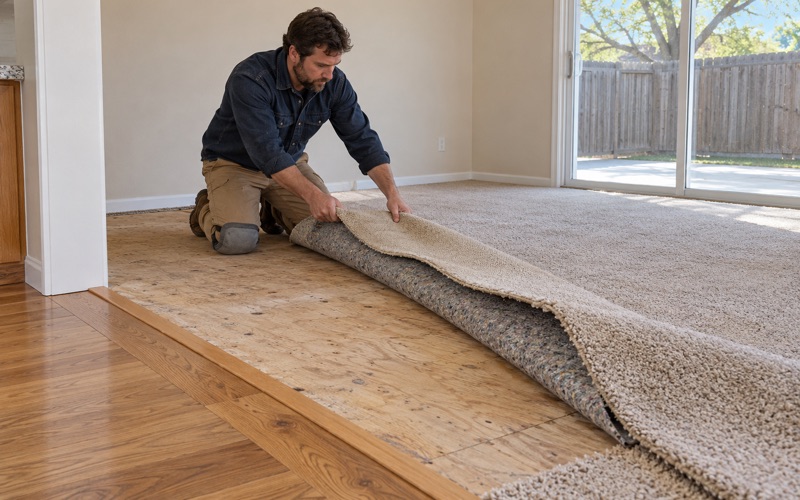
Carpet removal brings its own list. Tack strip nails leave rows of holes around the perimeter, the carpet pad sometimes glues itself to the finish, and pet urine stains that soaked through the pad can go deep into the wood. We tell you which marks will sand out and which boards need replacing before the drum sander ever starts.
Lead Checks Before Sanding
With this many older homes in the community, we check the build year and any painted surfaces before sanding a house built before 1978. Painted baseboards, stair risers and old floor paint can carry lead, and a drum sander turns that into fine dust. Where the EPA RRP Rule applies, we follow its containment and cleanup practices.
Stain Samples and Polyurethane Finishes
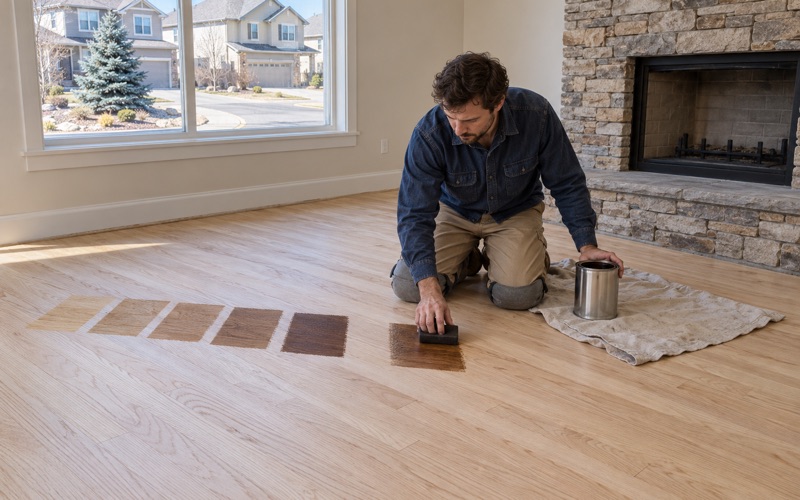
Finish choice shapes how an older floor reads. Waterborne polyurethane dries clear and keeps red oak or white oak close to its natural tone, while oil-modified polyurethane ambers over time and deepens the orange oak look some owners want gone. We lay stain samples on your own floor, in your own light, so the color is chosen on the wood it will live on.
Sheen level matters as much as color in a room with scuffs and traffic lanes. A satin or matte sheen hides wear better than gloss, and a hardwax oil gives a low, natural look that can be spot-repaired later. We walk through those tradeoffs before the first coat goes on, not after.
Floor Work in Unincorporated Jefferson County
West Pleasant View is an unincorporated census-designated place governed by Jefferson County, not a city with its own building department. The Pleasant View Metropolitan District provides services here, and that same district was a partner on the Lena Gulch work. For floor projects, that mix of county and district shapes who you call about what.
Metro District and HOA Documents
Any rule about interior flooring comes from your own documents, whether an HOA declaration or a metro district policy, and we read them before work starts. One-unit attached homes make up 18.6 percent of housing units here, and in a shared-wall building those documents are worth checking early. We ask for them at the first visit, not after the boards arrive.
Rental Floors and Stair Treads
Tenure matters too. With 37.9 percent of occupied homes here renter-occupied, landlords and property managers often need a floor turned around between tenants. A screen and recoat or targeted board replacement can refresh a rental far faster than a full sand, and we price both so an owner can choose.
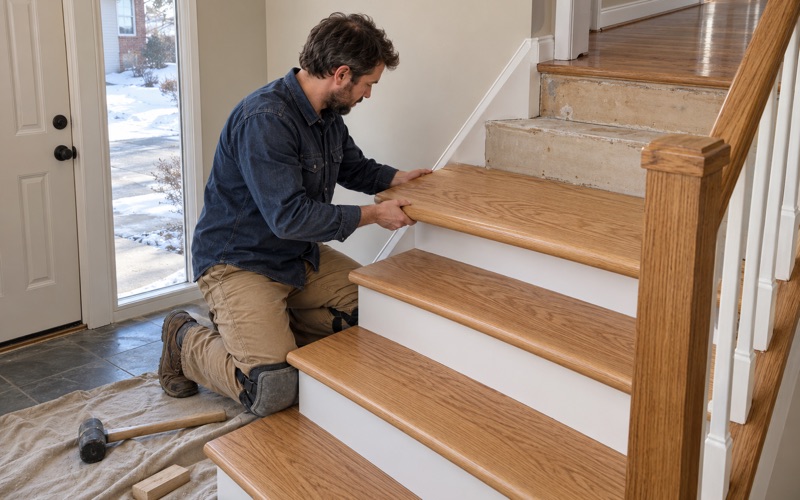
Stairs come up often in rental turnovers and in owner remodels alike. We quote stair treads one at a time, and when a new floor meets a landing, we check that the added thickness does not throw off the riser height at the top or bottom step. An uneven riser is a trip hazard that no finish can fix.
Seasonal Gaps and Dry Winter Air
Floors in West Pleasant View shrink and swell with the furnace season like floors anywhere on the Front Range. Winter gaps open between boards as heated indoor air dries the wood, then close again by summer. We take moisture readings before filling any seam, because filler packed into a winter gap gets crushed or pushed out once the boards expand.
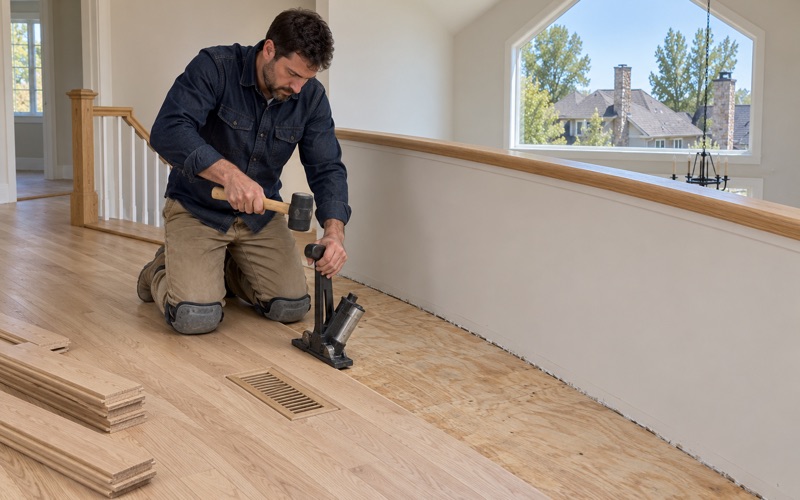
For a new installation, we talk through indoor humidity before anything goes down. Boards arrive carrying more moisture than a heated Colorado house holds in January, so acclimation and relative humidity readings come first, and a whole-house humidifier is worth discussing if gaps have been a problem before. Squeaks and popping boards get the same treatment: traced to a cause, not filled and hidden.
When you call, we start with a visit and a meter, not a price over the phone. Whether the floor is a water-stained lower level or a 1940s living room under decades of carpet, the first step is finding out what the wood can still give, and the plan follows from that reading.
- 20+ Years on Wood Floors
- Moisture Readings Before Repairs
- Stain Samples on Your Own Floor