
Broomfield Wood Flooring helps homeowners replace carpet with hardwood in Broomfield, CO, serving surrounding cities including Lafayette, Northglenn, Louisville, Westminster and Superior. Drawing on more than 20 years of floor work, we treat carpet removal as the start of the project rather than a demolition chore, because what is under the carpet decides how the new floor will feel, sound and last.
Broomfield’s housing is young: Census data shows 28.8 percent of it was built in the 2010s alone. In newer homes like these, carpet often covers bedrooms, stairs and landings, and replacing it with wood can mean a single bedroom, a whole upstairs or every room including the stairs, planned as one project so the floor runs cleanly from room to room.
Planning A Carpet To Hardwood Project
One Room, One Floor Or The Whole House
Some homeowners start with a single room, often a living room or a primary bedroom, while others replace every carpeted room at once. Doing larger areas together lets the floor run continuously through doorways without transitions, gives one consistent color and board pattern, and usually costs less per room. Doing it in phases works too, as long as we plan where the phases meet.
When a project will happen in stages, we keep a record of the product, species, width and finish used in the first phase. That makes it far easier to match the next rooms later, even if a year or two passes between them.
Upstairs Bedrooms And Noise
Replacing upstairs carpet with wood changes how the house sounds. Footsteps carry more, and a subfloor that was quiet under carpet can squeak once the padding is gone. We fasten the subfloor properly, consider an underlayment where the flooring allows one, and suggest area rugs in bedrooms and long hallways to soften sound without covering the wood.
Master-Planned Homes And Builder-Grade Carpet
Many homes in master-planned communities were delivered with builder-grade carpet over plain subfloors, often with carpeted stairs and landings in the same style. Broomfield itself began in 1955 as a master-planned community billed as a model city, and that pattern continued in the subdivisions that followed. Replacing the carpet with wood in these houses usually includes the stairs, and we plan the whole path through the house together.
What We Find Under The Carpet
Plywood And OSB Subfloors
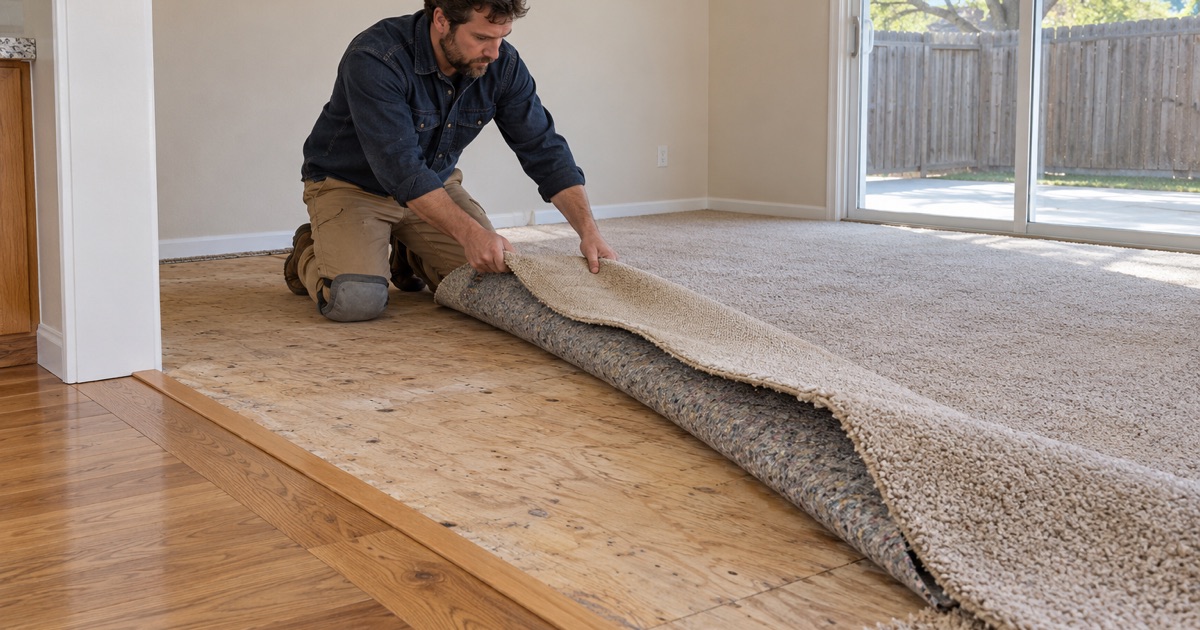
Most newer houses have plywood or oriented strand board subfloors under the carpet, which make a good base for hardwood once they are prepared. We remove the tack strip, pull the staples, fill low areas, grind high seams and refasten any panel that moves on its joist, so the new floor goes down on a flat, quiet surface.
Particleboard And Damaged Panels
Some older homes have particleboard underlayment beneath the carpet. Particleboard does not hold flooring cleats well and swells badly if it ever got wet, so we usually recommend removing it or covering it with a new plywood layer. Water-damaged areas near bathrooms and laundry rooms are repaired before any wood is installed.
Hardwood Hidden Under Old Carpet
In some older ranch and bi-level houses, the carpet covers original hardwood. If that floor has enough wood above the tongue and is in reasonable condition, sanding and refinishing it may be far cheaper than new flooring. We check a corner before the rest of the carpet comes up, so you can decide before anything is ordered.
Old Tile And Black Mastic
Pulling carpet in an older home sometimes uncovers resilient floor tile or black mastic adhesive, either of which may contain asbestos. Colorado Regulation Number 8 does not allow that tile to be sanded or ground, so we stop, arrange testing and plan around the result. In houses built before 1978, the EPA RRP Rule also applies to any painted trim or stair risers we disturb.
Choosing The New Floor
Solid, Engineered Or Vinyl Plank
Over a sound wood subfloor, solid hardwood is a natural choice and can be sanded many times. Engineered wood is more stable in very dry winters and in wide plank styles, and it is the right wood product for a basement or a concrete slab. Luxury vinyl plank is not wood, but it suits bathrooms and laundry rooms where carpet was never a good idea either.
Matching Existing Floors In The House
Many homes already have hardwood in the entry or kitchen and carpet everywhere else. Matching the existing floor means using the same species and width and either the same prefinished product or site-finished boards stained to match. When the existing floor has aged or changed color, refinishing old and new areas together gives the most seamless result.
Townhomes, Condominiums And HOA Rules
In attached homes, replacing carpet with a hard floor can affect the neighbor below, and association documents often address underlayment. Any interior flooring rule comes from your own HOA or metro district documents, so we read them with you before work starts and choose materials that meet the requirement.
Stairs, Landings And Transitions
Carpeted Stairs Converted To Wood
Carpeted stairs are usually converted by cutting back the bullnose and installing finished stair treads and stair risers over the existing structure. We quote the stairs tread by tread and match the species and color to the new floor, so the staircase and the rooms it connects look like one project.
Keeping The Top And Bottom Steps Even
New hardwood is thinner than carpet and pad together, and it sits differently at the top and bottom of a staircase. We measure the riser height where the new floor meets each flight and plan tread and landing thicknesses so every step stays even, rather than leaving one step taller or shorter than the others.
Transitions At Tile, Bathrooms And Closets
Where new wood meets tile, vinyl or remaining carpet, we use a reducer, threshold or T-molding in a matching species so the height change is gentle. We place transitions at doorways wherever possible and carry the wood into closets, so the floor looks installed with the house rather than added later.
- 20+ Years on Wood Floors
- Moisture Readings Before Repairs
- Stain Samples on Your Own Floor