Broomfield Wood Flooring has spent more than 20 years on wood flooring in Northglenn and across the northern metro, and a growing share of that work now happens in houses that earn their keep as short-term rentals. A floor in a rental lives a different life from a floor in a family home: suitcases roll across it, guests walk it in street shoes, and a new set of chairs scrapes it every weekend.
That changes what we recommend. A rental owner needs a finish that shrugs off turnover, repairs done before a license inspection rather than after it, and a schedule that keeps the booking calendar open. We sand, refinish, repair and install solid hardwood and engineered floors with those three pressures in mind, and we say plainly when a cheaper fix will hold and when it will not.
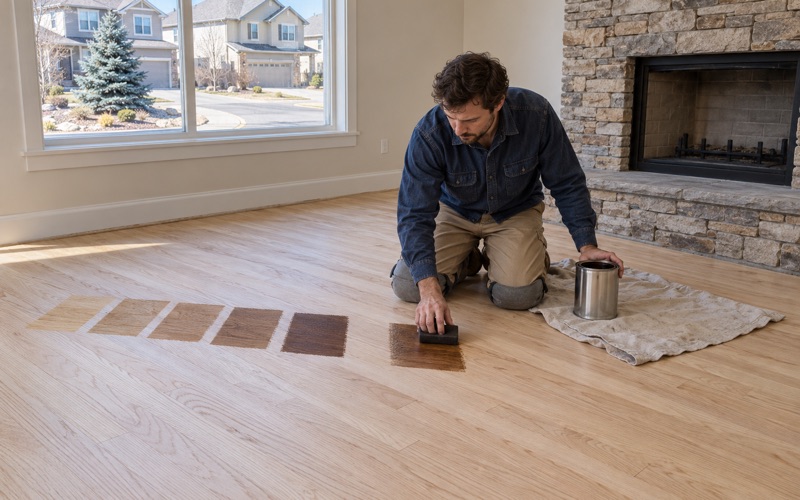
Every job still starts the same way, whether the house hosts guests or a family: moisture readings, a look at how the boards have moved through the heating season, and stain samples laid on your own floor so the color you pick is the color you get in that room’s light.
Northglenn’s Short-Term Rental License and the Good Repair Rule
Which Northglenn Homes Can Hold a Rental License
Northglenn regulates short-term rentals under its own code, Article 18-18 of the Municipal Code, adopted through Ordinance 1773 in 2019. The article states that a valid license is required for each short-term rental in the city, so an owner with two rental houses carries two licenses, not one covering both. Each license runs for one year, and after the first term it commences January 1 of each year.
Not every dwelling qualifies. Accessory dwelling units, as Chapter 11 of the code defines them, are not eligible, and neither are mobile homes, recreational vehicles or travel trailers. For floor work that matters in a practical way: before paying to refinish a backyard unit you hope to list, confirm it falls outside the code’s ADU definition, because an ineligible unit cannot hold a license at all.
Good Repair Inside, and Where Floors Fit
Section 18-18-6 sets the conditions a rental property has to meet. Among them: the property is kept in good repair inside and out with no active hazards, alongside posted information, a visible address, smoke and carbon monoxide detectors, fire extinguishers, freedom from pests, and compliance with zoning and building rules. The code language we have read does not set a separate standard for floors.
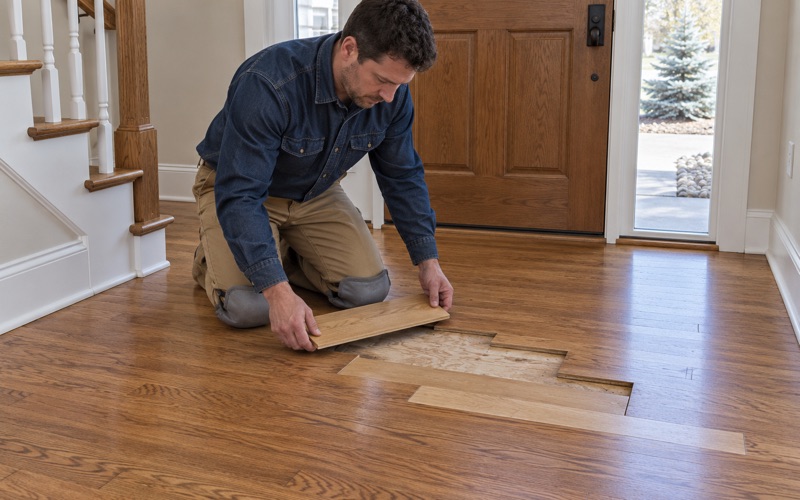
That leaves the judgment to the owner, and a floor is one of the first things anyone walking through a house reads as cared for or neglected. A popping board that lifts at one end, cupping near the dishwasher, a stair nosing that rocks underfoot, or water stains spreading from a supply line are conditions we would repair before any inspection, simply because they look like hazards.
Filing the Affidavit and Booking the Walkthrough
Every applicant files a License-Holder Affidavit of Inspection with the application, affirming that the property complies with Section 18-18-6, and the owner schedules the inspection. Because the owner sets that date, floor repairs can be planned in front of it instead of squeezed in after a surprise.
We usually suggest booking the floor work first and the inspection second, with a margin for the finish to cure. A board replacement and spot refinish in a hallway is a short job; a full sand and refinish across a main level takes longer and needs the house empty, so it belongs well ahead of the date you give the city.
Looking for wood-flooring closer to Louisville? See Louisville Wood-Flooring.
Finishes That Stand Up to Guest Turnover
Waterborne or Oil-Modified Polyurethane for a Rental
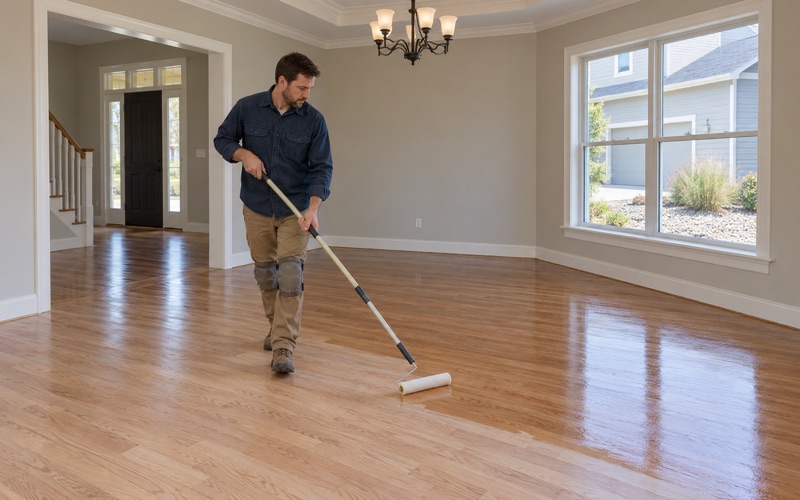
The finish on a rental floor does more work than the wood under it. Traffic lanes form fast when every guest takes the same path from the door to the kitchen, and rolling luggage grinds grit into the sheen. We talk through the tradeoffs between a waterborne polyurethane and an oil-modified polyurethane before choosing either one for your house.
Waterborne finishes stay clearer and dry faster, which matters when the next booking is close. Oil-modified finishes build a warmer amber tone and, on red oak, push toward the orange oak look many owners are trying to leave behind. Sheen level matters too: a satin or matte finish hides the scuffs and dust between cleanings that a gloss floor shows under every window.
Screen and Recoat Between Busy Seasons
A worn topcoat does not always mean a full sanding. When the wear is only in the finish and the stain and wood beneath are intact, a screen and recoat abrades the surface and lays down fresh polyurethane without cutting into the boards. On a rental, that job fits into a slow stretch and keeps the wood itself in reserve for later.
The test is whether the finish has worn through. Gray, bare wood in a traffic lane, pet urine stains that have soaked in, or deep scratches from furniture legs all go past what a recoat can hide, and at that point sanding is the honest answer. We show you which areas fall on which side of that line before quoting.
Choosing Hardwood Species for Hard Use
When a rental needs new flooring rather than a refinish, species choice affects how quickly it shows abuse. Janka hardness is the common yardstick: hickory and maple rate harder than red oak, and white oak sits a little above red oak. A harder board resists dents from dropped bags and chair legs, though no species is immune to them.
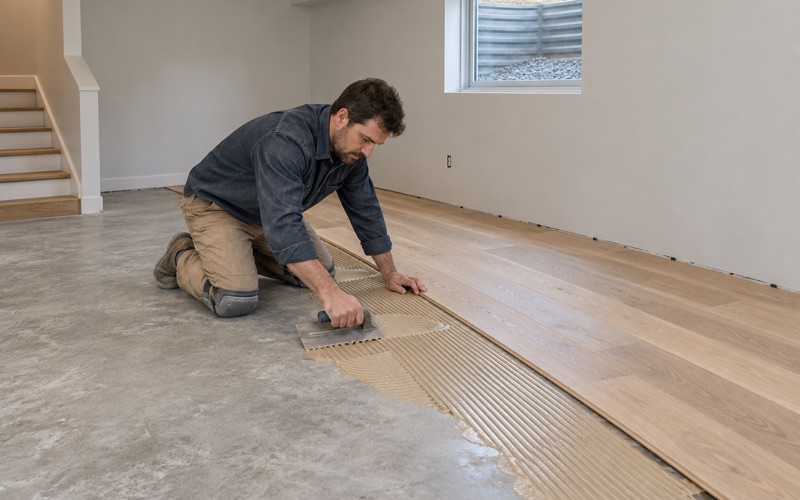
Grain matters as much as hardness. Busy grain in hickory or white oak disguises small dents and scratches that a plain maple floor shows. For rooms where solid wood would be a risk, such as spaces below grade, an engineered floor with a thick engineered wear layer gives a rental owner a surface that can still be sanded in future.
Refinishing Hardwood in 1960s Northglenn Homes
Northglenn began in 1959 as a master-planned community built by Jordon Perlmutter, and the city incorporated in 1969. The housing record reflects that start: 38.0 percent of the city’s housing units were built in the 1960s, and 60.2 percent predate 1980. Many houses now listed as rentals are among them, and their floors have usually been sanded, covered or both over the decades.
Checking What Is Left Above the Tongue
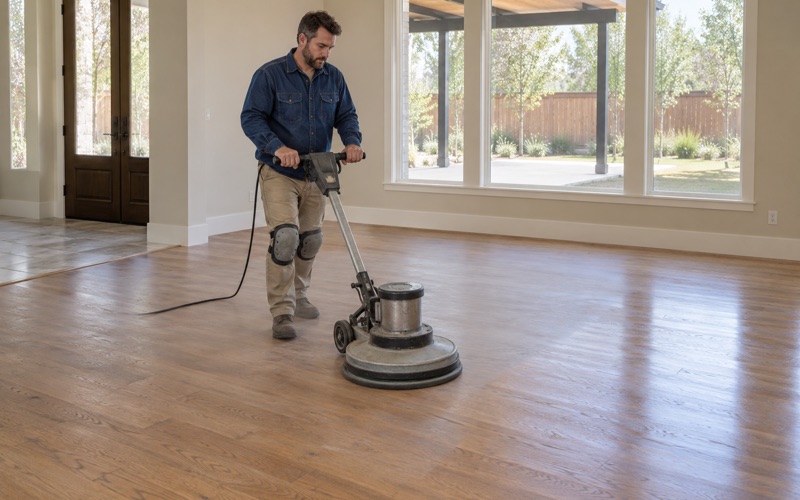
Before sanding an older hardwood floor, we pull a floor register or a threshold and look at the board edge to see how much wood remains above the tongue and groove. A floor that has already been drum sanded more than once may have little left, and another aggressive cut can expose nails or the tongue itself.
Where there is enough wood, we plan the grit sequence to take off only what the damage requires. Where there is not, board replacement in the worst areas or a screen and recoat may be the better use of the money. We never assume what species or grade sits under the carpet in a given house; we look first.
Lead Paint Checks Before Sanding a Pre-1978 House
Any house built before 1978 may carry lead-based paint on baseboards, trim and door casings that sit right against the floor. We check the build year and the painted surfaces before sanding starts, because a sander working along a painted baseboard can raise dust from it. Where the EPA RRP Rule applies, the work follows it.
For an owner who hosts guests, that check protects more than the crew. Dust left in a rental after the job is dust the next guest walks through, so containment, dustless sanding equipment and a thorough cleanup are part of our quote, not an extra added at the end.
Replacing Carpet With Wood in a Rental
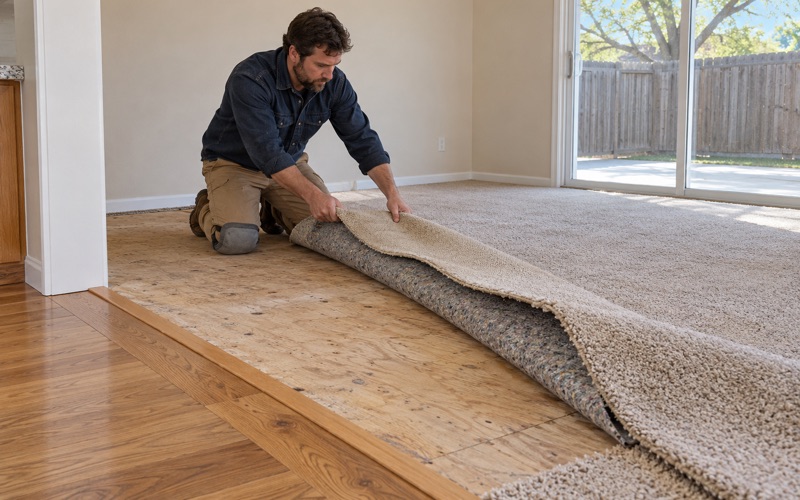
Carpet is the floor many rental owners give up on first. It holds odors between guests, stains from a single spill, and never looks fully clean in listing photos. Replacing it with prefinished or site-finished hardwood means pulling the carpet, carpet pad and tack strip, then inspecting and fastening the subfloor so the new floor does not squeak.
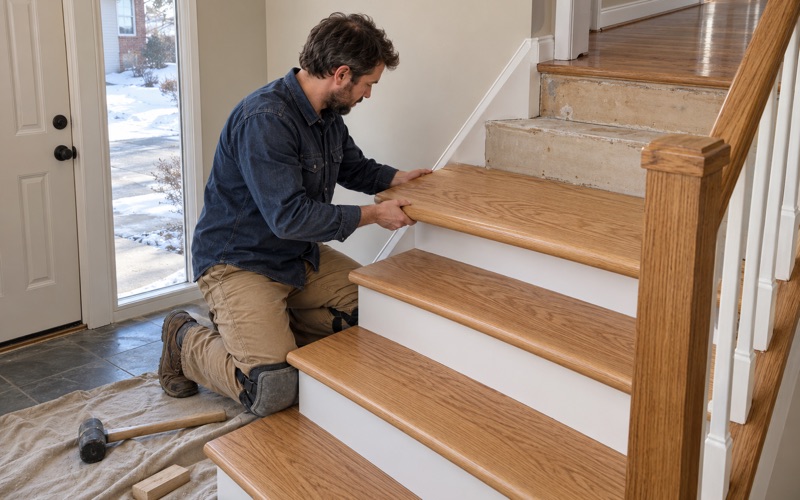
Stairs usually go with it. We quote stair treads, stair risers and stair nosing tread by tread, and where a landing gets new flooring we check that the added thickness does not throw off riser height at the top or bottom step. An uneven step is exactly the kind of hazard a rental owner does not want to discover after the fact.
Timing Floor Work Around a License Renewal
Because each Northglenn license term runs on the calendar year, many owners turn their attention to the property in late fall and early winter, just as the furnace takes over. That timing overlaps with the driest air of the year inside a heated house, and it shapes which floor work makes sense before January.
Seasonal Gaps and Winter Moisture Readings
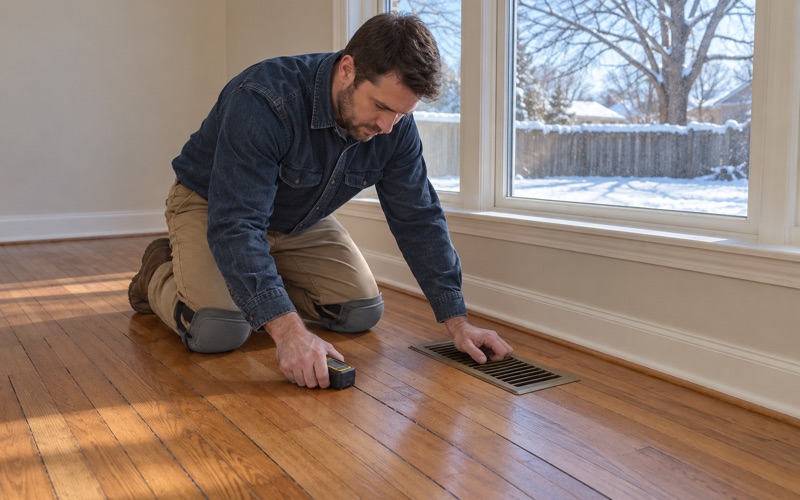
Solid hardwood shrinks as indoor relative humidity falls, and seasonal gaps open between boards during heating season. Owners preparing a rental in winter often want those gaps filled so the floor looks tight. We take moisture meter readings first, because a seam filled in January is likely to close again by summer and crush the filler out.
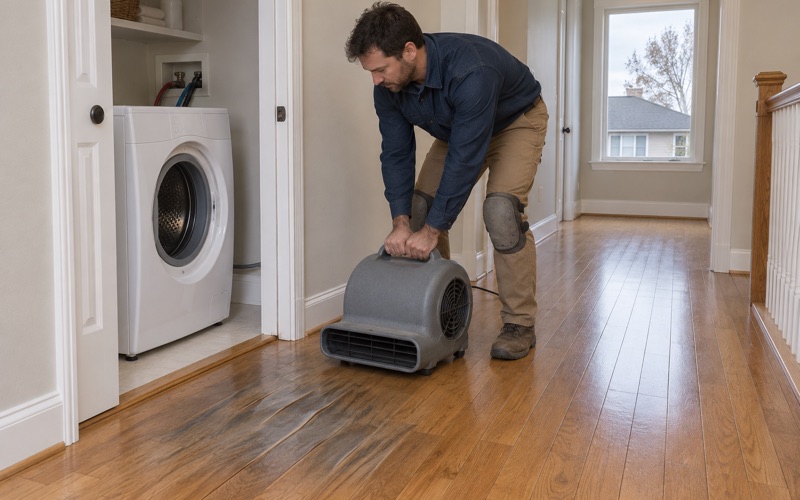
Where the gapping is seasonal, we explain it rather than hide it, and a whole-house humidifier often does more for the floor than filler would. Where the readings point to something else, such as a leak from a supply line or a washer, we trace and dry that source before touching the boards.
Installing New Hardwood Before a Busy Season
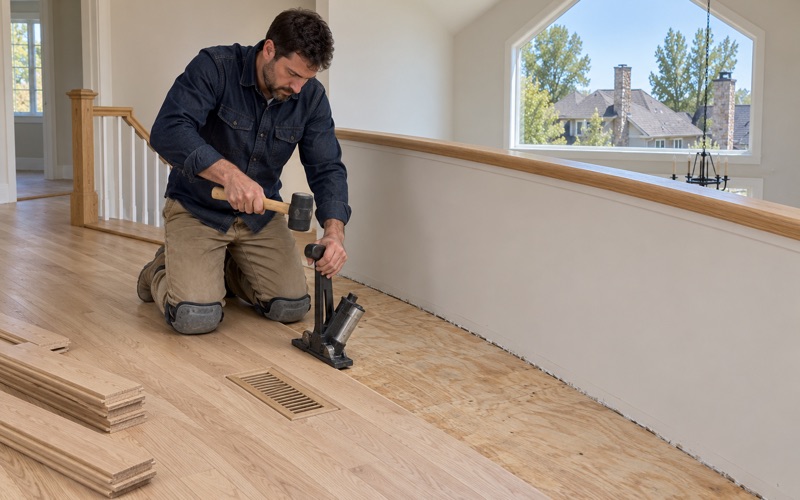
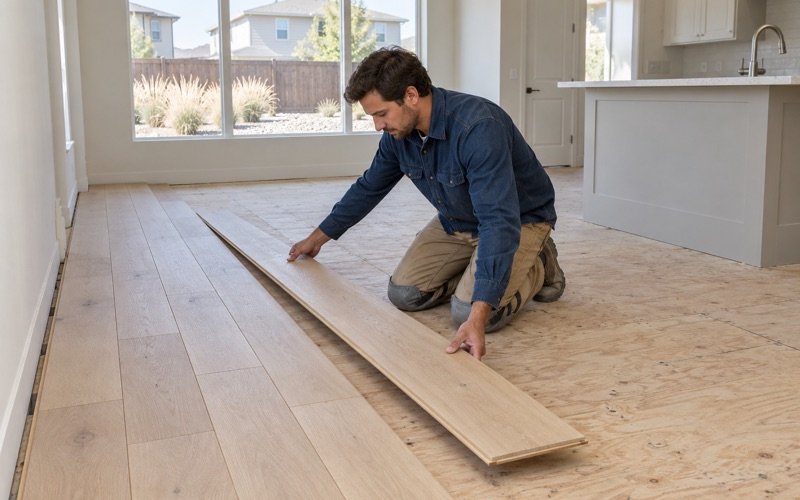
New flooring needs acclimation before installation and a proper expansion gap at the walls, both of which a rush job skips. We check the moisture of the boards and the subfloor against each other and talk through the humidity in the house before anything goes down, because boards installed wetter than the winter air will shrink after the first guests arrive.
Working back from your inspection date and your booking calendar, we set the order of delivery, acclimation, installation, finishing and cure, then leave a margin. Owners who plan that sequence in the fall tend to reopen with a finished floor rather than one still off-limits to furniture.
Floor Care Between Turnovers
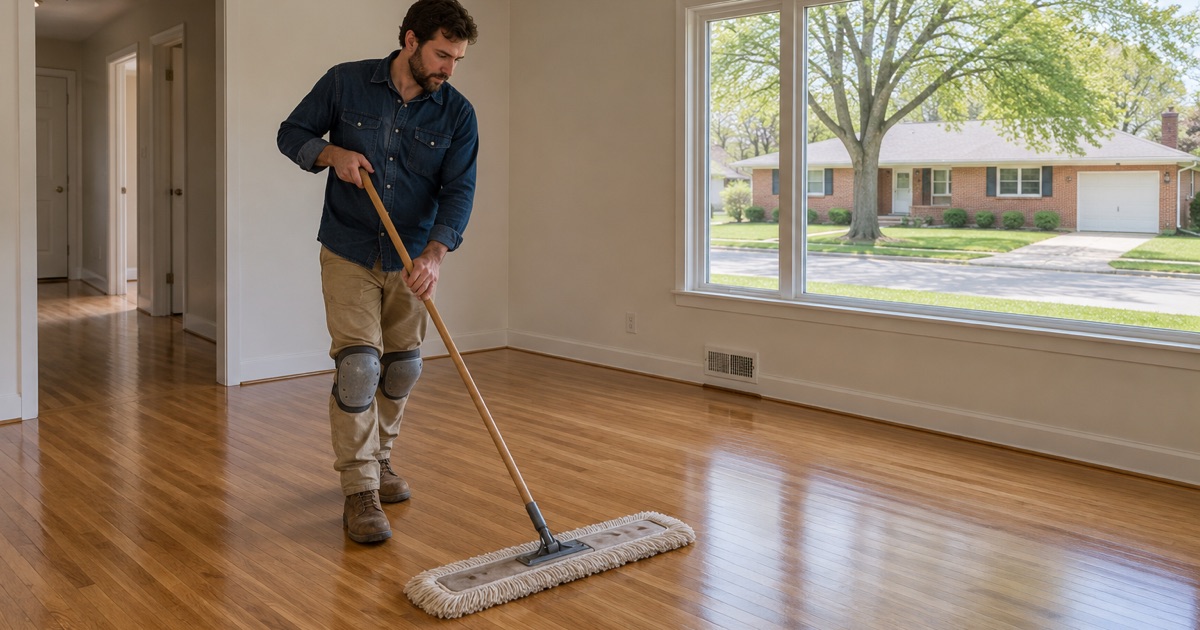
Most finish damage in a rental comes from grit and standing water, so we leave owners a short care routine their cleaners can follow: dry dust mops, a cleaner made for the finish that was applied, felt pads under chair legs, and mats at the doors. Wet mops and steam cleaners dull a finish fastest and swell board edges.
- 20+ Years on Wood Floors
- Moisture Readings Before Repairs
- Stain Samples on Your Own Floor