Broomfield Wood Flooring has handled wood-flooring in Niwot for homeowners who want an honest read of the boards they already have before anyone talks about new ones. With more than 20 years on Front Range floors, we start every visit with a moisture meter, a look at the finish and a few questions about how the house is heated.
Most of what we do here is sanding and refinishing, board repair, and replacement where a floor has truly run out of wood. We explain what the tongue and groove tells us, what a screen and recoat can still fix, and where a full sand to bare wood is the better spend. Nothing gets filled or hidden until we know why it moved.
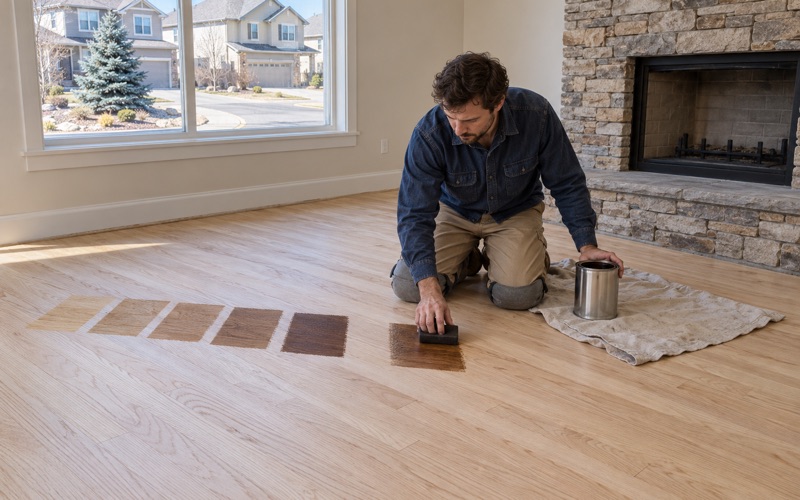
Color gets the same care. We lay stain samples on your own boards, in your own light, so the choice is made against the room rather than a showroom card. Then we talk through sheen level and finish type, whether waterborne polyurethane, oil-modified polyurethane or a hardwax oil suits the way your household actually uses the floor.
Wood Floors in Niwot’s Ditch Country
Niwot sits in Boulder County between Boulder and Longmont on State Highway 119, and it is ditch country in a very literal sense. The Left Hand Ditch Company, with its headquarters listed at a Niwot post office box, manages raw water, stream diversions, ditches and reservoirs on the west side of Boulder County. It is a separate entity from the Left Hand Water District.
Where the Boulder and Lefthand Ditch Runs
Two of the company’s ditches, the Boulder and Lefthand Ditch and the Boulder & White Rock Ditch, flow through Niwot, and Left Hand Creek passes just north of town on its way to meet St. Vrain Creek at the south edge of Longmont. The town itself takes its name from an Arapaho leader, and the name means left-handed.
The town was first platted in 1875 along either side of the Colorado Central Railroad, but most of the houses we work in today went up about a century later. That mix of a railroad plat and much newer construction is why we never assume a floor from the street.
We mention the water because it explains the place, not because it explains your floors. What moves hardwood in a Niwot living room is the air inside the house, and that story runs on the furnace calendar. A heated Front Range winter pulls indoor relative humidity far below what the boards arrived at, and the seasonal gaps follow.
Board Gapping and Winter Shrinkage
When we see board gapping in January, we take moisture readings before anyone reaches for filler. A seam that opens with the heat on usually closes again by summer, and filling it in winter means the filler gets crushed or squeezed out when the wood swells back. We would rather show you the numbers and wait.
Where gaps stay open year round, or where cupping, crowning or buckling shows up, the cause is different and we trace it. That can mean a leak from a supply line or washer, a missing expansion gap at the walls, or boards that never acclimated. Each points to a different repair, so the diagnosis comes first.
Squeaks and Popping Boards
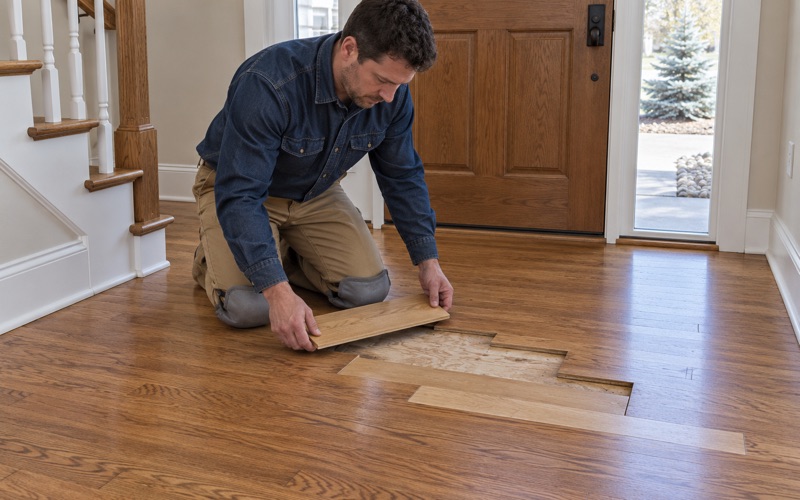
Squeaks, popping boards and hollow spots get the same treatment. We find where the fastener has let go or where the subfloor has moved before we decide on a fix, because screwing down a squeak without knowing its cause tends to move the noise a foot over rather than end it. Cracking and checking in the boards themselves get a look too.
Looking for wood-flooring closer to Boulder? See Wood-Flooring Services in Boulder.
Refinishing 1970s and 1980s Niwot Floors
Niwot’s housing stock is concentrated in two decades. Census figures show 68.2 percent of the town’s housing was built between 1970 and 1989, with only 93 units dating from 2000 or later. That makes refinishing, rather than new construction, the more common job for us here, and it shapes how we approach a floor on the first visit.
Reading How Much Wood Is Left
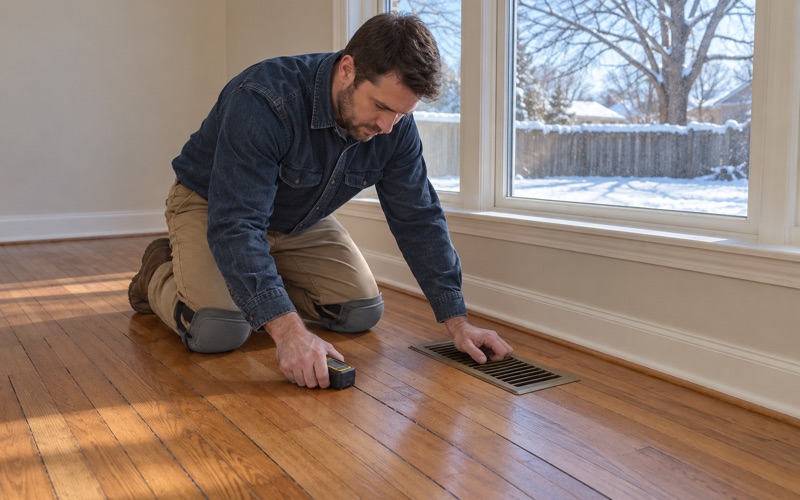
A floor that has been sanded before has less to give. We pull a floor vent or a threshold where we can and check how much wood remains above the tongue, because a solid hardwood board can only take so many passes of a drum sander before the groove starts to show. That check decides between a full sand and a lighter approach.
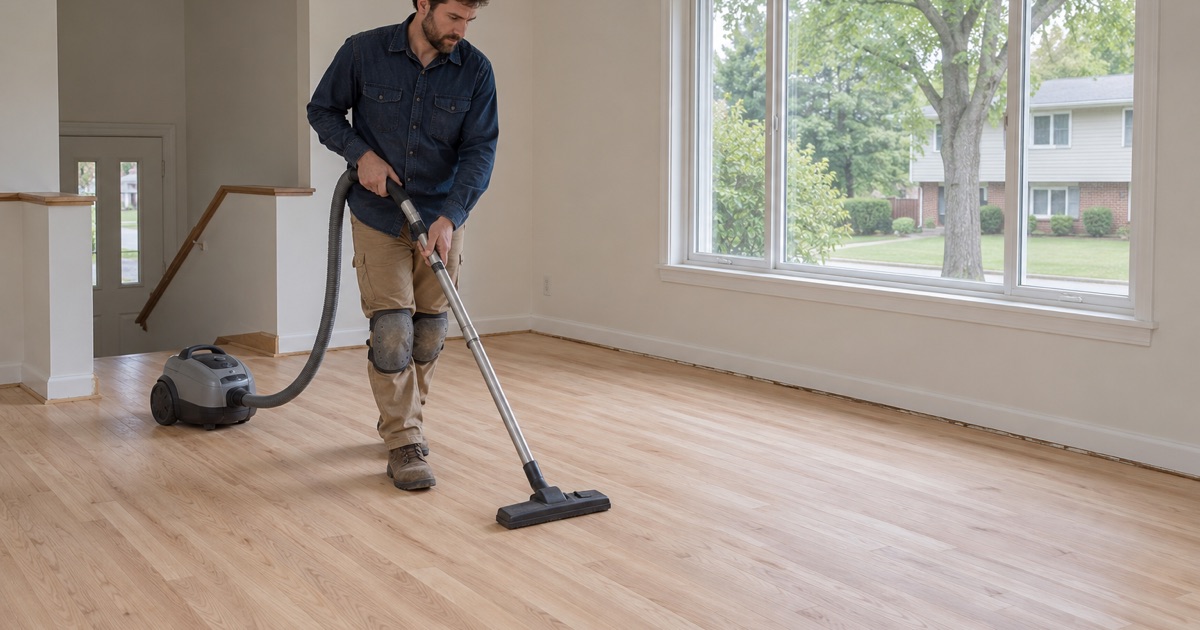
When there is enough wood, we work through a grit sequence with the drum sander and an orbital sander at the edges, with dustless sanding equipment to keep the rest of the house livable. Where the finish is only worn, not through to bare wood, a screen and recoat can restore the sheen for a fraction of the disruption.
Traffic Lanes, Water Stains and Orange Oak
Floors that have carried a household for decades show it in predictable places. Traffic lanes down a hallway, pet urine stains near a door, water stains by the kitchen sink and sun fade under a south window all tell us something different about how deep the damage runs, and whether sanding will lift it or a board replacement is the honest answer.
Many older red oak floors have also yellowed under an oil-based finish into what homeowners call orange oak. Sanding to bare wood clears that tone, and a waterborne polyurethane will hold a lighter, more neutral color than the finish it replaces. Stain samples on your own floor show the difference before you commit to it.
Painted Surfaces in 1970s Houses
Part of Niwot’s housing predates 1978, and that matters before any sanding starts. For a house built before that year, we confirm the build year and check painted surfaces such as baseboards, stair risers and trim that the work will touch, and we plan dust control around what we find, so the refinish does not create a second problem.
Replacing Floors in Owner-Occupied Detached Houses
Niwot is largely a place of owners living in their own detached houses. Of 1,163 owner households, 1,111 live in one-unit detached homes, and 77.3 percent of occupied units are owner-occupied. For us, that usually means the person asking about a new floor is the person who will live on it for years, and the plan is built around that.
When Solid Hardwood Replacement Makes Sense
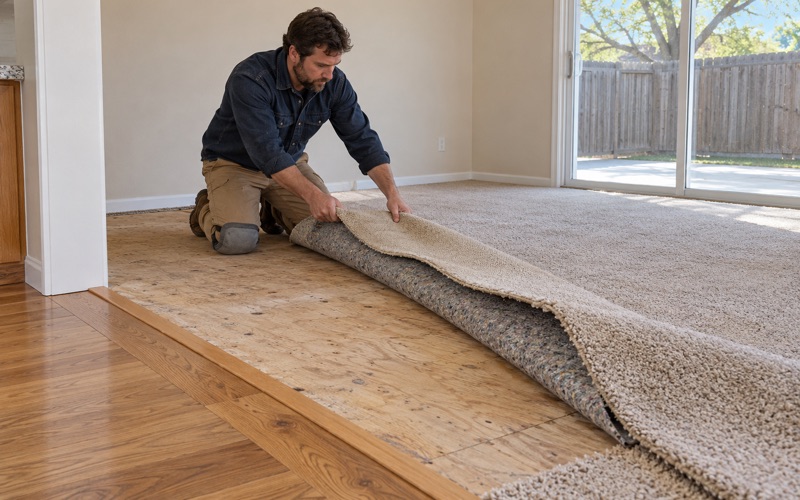
Replacement comes up when a floor has been sanded through, when damage runs deeper than the wear layer can absorb, or when an owner is done with carpet or a dated floating floor. Pulling carpet means removing the carpet pad and tack strip and looking hard at the subfloor underneath before any new boards are ordered.
Species is a real decision. Red oak and white oak take stain differently, hickory and maple sit higher on the Janka hardness scale, and wide plank boards show seasonal movement more than narrow strips. We walk through those tradeoffs with samples in hand, including herringbone or parquet for owners who want a pattern.
Acclimation and Humidity for a New Floor
Before a new floor goes down, we talk through the humidity in your house. Boards leave the mill at one moisture level and meet a much drier heated interior here, so we let them acclimate, measure with a moisture meter against the equilibrium moisture content the room will hold, and discuss whether a whole-house humidifier belongs in the plan.
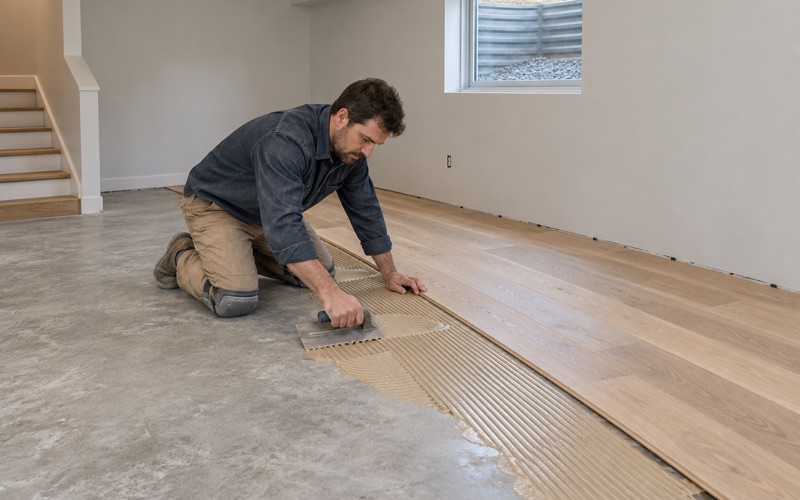
Installation follows the NWFA Installation Guidelines for the product at hand, whether that is nailed solid hardwood with flooring cleats, glue-down engineered planks or a prefinished product. We leave the expansion gap the boards need at the walls and finish the edges with quarter round or a reducer where the new floor meets tile or carpet.
Stair Treads and Landings
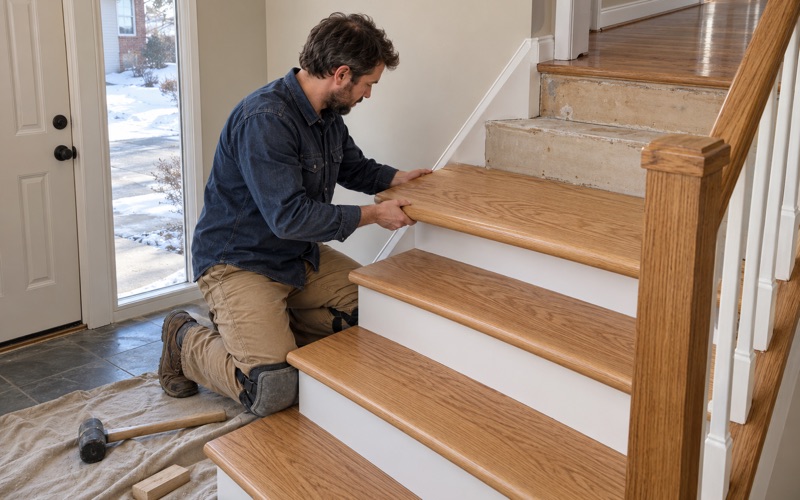
If your stairs are still under carpet, they can come along with the rest. We quote stairs tread by tread, replacing or capping stair treads and matching the stair nosing to the new floor. Where new flooring lands on a landing, we check the added height so the top and bottom riser height still match the rest.
Stairs take longer than they look, because the treads, risers and nosing each need their own sanding and finish coats. We sequence the work so the household keeps a usable route up and down while each coat cures, and we tell you the schedule before the first tread comes off.
Unincorporated Niwot and Boulder County
Niwot has no city government of its own. It is an unincorporated community and census-designated place governed by Boulder County, which means county offices, not a city, handle building and floodplain administration here. We confirm with Boulder County Community Planning & Permitting what a given job needs rather than assuming an answer for you.
HOA Documents Before Work Starts
If your house belongs to a homeowners association, we read its documents with you before work starts. Any rule about interior flooring would come from those papers, not from us or from the county, and it is far easier to learn about a required underlayment or a work-hours limit before the old floor comes up.
Water Damage, Traced Room by Room
When a burst pipe, a washer, a supply line or a roof leak soaks a floor, we trace where the water went, dry the area and measure moisture before replacing a single board. Rushing that step is how a repaired floor starts cupping again months later, after the wall cavity finally gives up what it held.
We also document the damage room by room for your adjuster, with readings, photos and the extent of affected boards noted plainly. That record helps an insurance claim move and gives you a clear picture of which rooms need board replacement and which only need drying time and a refinish.
Planning Your Niwot Floor Project
Our Niwot jobs follow a set order: the site visit, the readings, the decision between refinishing and replacement, then a written scope naming the species, the finish, the sheen and the sequence of rooms. That lets the household plan around the work instead of around surprises.
Finish choice is part of that scope, and sheen level matters as much as the product. A lower sheen hides the fine scratches a dog or a dropped chair leaves, while a higher gloss shows every one. We show both on a sample before the first coat goes down.
- 20+ Years on Wood Floors
- Moisture Readings Before Repairs
- Stain Samples on Your Own Floor