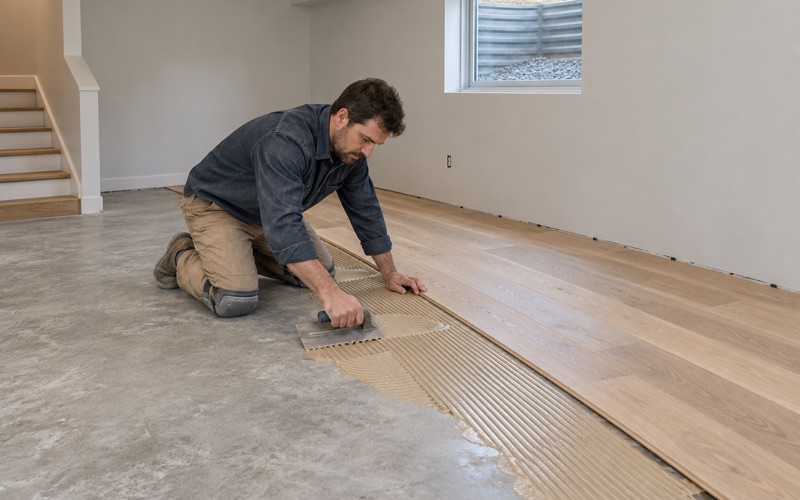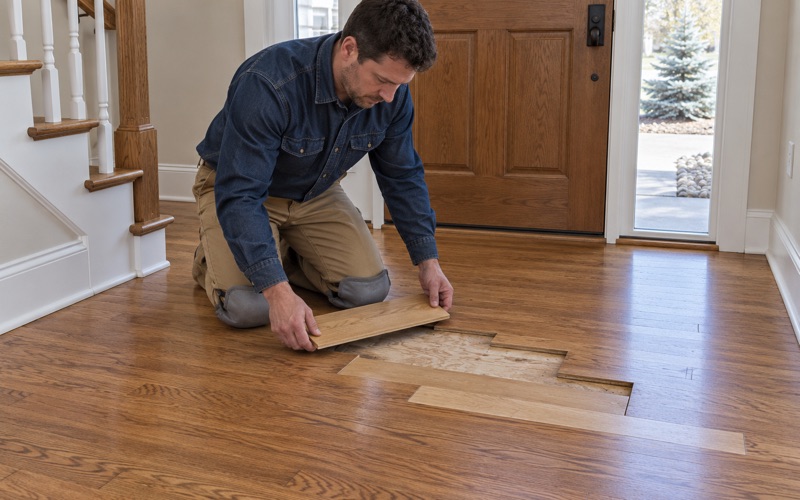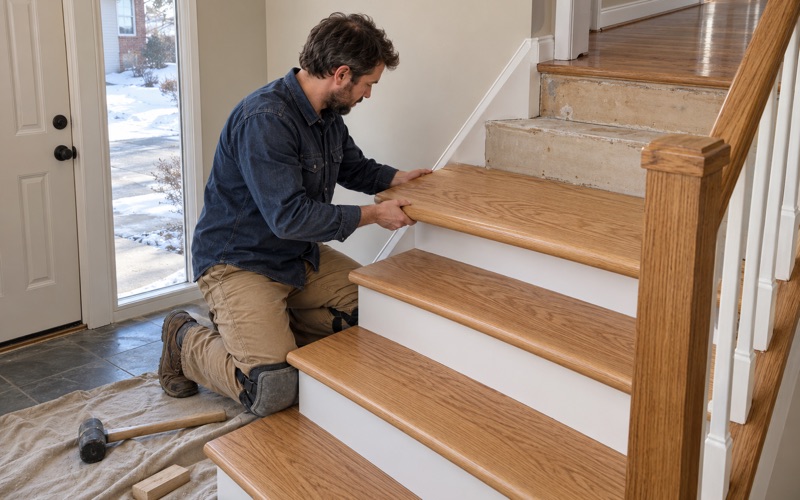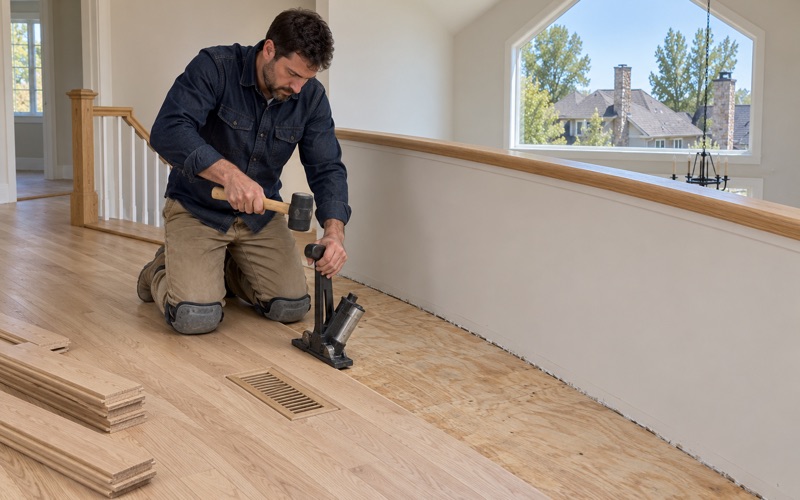
Broomfield Wood Flooring approaches wood-flooring in Montbello with more than 20 years of sanding, refinishing and installing floors behind us, and with two kinds of clients in mind. One owns the house and lives on the floor every day. The other rents a unit out and needs it ready, clean and durable before the next tenant carries a box through the door.
Those two clients ask different questions of the same wood. An owner wants to know whether sanding will leave enough wear surface for another decade, or whether replacement is the honest answer. A landlord wants a finish that dries fast, resists traffic lanes and pet urine stains, and does not strand a vacant unit for a week while it cures.
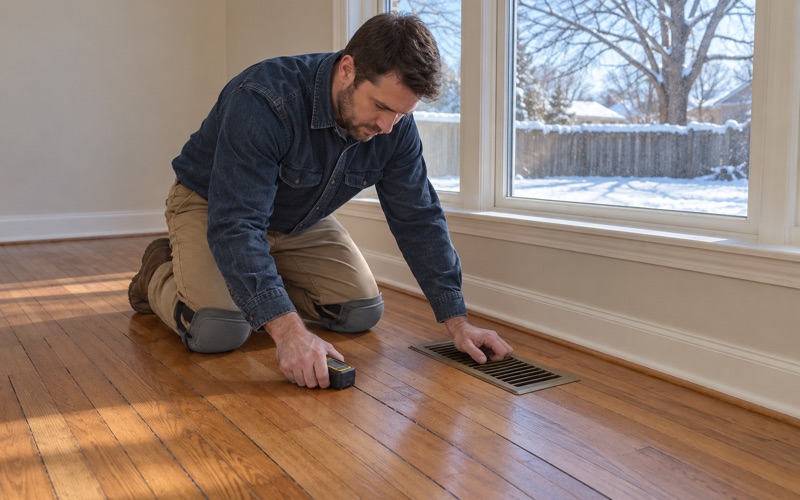
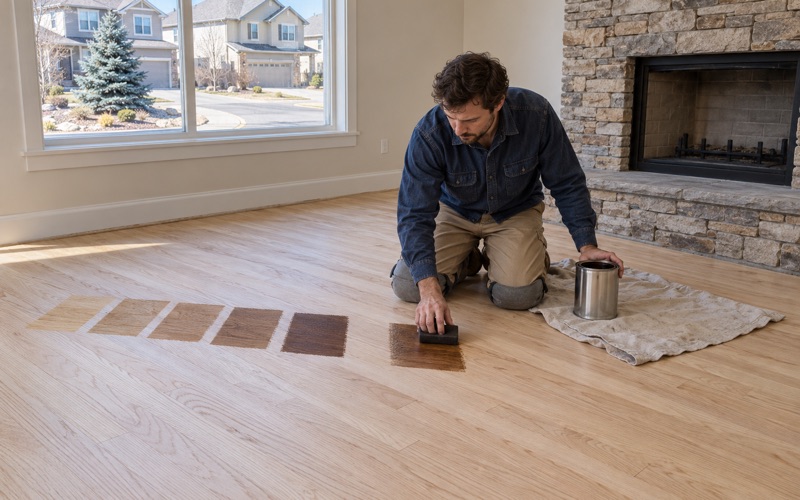
We answer both the same way: by looking at the floor first. Moisture readings, board thickness above the tongue, stain samples laid in your own light and a check of the build year before any sanding all come before a quote. Nothing gets filled, stained or torn out until we know why the floor looks the way it does.
Wood Floors Across Montbello’s Owner and Rental Homes
Who Lives on Montbello’s Floors
Montbello is a neighborhood of the City and County of Denver, sitting in the far northeast of the city between Peoria Street and Chambers Road. The City’s own neighborhood tabulation of the 2017-2021 American Community Survey counts 9,746 occupied homes there, and 3,584 of them are renter-occupied. That is 36.8 percent of the neighborhood’s households living in a rented home.
The other 6,162 households, 63.2 percent, own their homes. So a floor crew working here meets both kinds of job. We keep the two conversations separate, because a landlord’s timeline and an owner’s long-term plan lead to different finishes, different grit sequences and sometimes a different decision altogether. A rental floor is judged by how it survives the next lease; an owner’s floor is judged over decades.
Solid Hardwood or Something Else Underneath
Before we talk refinishing, we find out what is actually on the floor. A room might carry solid hardwood, engineered planks with a thin wear layer, or luxury vinyl plank and carpet laid over whatever came before. Each answers the refinish question differently, and a floor that looks like wood from the doorway is not always wood.
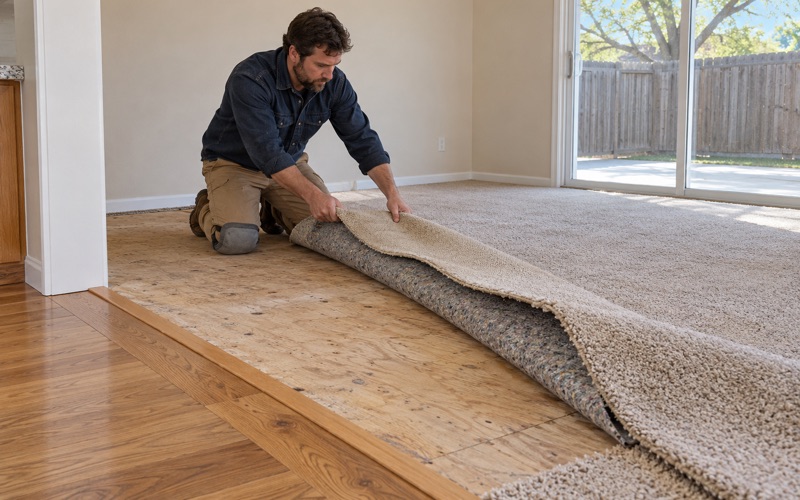
When carpet comes up, we pull the tack strip and carpet pad and look at what is left: the subfloor, any wood that was hidden, and the staple and nail damage along the walls. If there is wood, we measure the thickness above the tongue and read it with a moisture meter before anyone quotes a sanding job on it.
The Build Years Behind the Floors
Montbello’s housing stock leans older. In the City’s tabulation, 51.7 percent of the neighborhood’s 9,934 housing units were built before 1980, and the median year built sits at about 1978. The 1970s were the biggest building decade by a wide margin, with 3,240 units, followed by 2,015 from the 1980s.
That age matters on the floor in two ways. Wood and finishes that have lived through four or five decades of Denver winters often show seasonal gaps, cupping near old leaks and worn traffic lanes. And a home built before 1978 may have lead-based paint on baseboards, trim or stair parts, so we confirm the build year and check painted surfaces before a drum sander touches the room.
Looking for wood-flooring closer to Denver? See Wood-Flooring in Denver.
Refinishing Between Tenants
Screen and Recoat for a Quick Turnover
When a lease ends and the finish is dull but intact, a screen and recoat is usually the fastest honest fix. We abrade the existing coat, clean the floor and lay down fresh polyurethane without cutting into the wood. The unit is walkable again quickly, and the floor keeps its wood thickness for a full sanding later.
A recoat only works where the old finish is still bonded and the damage sits on top. Gray traffic lanes through the wood, water stains that have turned black and deep pet scratches all go below the finish, and no recoat will hide them. We tell a landlord which rooms qualify and which need more before the turnover schedule is set.
Full Sanding When a Unit Needs More
Some turnovers need a full sand. We run a drum sander through a planned grit sequence, finish the edges with an orbital sander and use dustless sanding so the unit is not coated in fine dust when the painters arrive. Loose or popping boards get fastened, and damaged boards are replaced before the first pass.
Pet urine stains are the hardest call on a rental floor. Light marks sometimes sand out, but urine that has soaked into the grain usually leaves a dark stain no sanding removes, and the honest fix is board replacement woven into the surrounding floor. We show the landlord which boards come out and why, before the sanding begins.
Finishes Chosen for Rental Traffic
For a rented unit we usually recommend a waterborne polyurethane. It dries quickly, stays clear rather than ambering, and lets a unit go back on the market sooner than an oil-modified polyurethane that needs longer to cure. A satin or matte sheen level also hides the small scratches that come with any move-in.
Cure time is what a landlord actually plans around. A waterborne coat can usually take socks within a day, but furniture and rugs wait longer while the finish hardens. We give a room-by-room schedule so the cleaners, the painters and the next tenant’s move-in date line up with a floor that is ready for them.
Montbello’s Ranch-Style Houses and the Refinish-or-Replace Call
Catalog Ranch Homes From 1966 Onward
The first single-family homes in Montbello went on sale in 1966, and the Denver Public Library describes them as ranch-style homes chosen ready-made from a catalog. Perl Mack developed the residential areas, and those first houses were priced from $14,950 to $21,950. A ranch plan puts most of the living space on one level, which shapes how a floor project runs.
On one level, rooms tend to flow into each other: living room into hallway, hallway into bedrooms. That makes it easy to run one continuous floor through the house, and it also means a single stain or finish choice shows everywhere at once. We lay stain samples on your own floor, in your own light, so the color you pick is the color you live with.
When Refinishing Still Makes Sense
For an owner who has lived on the same floor for years, the first question is how much wood is left. A solid hardwood strip floor that has been sanded once or twice often has room for another full refinish. We check the thickness above the tongue at a heat register or threshold before recommending it, rather than guessing from the surface.
Refinishing also fixes more than color. Squeaks and popping boards get traced to a loose fastener or a gap over a joist and fastened properly, cracked or checked boards are replaced individually, and seasonal gaps are read against the furnace season rather than filled while they are at their widest. Filler packed into a winter gap gets crushed out by summer.
When Replacement Is the Better Answer
Replacement makes sense when the wear layer is gone, when an engineered plank has too little veneer left to sand, or when water has left cupping, buckling or hollow spots across a room. It also makes sense when an owner wants to take out carpet or luxury vinyl plank and put real wood through the main living areas for the first time.
For a new floor, we talk through species and format with the room in mind. Red oak and white oak take stain predictably, hickory and maple bring a harder surface by Janka hardness, and wide plank or herringbone changes how a long ranch hallway reads. Whichever you pick, we let the boards acclimate and check equilibrium moisture content before installation.
Planning a Wood Floor Project in Montbello
Dry Winter Air and New Boards
Montbello falls in the National Weather Service forecast zone that covers Denver, and like the rest of the Front Range it spends winter under a running furnace. Indoor relative humidity drops well below what the boards saw at the mill, so wood shrinks and gaps open. We talk through humidity in the house, including a whole-house humidifier, before a new floor goes down.
That same shrinkage explains most of the winter complaints we hear from owners of older floors. A board gap that appears in January and closes by July is the wood doing what wood does. We take moisture meter readings first, and only fill or replace boards where the gap stays open through the humid months.
Water Damage Traced to Its Source
When a supply line, water heater or washer hose fails and water reaches a wood floor, we trace the source, dry the area and measure moisture before any board is replaced. Replacing boards over a wet subfloor only restarts the cupping. We also document the damage room by room so an insurance adjuster has what they need.
Water stains tell part of the story. A gray stain usually sits in the finish and may sand out, while a black stain has reached into the wood and usually means new boards. Where boards come out, we weave replacements into the existing floor so the repair does not read as a patch once it is sanded and finished together.
Stairs, Transitions and Scheduling
Stair treads and landings get quoted tread by tread. If a new floor goes onto a landing, we check that the added thickness does not throw off the riser height at the top or bottom step, and we finish the stair nosing to match the new boards. Reducers and quarter round are planned where wood meets tile or carpet.
When you call, tell us whether the home is owner-occupied or between tenants, the rough build year and which rooms are involved. For a rental we plan around the vacancy window; for an owner we plan around the rooms you can live without. Either way, the first visit is a look at the floor itself, and the quote follows from what we find.
- 20+ Years on Wood Floors
- Moisture Readings Before Repairs
- Stain Samples on Your Own Floor