Broomfield Wood Flooring has worked on wood flooring in Louisville for more than 20 years, and a large share of the calls start the same way: a homeowner has noticed a gap, a crack or a slope and wants to know what it means. We install, sand, refinish and repair solid hardwood and engineered floors, but the first job is usually reading the floor honestly.
Most of what we see is ordinary wood behavior. Boards shrink in a dry heated winter, squeaks develop where flooring cleats have loosened, and traffic lanes wear through a finish that has done its time. Those are floor matters, and we fix them with the right tool rather than a tube of filler that hides the cause.
Some symptoms deserve a different first call. When a crack runs from the floor into the wall, or doors that used to close start sticking, we say so plainly and suggest an engineer look before anyone sands. A refinish is money well spent once the house underneath has been checked and settled.
Reading Louisville Floors Over Old Coal Country
Louisville’s history sits closer to its floors than most towns’. The town dates to the Welch Mine, which opened in 1877 as the first coal mine in the area of Boulder and Weld counties known as the Northern Coalfield. By the 1907-1909 peak, twelve mines operated within Louisville, and the last of them closed in the 1950s.
What the State’s Homeowner Guide Lists
The Colorado Geological Survey publishes a homeowner guide, Special Publication 26, on subsidence above inactive coal mines. Among the possible signs of damage it lists are distorted window and door frames, sticking windows and doors, cracks in drywall or plaster that appear or widen, and a basement or foundation pulling away from the building.
The guide also shows a brick house where walls, ceilings and floors have cracked. That is why we pay attention to where a floor crack goes. A split that stays inside one board is wood; a line that continues into the plaster or lines up with a door that now drags is worth writing down before we quote anything.
Why a Symptom Is Not a Diagnosis
The same guide is careful on this point, and so are we. It states that swelling clay soil and bedrock cause the most common and extensive damage to construction in Colorado, and that moisture changes can make floor slabs heave and buckle. Expansive soils can leave a very similar set of cracks and sticking doors.
So we never tell a homeowner that a floor symptom proves anything about what lies below. We are flooring people with a moisture meter and a level, not engineers. What we can do is describe what the floor shows, separate the wood problems from the rest, and hand you notes an engineer can use.
Insurance Questions Come Before Floor Questions
One more line from the state guide matters before any repair budget is set: mine subsidence protection is normally not included in most homeowners insurance policies. The guide describes a state-sponsored Mine Subsidence Protection Program run through the Colorado Division of Reclamation, Mining and Safety, and who qualifies is a question for that office, not for us.
If you suspect movement, it makes sense to call your insurer and the state before a floor is torn up, because the condition of the room may matter to them. We are happy to pause, photograph each room and hold the work until those conversations are done.
Looking for wood-flooring closer to Westminster? See Wood-Flooring in Westminster.
When a Gap or Crack Is Just the Floor
Most Louisville floor complaints we are called about turn out to be wood doing what wood does. The trick is telling them apart from movement quickly, so the homeowner is not paying an engineer to look at a seasonal gap or paying us to refinish over a problem that will return.
Seasonal Gaps and Board Shrinkage
In a heated Front Range winter, indoor relative humidity drops far below what the boards were milled at. Strip oak gives up moisture, shrinks across its width and opens seasonal gaps between the rows. Those gaps are usually even, spread across the whole room, and tend to close again as summer humidity returns.
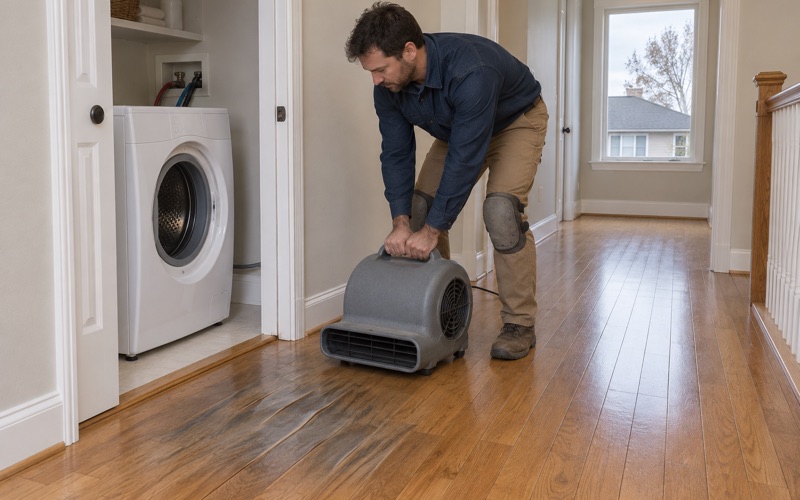
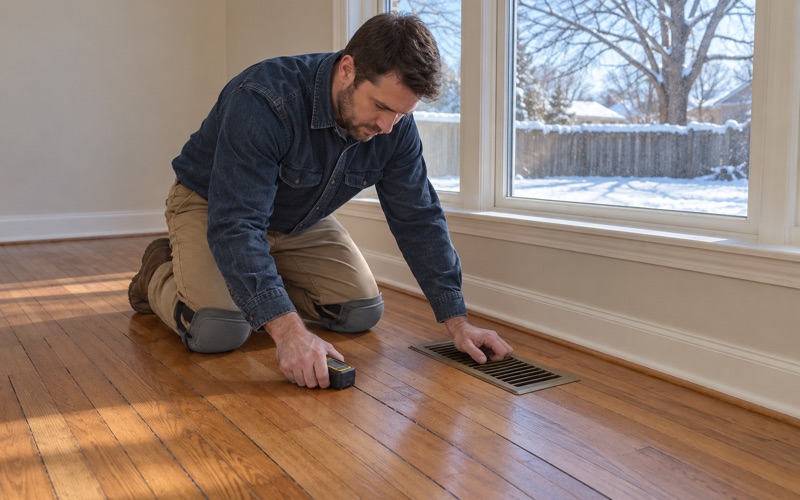
We take moisture meter readings before anyone fills a seam, because filler packed into a winter gap gets crushed or pushed up when the boards swell back. When gapping is severe, the better answer is often a whole-house humidifier and a talk about the equilibrium moisture content the floor should settle at.
Cupping, Crowning and Checking in Solid Hardwood
Cupping, where board edges rise above the centers, points to moisture coming from below or a spill that soaked in. Crowning is often what follows when a cupped floor is sanded flat too soon. Checking, the fine cracks along the grain of a single board, is surface drying and rarely has anything to do with the house.
None of these runs in a straight line across several rooms, and none drags a door frame out of square. When the pattern stays inside the flooring, we treat it as a flooring job: find the moisture source, let the boards settle, then decide between board replacement and a sand and refinish.
Squeaks, Popping Boards and Hollow Spots
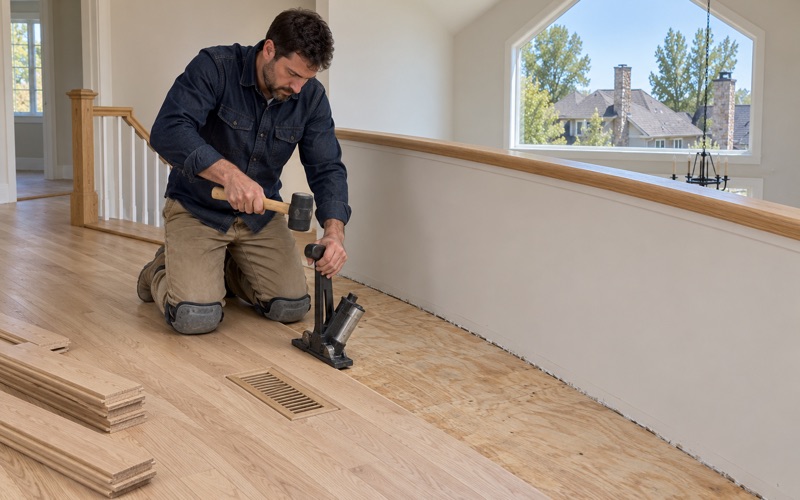
Squeaks and popping boards usually trace to fasteners. Flooring cleats and staples loosen over the years, the tongue and groove rubs, and a joist below may have dried and pulled away from the subfloor. We find the spot, fasten it from above or below, and avoid simply spraying powder into the seams.
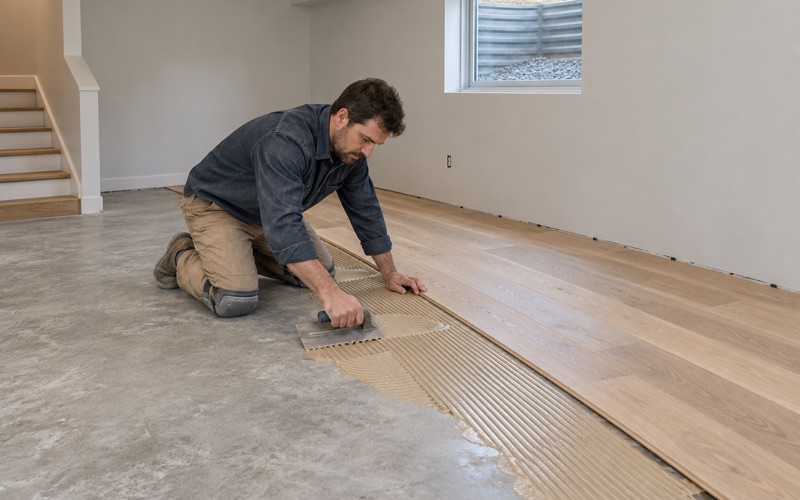
Hollow spots on glue-down engineered flooring mean the adhesive has let go, which a local repair can often fix. What makes us stop is a dip or slope we can measure across a long run with a level, especially near a wall crack. That is the point where a floor quote waits for an engineer.
Mining-Era and 1990s Houses Across Louisville
Louisville’s housing stock tells two stories. Census figures show 306 homes built in 1939 or earlier, a small group from the town’s working years. Far more of the city is recent: 54.3 percent of its housing was built between 1980 and 1999, and those homes shape most of the flooring we do here.
Older Homes From the Coal-Town Years
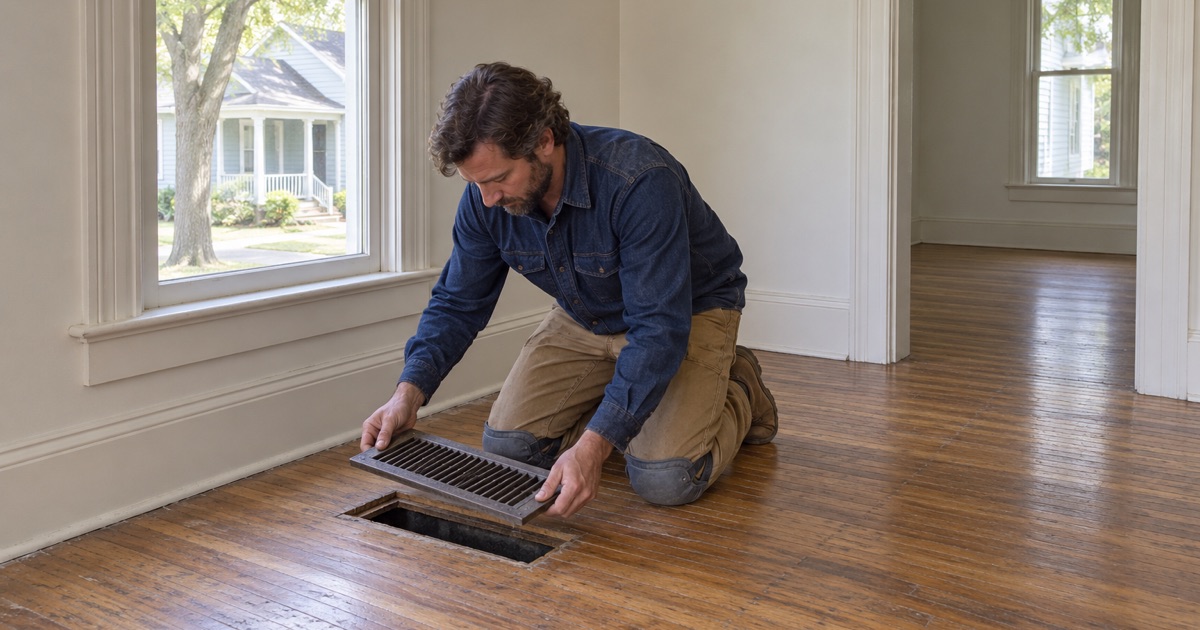
Houses from the early decades of the town have usually been through several owners, several floor coverings and several repairs, so we do not assume what species is under the carpet or linoleum. We pull a corner, identify what is actually there, and check how much wood is left above the tongue before promising a sanding.
A house from that era also means paint and old finishes to think about. For any home built before 1978, we check the build year and any painted surfaces before a drum sander touches the room, because lead-safe work practices change how dust is contained, collected and cleaned.
Site-Finished Oak in 1980s and 1990s Homes
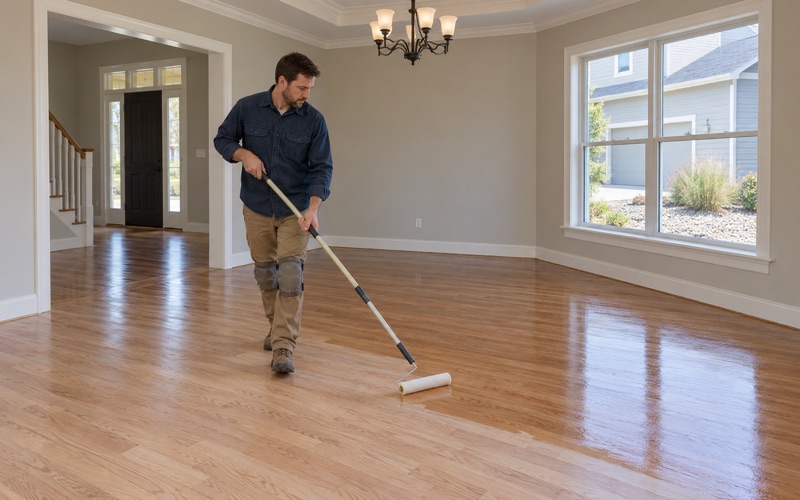
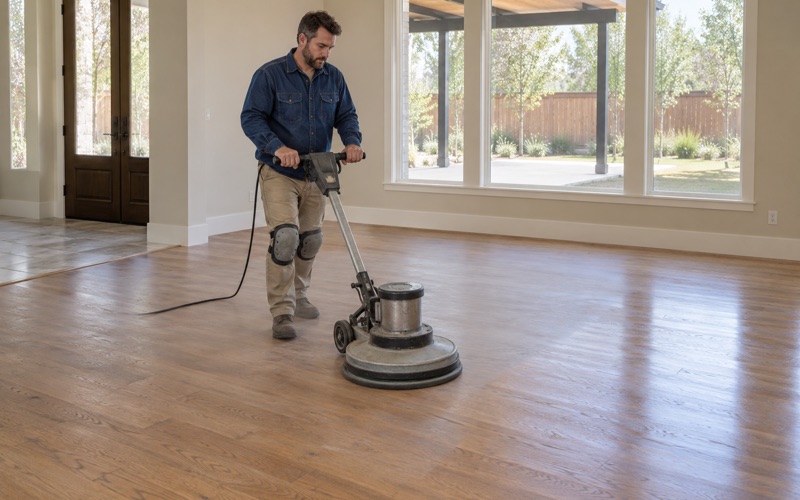
The bigger share of Louisville’s floors sit in homes from the 1980s and 1990s, and many hold site-finished red oak or white oak that has turned orange and worn traffic lanes by the kitchen. These floors rarely need replacement. A full sand with a proper grit sequence usually takes them back to clean wood.
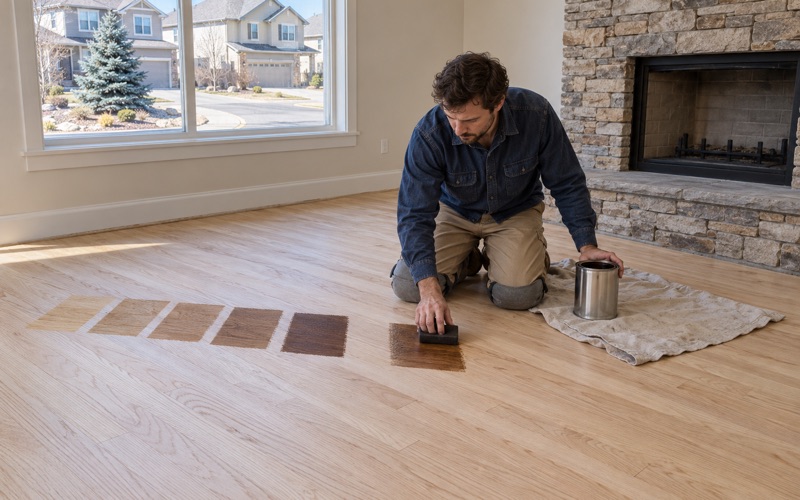
Before a color is chosen, we lay stain samples on your own boards and let you see them in your own light, morning and evening. Water popping opens the grain for darker tones; a clear waterborne polyurethane keeps oak close to natural. We talk sheen level through too, since satin hides wear better than gloss.
Carpet to Hardwood on Stairs and Landings
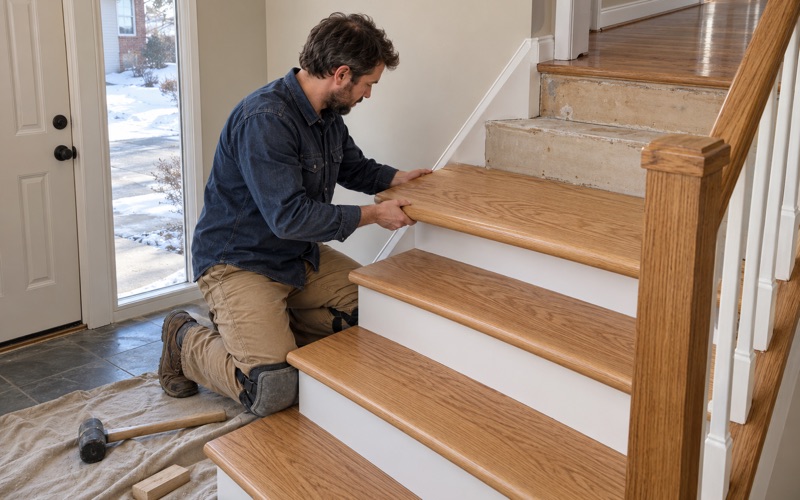
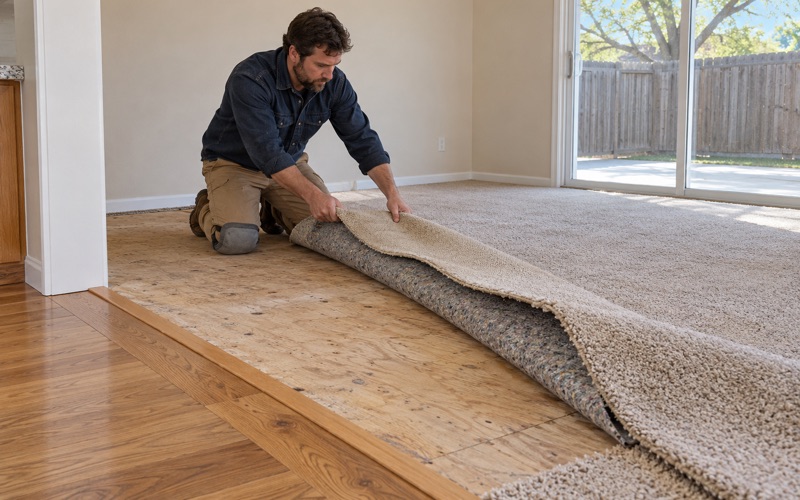
Plenty of these homes still have carpet on the stairs. When we replace it with wood, we quote stair treads, stair risers and stair nosing one step at a time. The tack strip and carpet pad come out first, and we check the landing so a new floor there does not throw off the riser height.
The same thinking applies to a landing or hallway that meets tile or vinyl. A reducer or threshold handles the height change, quarter round covers the expansion gap at the walls, and we match the direction of the boards so the new wood reads as one continuous floor through the house.
Refinishing Once the Structure Is Settled
If an engineer does find movement, the floor work waits until the repair is complete. Sanding a floor that is still shifting spends your money twice, because new cracks in the finish and fresh gaps between boards will follow the house as it moves. Once the structural work is signed off, the floor becomes a straightforward job again.
Board Replacement and Weaving In New Wood
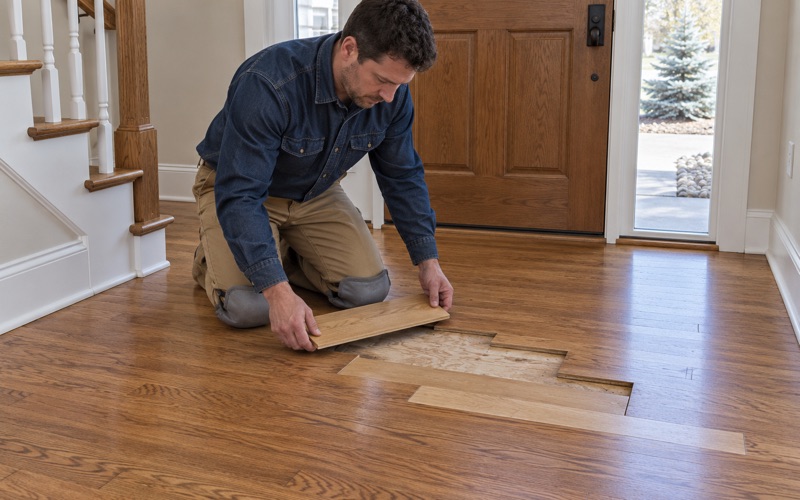
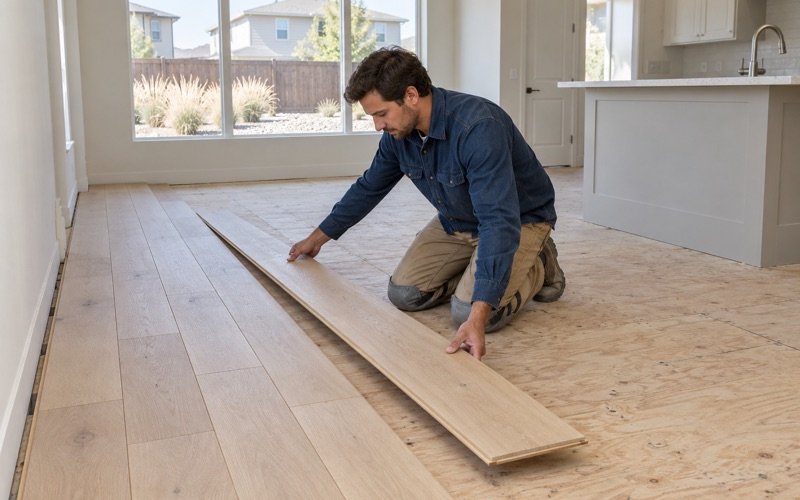
After a repair, some boards are usually cracked, split or pulled apart. We cut them out and weave in matching wood so the joints stagger naturally rather than leaving a visible patch. On solid hardwood we match width and species; on engineered floors we match the engineered wear layer so the repaired area sands evenly.
We also recheck the subfloor while boards are up, looking for fasteners that have pulled loose and seams that need resetting. It is the cheapest moment to fix a squeak, and a firm subfloor gives the new finish a better chance of lasting through the next dry winter.
Sanding and Finish Choices After the Repair
With the floor flat and fastened, we run dustless sanding through a full grit sequence, then choose a finish for how the room is used. Waterborne polyurethane dries clear and fast; oil-modified polyurethane warms the tone; hardwax oil is easier to spot-repair later. A screen and recoat may be enough where the wood was never damaged.
Throughout, we keep a room-by-room record of what we found, what we replaced and the moisture readings we took. If an insurer or engineer asks later what the floor looked like before and after the repair, you will have dated notes and photos rather than a memory to rely on.
Humidity Planning Before the Final Coat
Before the last coat goes down, we talk through indoor humidity for the months ahead. A heated Louisville house in January is far drier than the boards were when they arrived, so a humidifier setting and a realistic expectation about winter gaps protect the work more than any finish choice will.
- 20+ Years on Wood Floors
- Moisture Readings Before Repairs
- Stain Samples on Your Own Floor