Broomfield Wood Flooring brings more than 20 years of experience to wood flooring in Lochbuie, and most of the floors we are called to here share one trait. They are old enough to need real attention and young enough to be worth saving. That shapes nearly every visit we make in town, from the first walk-through to the final coat.
Our work here comes down to three jobs. The first full refinish brings a dull, scratched floor back to bare wood and a fresh finish. Replacement handles boards that have worn through their finish and started to gray or stain. Matching adds a new room, hallway or stair run so it reads as one floor with what is already down.
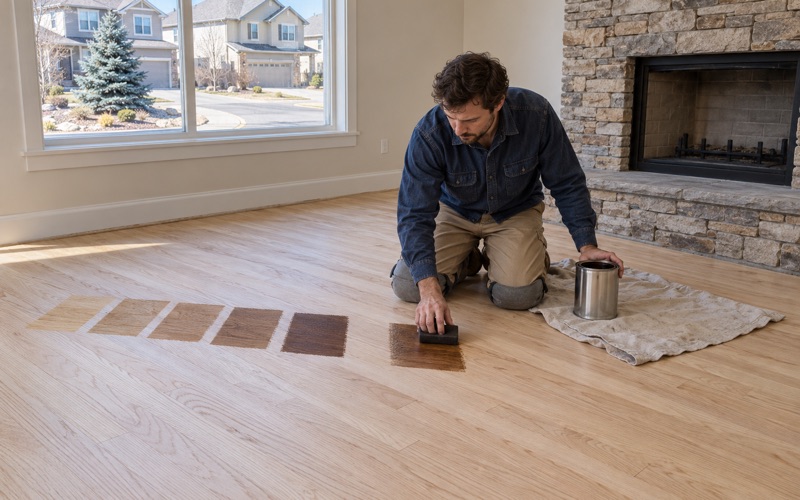
Every job starts with the same questions: how much wood sits above the tongue, what the moisture meter reads, and what finish is on the floor now. We lay stain samples on your own boards, in your own light, before anyone commits to a color, and we trace squeaks and popping boards to a cause rather than hiding them.
Lochbuie’s Houses From the 2000s and 2010s
From Space City to a Statutory Town
Lochbuie did not start as a subdivision of detached houses. In 1961 a 12-acre mobile home subdivision was developed along the Weld-Adams County line, named Spacious Living and nicknamed Space City. Residents voted to incorporate in 1974 to improve their water and sewer systems, and the new town took its name from Lochbuie on the Isle of Mull, Scotland.
Today it is a statutory town in Weld and Adams counties, with 8,088 residents at the 2020 census. The mobile homes are still part of it: 633 units, 20.8 percent of the housing, all owner-occupied. Most of what has been added since, though, is detached houses, and those houses are what this page is mostly about.
Two Decades of Detached Houses
Census figures show how recent the housing stock is. Of Lochbuie’s 3,038 housing units, 2,012 were built from 2000 through 2019, and the 1,129 built from 2000 to 2009 make the 2000s the largest single decade in the count. The 2010s account for the other 883, so the town’s houses can sit a decade or more apart in age. Another 99 units date to 2020 or later.
Just as telling is what the town lacks. Not one housing unit sits in a multi-unit building, so there are no apartment floors stacked over a neighbor’s ceiling to plan around. And 92.9 percent of occupied homes are owner-occupied, which means the person deciding on a refinish is usually the person who will live on it.
What 15 to 25 Years Does to a Wood Floor
A house built during that stretch is now roughly 15 to 25 years old, and so is any wood floor that went down with it. That is about the age when a factory or site-applied finish has often thinned in traffic lanes, the kitchen and entry show gray wear, and sun fade has shifted the color near south and west windows.
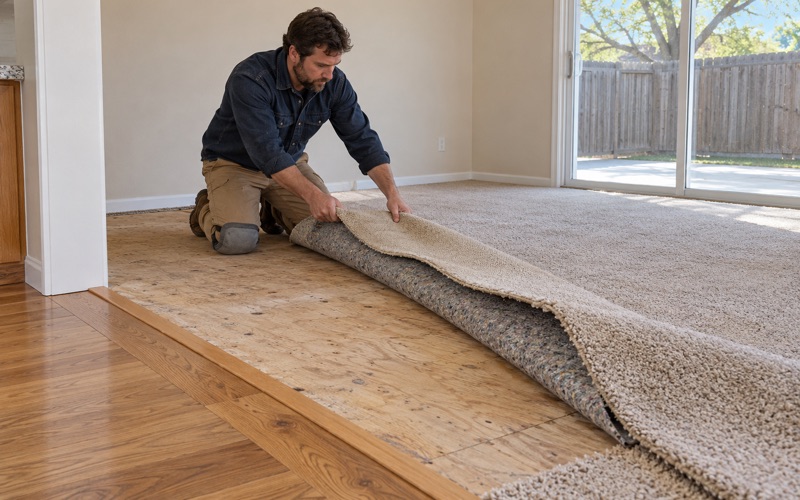
Floors that went in later, during a remodel, may be younger than the house, and some rooms may still have carpet over a tack strip and pad. We walk the whole house before quoting, because a first refinish in one room usually raises the question of what the next room should look like.
Looking for wood-flooring closer to Fort Lupton? See Wood-Flooring Services in Fort Lupton.
The First Full Refinish
Screen and Recoat or Full Sanding
Not every tired floor needs to go back to bare wood. If the finish is dull and lightly scratched but still intact across the boards, a screen and recoat abrades the top coat and adds a fresh one without touching the wood. It is quicker, less dusty and preserves the wood left for later sanding.
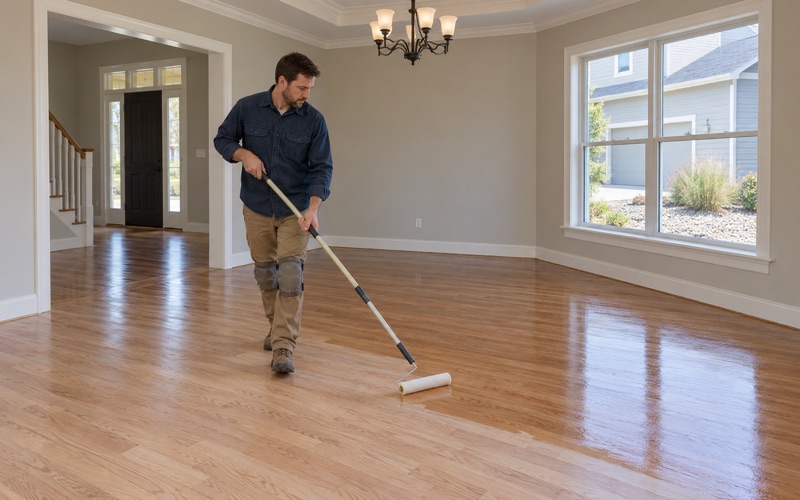
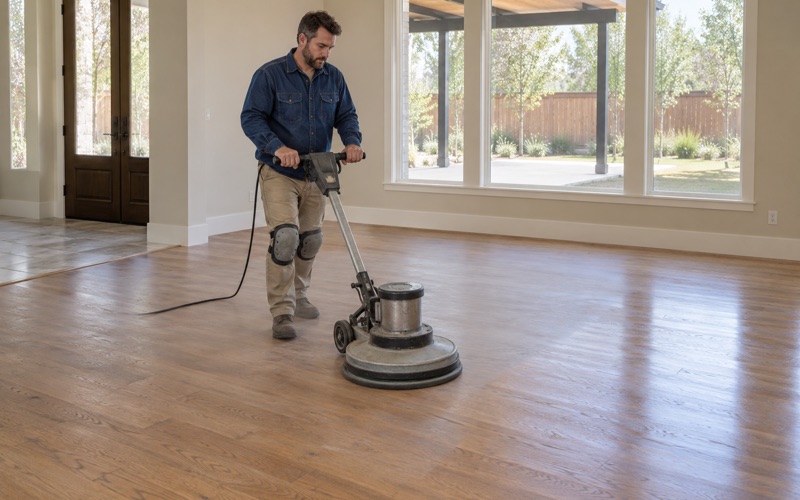
Once the finish has worn through in traffic lanes, water stains have reached the wood, or pet urine stains have darkened the boards, a recoat cannot hide the damage. That is when a full refinish makes sense: a drum sander and orbital sander taken through a grit sequence, then stain if wanted and new finish coats.
Checking the Wear Layer on Site-Finished Oak and Engineered Boards
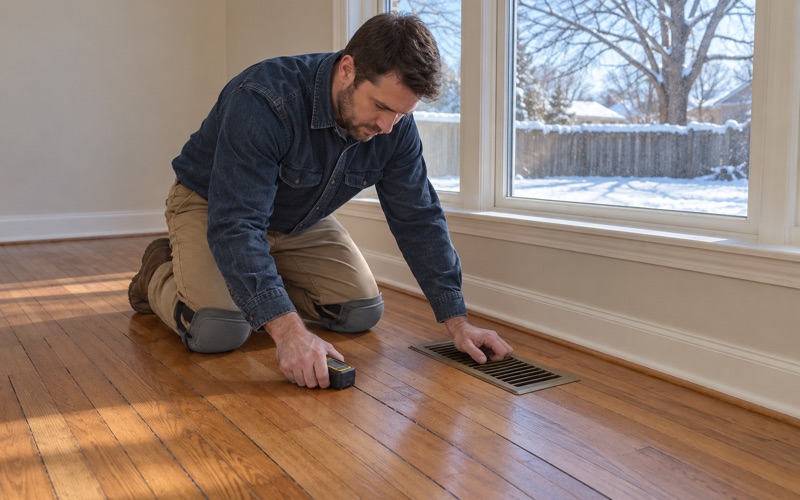
A first refinish is the time to find out how much sanding a floor can take. On solid hardwood we check the wood left above the tongue at a floor register or a pulled threshold. On engineered flooring, the engineered wear layer decides whether a full sanding is possible at all, or whether a recoat is the only safe option.
We do not assume what a Lochbuie house has underfoot, since flooring went in differently from one builder and one owner to the next. If the floor is site-finished oak with plenty of wood above the tongue, sanding and refinishing is usually the better value than tearing it out and starting over.
Choosing a Finish: Waterborne Polyurethane, Oil-Modified or Hardwax Oil
The finish is the decision owners live with longest. Waterborne polyurethane dries clear and stays closer to the natural color of the wood, which matters if you are trying to move away from orange oak. Oil-modified polyurethane ambers over time and gives a warmer look, and hardwax oil soaks into the wood for a lower-sheen, easily spot-repaired surface.
We also talk through sheen level, since matte and satin hide scratches from pets and grit far better than gloss. We tell you up front how many coats the floor will get and how long each room stays off-limits to furniture and pets while the finish cures.
Matching a New Room and Replacing Worn Boards
Red Oak, White Oak and Hickory Species Matching
When a family finishes a bonus room or pulls carpet from a bedroom, the goal is usually a floor that looks like it was always there. That starts with species. Red oak and white oak take stain very differently, hickory and maple read nothing alike, and board width matters as much as color when the new room meets the old one.
We identify what is already down by pulling a vent cover or a threshold and looking at the grain, the width and the milling. Then we lay stain samples on both the new boards and the existing floor, because 15 or 20 years of light and wear have changed the old color in ways a showroom sample cannot predict.
Weaving New Tongue and Groove Into an Existing Floor
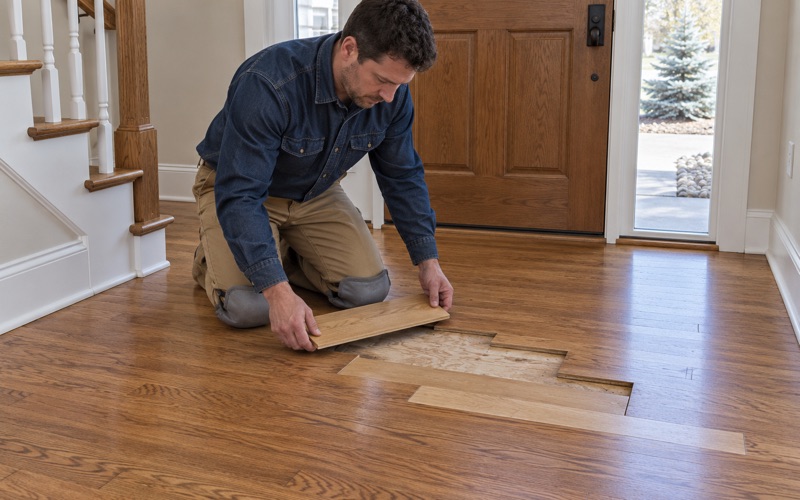
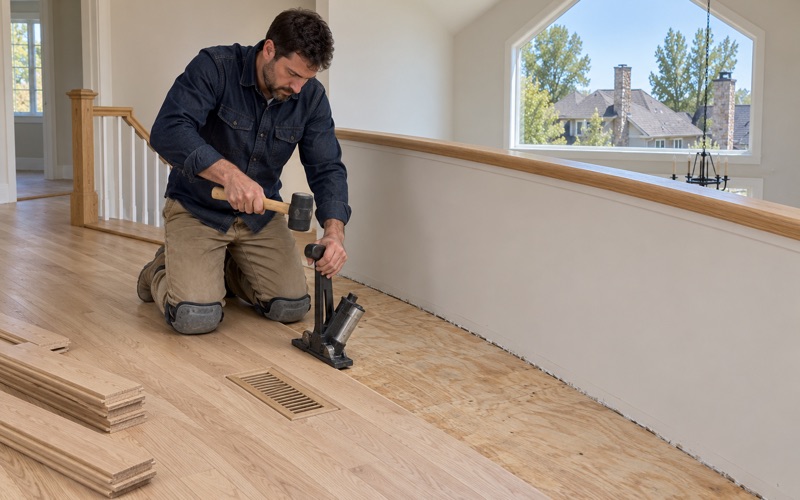
The cleanest match comes from weaving new solid hardwood into the old at the doorway rather than stopping at a straight seam or a reducer. Boards are toothed out in a staggered line, new tongue and groove is laced in, and then both rooms are sanded and finished together so the color and sheen level come out even.
Where the existing floor is prefinished, a lace-in is harder because the factory edges and finish cannot be sanded to match. In that case we look for a matching product, or plan a clean break at a doorway with a proper transition. Either way, you see the plan and the samples before any board is cut.
When Worn Boards Need Replacing
Some floors are past refinishing. Boards that have been sanded thin, cupped from a slow leak, or blackened by moisture deep in the grain are better replaced. Board replacement lets us cut out only the damaged pieces and weave in new ones, so a problem near the kitchen sink does not become a whole-room tear-out.
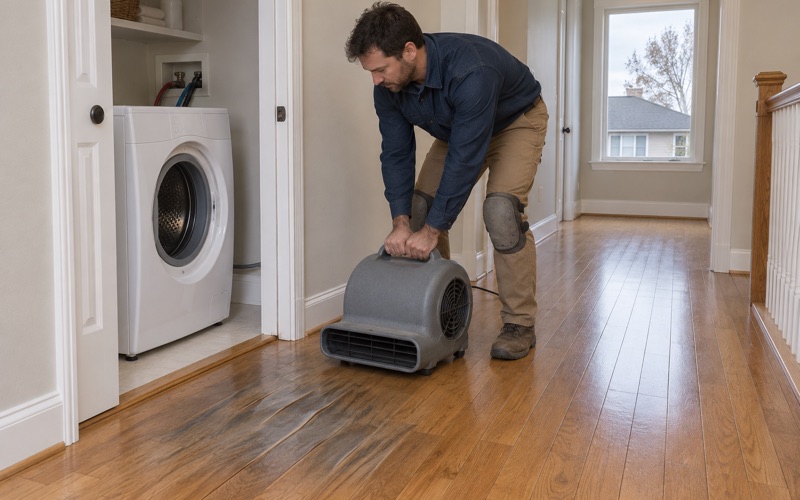
When water is the cause, we trace the source first, whether a supply line, a dishwasher or a washer, and take moisture readings until the subfloor has dried. Replacing boards over wet material only repeats the damage, and room-by-room notes help if an insurance adjuster is involved.
Planning a Wood Floor Project in Lochbuie
Detached Houses and Manufactured Homes
Detached houses account for 2,388 of Lochbuie’s housing units, so they are the setting for most wood floor projects in town. Manufactured homes remain part of the town’s story from its Space City start, and we assess each one as its own case, beginning with what sits under the existing floor before recommending any product.
Some houses in town date to the 1970s and earlier. If your house was built before 1978, we confirm the build year and check painted surfaces such as baseboards and stair trim before any sanding, so the job can be set up correctly from the start.
Dry Winter Air, Acclimation and Seasonal Gaps
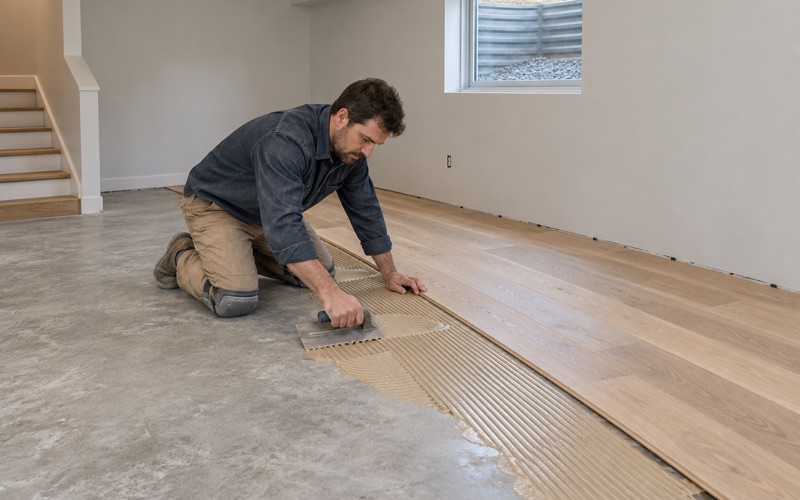
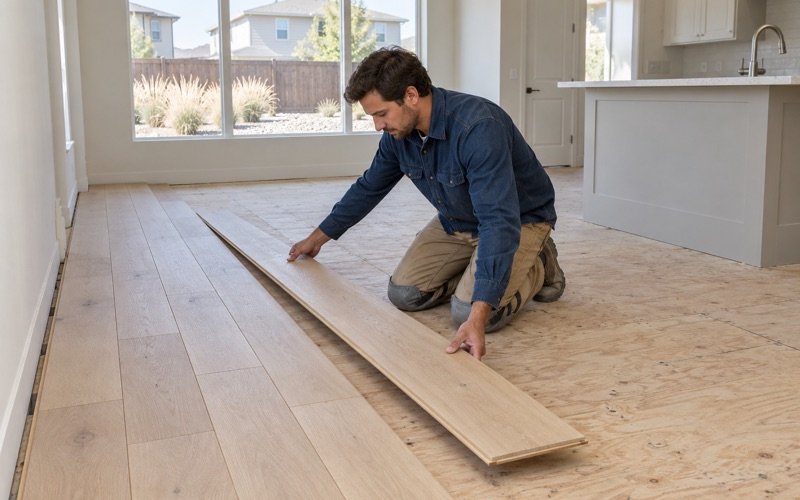
Indoor air in a heated Front Range winter is far drier than new boards are when they arrive, so we talk through relative humidity before a new room goes down. New flooring needs acclimation toward the house’s conditions, and a moisture meter tells us when the boards and subfloor are close enough to install.
Thin seasonal gaps between boards in January are usually the furnace season at work, not a failing floor. We read them against the time of year before filling anything, since a seam filled in winter tends to close by summer and push the filler out. A whole-house humidifier can narrow those gaps when owners want steadier boards.
HOA Documents, Stairs and Scheduling
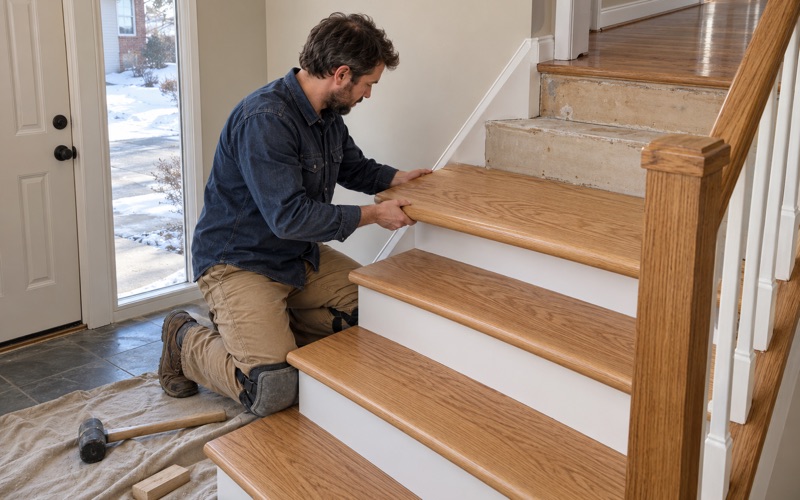
If your neighborhood has an HOA or metro district, any interior flooring rule comes from your own documents, so we read them before work starts. Stairs are quoted tread by tread, and when a new floor meets a landing we check that the added height will not throw off the riser height at the top or bottom step.
A typical visit starts with a walk-through, moisture readings and a look at the existing finish, then a written plan covering sanding, samples, finish and how long rooms stay out of use. From there we schedule the work so a Lochbuie household can keep living in the rest of the house while one area is done.
- 20+ Years on Wood Floors
- Moisture Readings Before Repairs
- Stain Samples on Your Own Floor