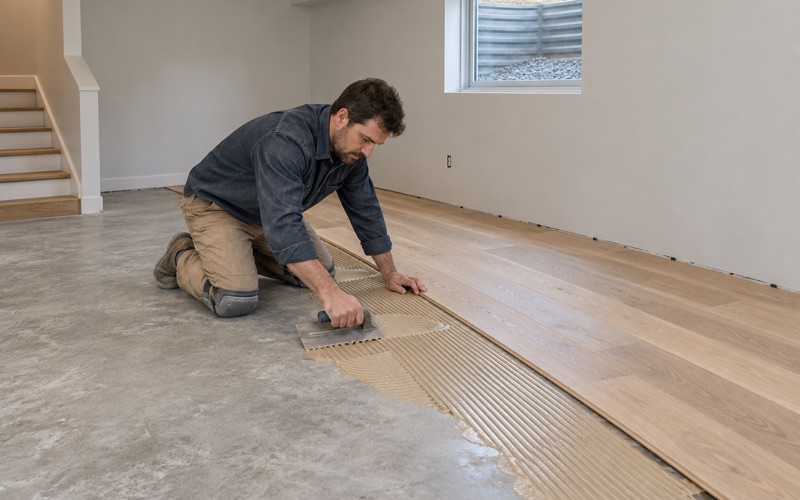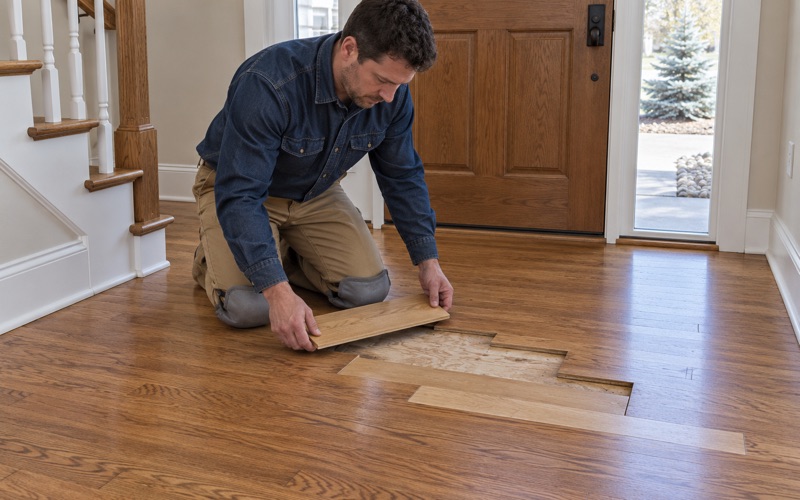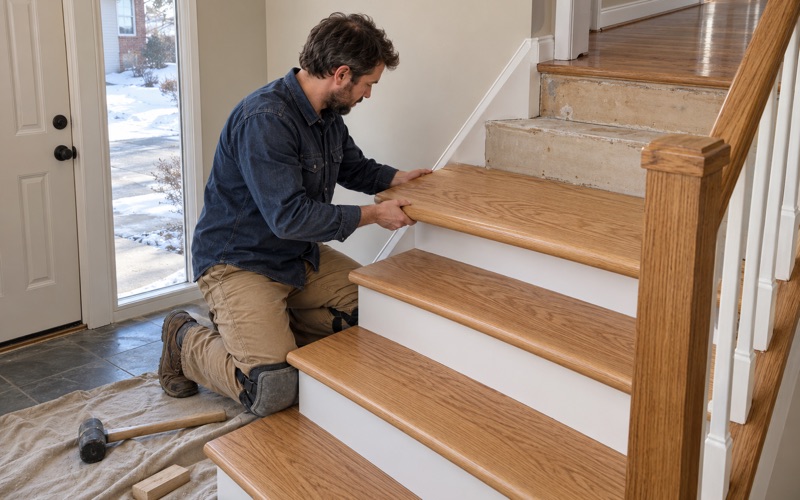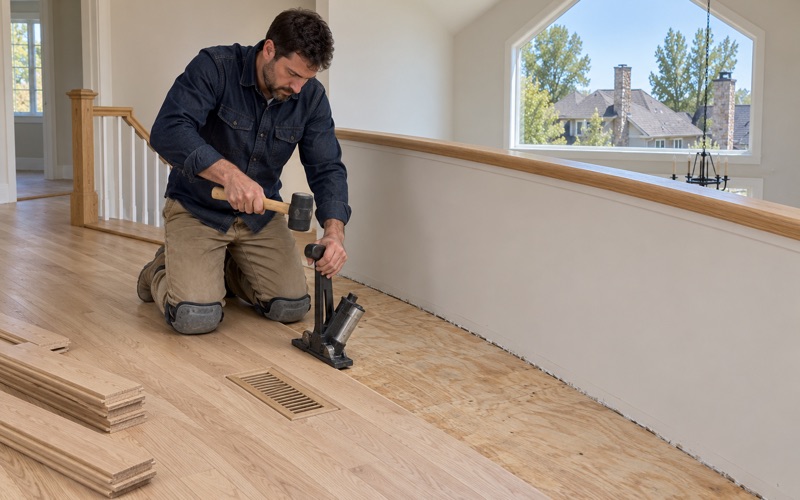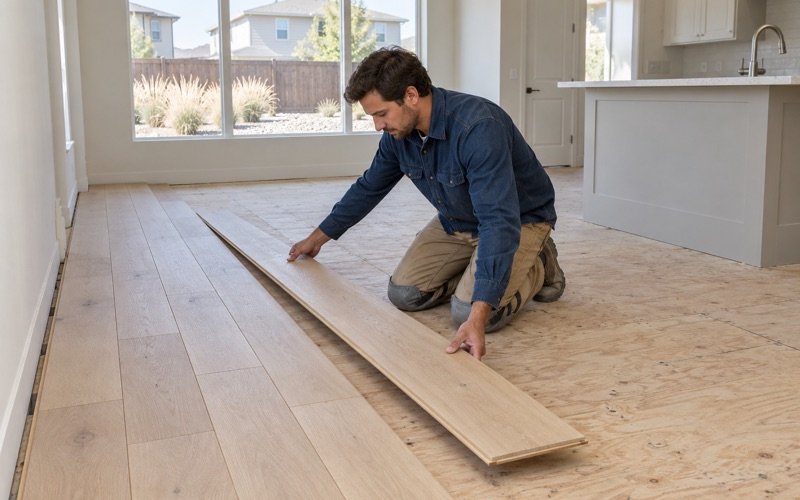
Broomfield Wood Flooring has handled wood flooring in Lafayette for more than 20 years, and most of that work comes down to three questions: what the boards are doing now, why they are doing it, and whether they can be saved. We install solid hardwood and engineered floors, sand and refinish site-finished oak, rebuild stairs tread by tread, and trace water damage to its source first.
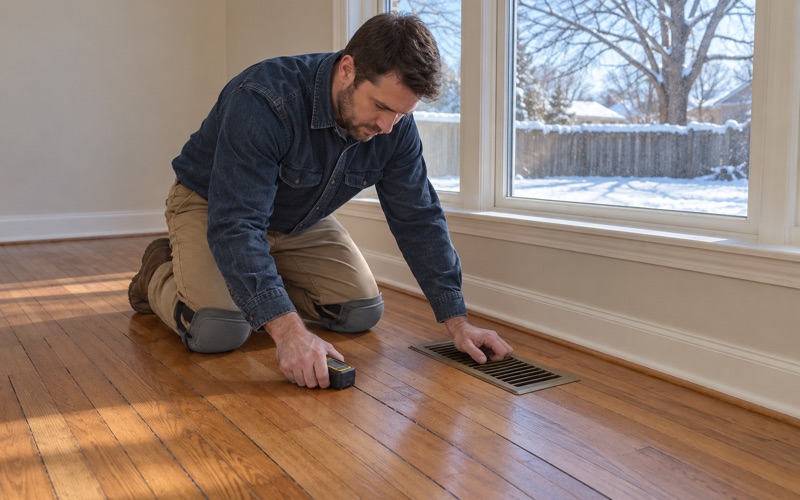
The order matters to us. A floor that cups after a leak, or opens its seams every February, is telling you something about moisture, and we read it with a moisture meter before recommending a fix. Filling a winter gap that will close again by July, or replacing boards that would have flattened on their own, costs money and solves nothing.
This page covers what we weigh on Lafayette jobs in particular: the creek corridors that shape the city’s history with water, how we judge hardwood after a leak or a flood, and what changes when the floor sits in a townhome or attached house rather than a detached one.
Coal Creek, Its Floods and the Floors Near It

A 29-Mile Creek Through Four Towns
Coal Creek is about 29 miles long. It starts on the eastern side of Thorodin Mountain, north of Golden Gate Canyon State Park, and passes through Superior, Louisville, Lafayette and Erie on its way east. The City of Lafayette notes it is one of eighteen streams with that name in Colorado, which is worth knowing when you search for local flood records.
Inside the city, a long stretch of the creek is held as the Coal Creek Corridor Open Space. The city says one benefit of those properties is preventing dangerous occupancy of the floodplain. In plain terms, the open land is part of how Lafayette keeps buildings back from the water, and that choice was made with the creek’s record in mind.
Three Floods on the Record
The city records Coal Creek floods in 1896, 1921 and 2013 that inflicted major damage to structures and facilities along the floodplain. Three events across more than a century is not a reason for alarm, but it is a reason to treat water as a real design condition for any floor in a house near either of Lafayette’s creeks.
We do not tell anyone whether their own property sits in a regulatory floodplain; that answer comes from the official flood maps, not from a flooring contractor. What we can do is match the floor to the risk you already know about, and plan the finish, the underlayment and the edges so a leak or a wet spring does less harm.
Solid Hardwood or Engineered Wood Near the Water
Solid hardwood can be sanded many times, which is its great strength, but it moves more with moisture. An engineered floor, with a real wood wear layer over a cross-ply core, holds its shape better when relative humidity swings. On lower levels and rooms by an exterior door, we often suggest engineered wood with a wear layer thick enough for at least one future refinish.
Finish choice matters too. A site-finished floor coated with waterborne polyurethane seals the seams on top, which slows surface water from a spill or a mopping mistake. Prefinished boards carry micro-bevels at every edge, and water can find those joints faster. Neither choice stops a flood, but day to day the difference shows up as water stains along the edges.
Looking for wood-flooring closer to Northglenn? See Wood-Flooring Services in Northglenn.
Water-Damaged Hardwood: Repair, Replace or Wait
Reading Cupping, Crowning and Buckling
When water gets under wood, the boards tell the story in their shape. Cupping, where the edges rise above the center, means the bottom of the board holds more moisture than the top. Crowning, the reverse, often follows a floor that was sanded flat while still cupped. Buckling, where boards lift off the subfloor, means the swelling pushed past what the expansion gap could absorb.
Each of those calls for a different answer. Mild cupping frequently settles as the floor dries, and sanding it too early locks in a crown. Buckled boards usually need to come up, but often only in the affected room. We map the damage with moisture readings across the whole floor, so the repair follows the water rather than a guess.
Drying and Measuring Before Board Replacement
Our first job after a leak, whether from a washer, a supply line, a burst pipe or the roof, is to find where the water came from and stop it. Then we dry and measure. We take readings in the boards and in the subfloor and compare them to the equilibrium moisture content the wood should settle at in your house.
Only when those numbers come back do we decide between drying in place, board replacement or tearing out a section. We document the readings room by room so your adjuster sees the same evidence we do. That record also helps if a claim asks why a floor was kept rather than replaced, or the other way around.
Refinishing a Floor That Dried Flat
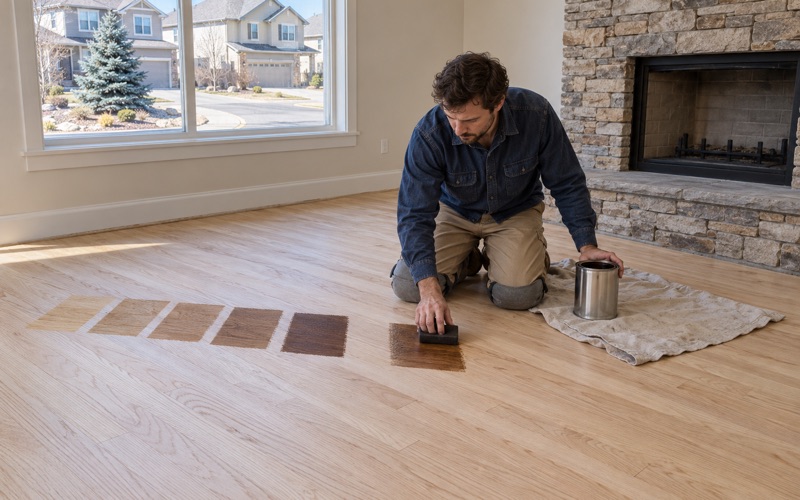
A floor that dries flat can often be saved with a full sand and refinish. Water stains that soaked into the wood, especially the dark gray or black marks where water sat against oak, may need individual boards replaced and woven into the surrounding tongue and groove. We lay stain samples on the repaired area so new and old boards match in your own light.
Engineered floors are less forgiving here. A thin wear layer cannot be sanded deep enough to remove a stain, and veneer cracking or delamination usually means replacement. Before quoting any refinish we check how much wood is left above the tongue, because a floor that has already been sanded several times may not survive another pass.
Rock Creek and What the 2013 Changes Left Behind
An Underpass That Flooded Every Year
Coal Creek is not the only water in Lafayette. The city’s project records describe a Rock Creek trail underpass at Horizon Ave. and Majestic Dr. that flooded annually because of floodplain alterations caused by the 2013 flood. The fix was to close the underpass permanently and realign the trail to an at-grade crossing.
The Mile High Flood District partnered with the city on that Rock Creek work and on Coal Creek bank repair and trail realignment. For a homeowner, the lesson is narrow but useful: a flood can change where water goes afterward, and a spot that stayed dry for years may not stay dry once a creek has shifted.
Watching Hardwood in Rooms That Take Water
We pay attention to which rooms show seasonal water: an entry that gets wet every spring, a patio door that lets in wind-driven rain, a lower room where the air stays damp. Hardwood in those spots shows it first as water stains along the edges, dark lines at the seams, or boards that feel soft underfoot.
Hollow spots, squeaks and popping boards can also trace back to moisture that loosened fasteners over time. Instead of filling or hiding them, we find the cause, which might be a failed vapor retarder, a gap in the exterior flashing or a slow plumbing drip, and deal with it before any board is refastened with new flooring cleats.
Humidity Swings in a Front Range House
Water is only half the moisture story. A heated house in a Front Range winter is far drier than the boards were when they arrived, and solid hardwood shrinks to match. Seasonal gaps in January are normal; we read them against the furnace season and take moisture readings before anyone fills a seam that will close again by summer.
Before a new floor goes down, we talk through your indoor relative humidity and whether a whole-house humidifier makes sense. Acclimation matters too, so the wood adjusts to your house before installation. Getting that right reduces shrinkage and checking in winter and cupping when summer humidity returns.
Floors for Lafayette Townhomes and Attached Houses
A Large Share of Attached Homes
Lafayette has a sizable stock of attached housing. Census figures show 17.4 percent of the city’s housing units are one-unit attached, which covers townhomes and similar homes that share a wall with a neighbor. Those homes bring their own flooring questions, most of them about stairs, landings and how a new floor meets a shared wall.
Much of the city’s housing is fairly recent. About 27.5 percent of Lafayette’s units were built in the 1990s and 32.6 percent in 2000 or later, so we see a lot of site-finished oak and builder-grade floors from those decades. Carpet on stairs and upper levels is common, and many owners want to swap it for wood.
Stair Treads, Risers and Landings
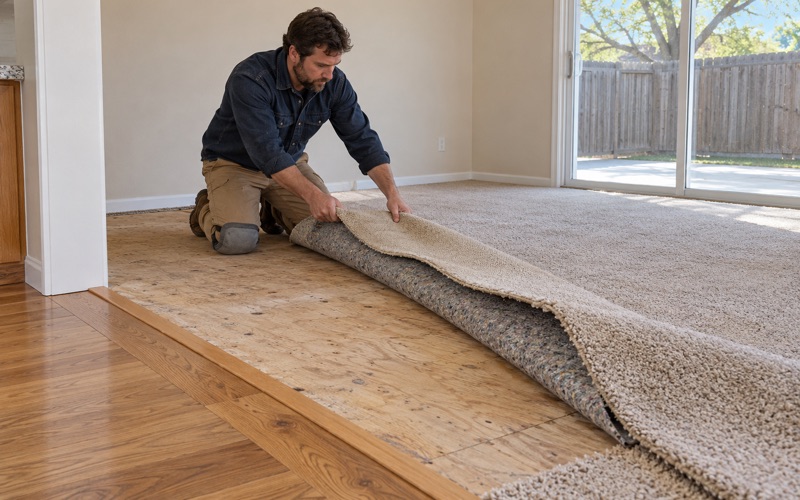
Multi-level townhomes put stairs at the center of most projects. We quote stairs tread by tread, replacing carpet, pad and tack strip with solid stair treads, new stair nosing and painted or stained stair risers. Each step is measured separately, because stairs are rarely as uniform as they look.
Landings need extra care. Adding a new floor on a landing raises its surface, and that can throw off the riser height at the top or bottom step. We check the math before we order material and adjust the build-up so every riser stays consistent and the stairs still feel right to climb.
Refinishing Red Oak and White Oak From the 1990s and 2000s
Site-finished red oak and white oak in homes from these decades can usually be sanded and refinished rather than torn out. Many of those floors have turned orange over the years under oil-modified polyurethane, and a fresh sand removes that color along with traffic lanes, pet urine stains near the surface and sun fade.
For owners who want a lighter look, waterborne polyurethane or a hardwax oil keeps the natural tone of the oak. We use dustless sanding with a drum sander and orbital sander through a set grit sequence, which matters in attached homes where dust drifting toward a shared wall or stairwell is a real concern for the neighbors as well as you.
- 20+ Years on Wood Floors
- Moisture Readings Before Repairs
- Stain Samples on Your Own Floor