Broomfield Wood Flooring has spent more than 20 years on wood-flooring in Gunbarrel and the rest of the Boulder County side of our service area, and most of what we do here is refinishing and replacing floors in houses, townhomes and condominiums from the 1960s through the 1980s. That era shapes everything from how much wood is left above the tongue to which finish belongs on it.
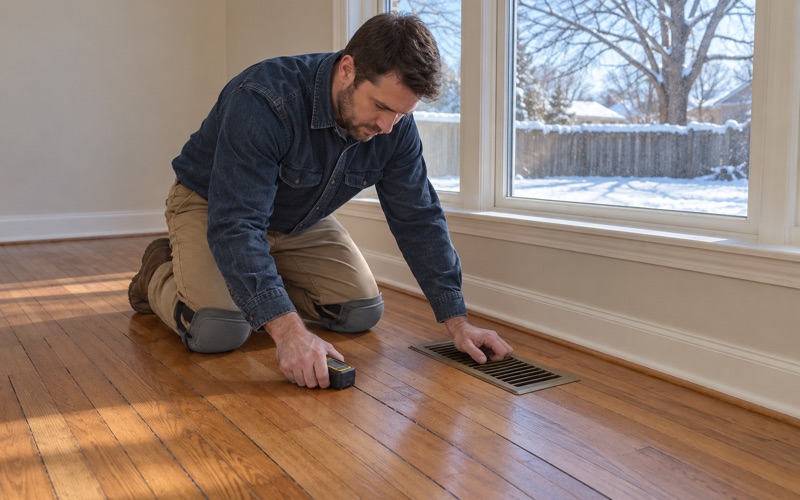
We start every job the same way: a moisture meter on the boards, a look at the wear pattern and a conversation about how the house is heated. Gaps that open during the furnace season often close again by summer, so we read them against the time of year before anyone reaches for filler. Squeaks and popping boards get traced to a cause rather than hidden.
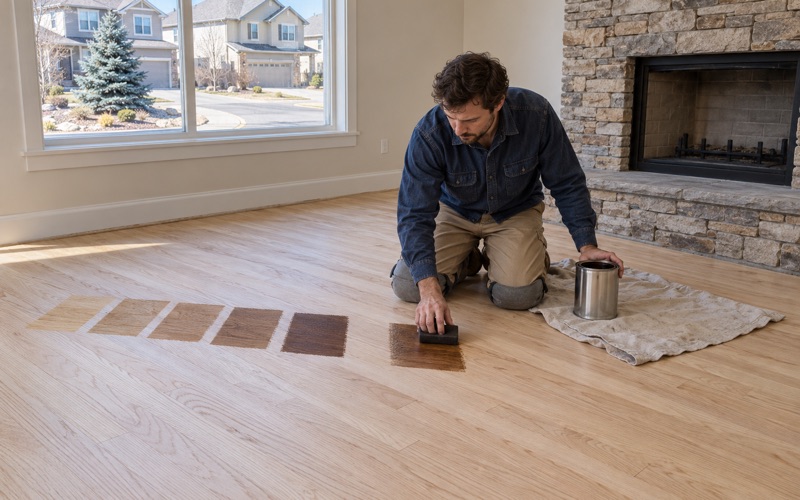
Color gets the same care. We lay stain samples on your own floor and let you judge them in your own light, morning and evening, because a swatch under store lighting tells you little about how red oak or white oak will look in your living room.
Wood Floors Around Gunbarrel’s Twin Lakes
A Neighborhood Built Around Two Reservoirs
Gunbarrel’s housing has a clear center. The two Twin Lakes are reservoirs that store water for agriculture, and the Boulder and Left Hand Ditch Company has operated them since 1910. The Gunbarrel residential area grew up around those lakes during the 1960s, which is why so many of the homes we work in date from the decades that followed.
The water and the land around it are held separately. The ditch company still owns the rights to the water, while Boulder County owns the land surrounding the lakes and manages it as Twin Lakes Open Space. Its protected wetland habitats draw large numbers of migrating bird species.
Solid Hardwood Near Open Water and Wetlands
People sometimes assume a house near open water needs a different kind of floor. We do not start from that assumption. What we measure is the house itself: the equilibrium moisture content of the boards, the relative humidity in each room, and how both shift once the furnace starts running for the winter.
A heated Front Range winter pulls indoor air far drier than the boards were when they arrived, which is where shrinkage and seasonal gaps usually begin. Before new solid hardwood goes down, we talk through acclimation, the expansion gap at the walls and whether a whole-house humidifier makes sense for the way you live.
Unincorporated Gunbarrel and Boulder County
Gunbarrel is an unincorporated community and census-designated place, located in and governed by Boulder County rather than by a city. Parts of the wider Gunbarrel area do fall inside the City of Boulder, and the City of Boulder’s Eaton Park adjoins the west lake, so the address alone does not always settle which authority covers a property.
We ask about that at the first visit, along with the build year of the house. Getting the jurisdiction right early keeps the schedule honest, and it means questions that belong to Boulder County go to Boulder County rather than being answered from memory by a flooring crew.
Looking for wood-flooring closer to Frederick? See Frederick Wood-Flooring.
Refinishing Floors in 1970s Gunbarrel Houses
Gunbarrel’s Biggest Building Decade
The 1970s are Gunbarrel’s largest build decade, with 1,808 housing units dating from those ten years, and 54.8 percent of the area’s housing predates 1980. When we walk into a Gunbarrel house, we expect a floor with decades of foot traffic behind it and ask what has been done to it since it went down.
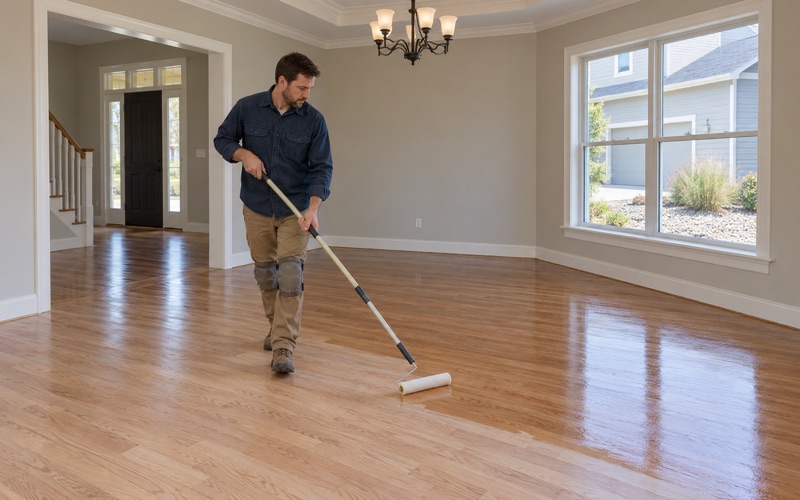
Where there is solid wood, the question is how much remains above the tongue. We check that at a floor register or an edge before quoting a full sanding, because a board that has been sanded aggressively before may only have room for a screen and recoat. Traffic lanes, sun fade and water stains all read differently once we know the margin.
Lead Checks Before Sanding Older Homes
Given the age of the housing stock here, the build year matters before a sander ever runs. For any home built before 1978, we check the build year and look at painted surfaces near the floor, such as baseboards, stair risers and door casings, before sanding begins, and we follow the EPA RRP Rule where it applies.
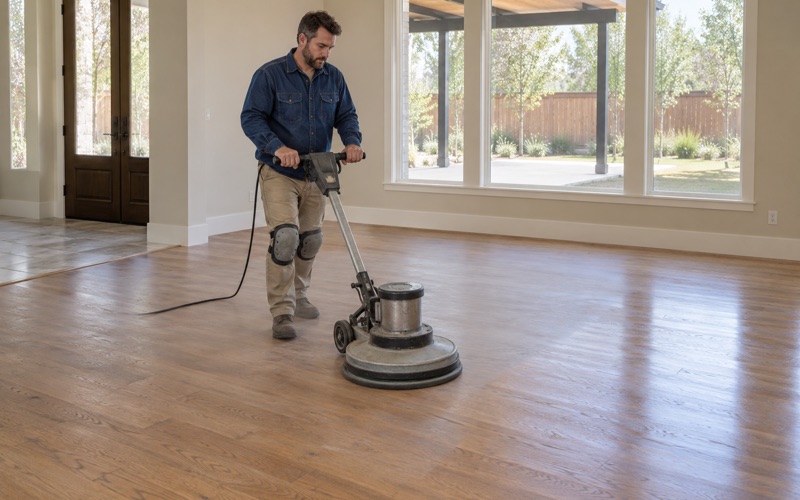
Dust control is part of the same conversation. Dustless sanding with a drum sander and an orbital sander, run through a proper grit sequence, keeps most of the fine material out of the air and off the furniture in the next room. It also gives a flatter surface for water popping when a darker stain is going on.
Oak, Stain and Finish Choices
Red oak with an amber cast is a common reason people call us, and the orange oak look can be sanded away and replaced with a cooler tone. We show that change on a few boards of the floor itself, because red oak takes color differently than white oak or maple, and a sample on a scrap board rarely matches.
Finish is the second choice. Waterborne polyurethane stays clearer and dries faster, oil-modified polyurethane deepens the tone, and hardwax oil gives a lower-sheen look that is easy to spot-repair. We match the sheen level to how the room is used, since a satin floor hides everyday wear better than a high gloss in a busy hallway.
Floors for Gunbarrel Condominiums and Townhomes
A Mixed Housing Stock
Gunbarrel is not only detached houses. Detached homes make up 48.5 percent of its housing units, and the rest include attached townhomes and multifamily buildings, with 698 units in buildings of twenty to forty-nine units. Renters occupy 36.9 percent of occupied units, so we work for owners and landlords alike.
A unit in a stacked building brings different limits than a house. Floor height at the entry door, the transition to a shared hallway and any rules your building sets for interior work all shape the choice. We read those rules with you before work starts rather than assuming what they allow.
Engineered Wood and Floating Floors in Condos
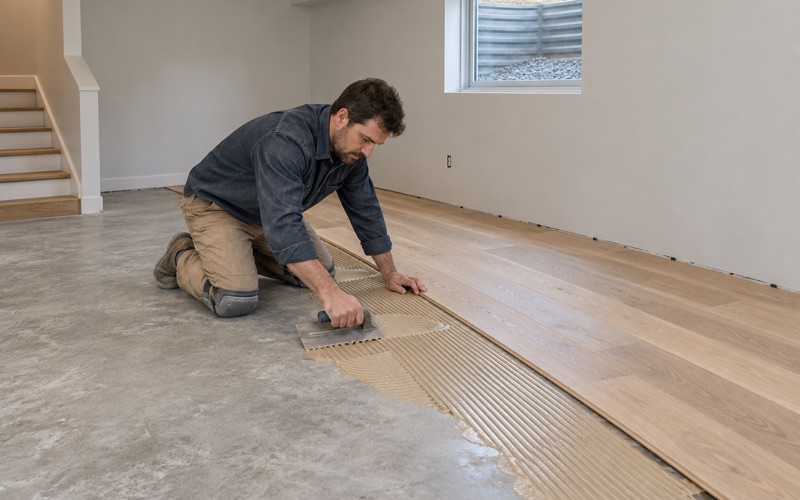
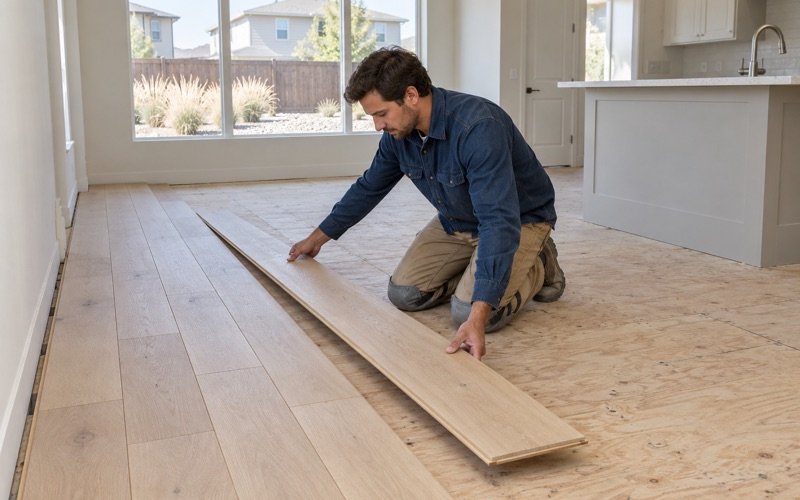
In many condominiums, glue-down engineered flooring or a floating floor is the practical answer. An engineered wear layer of real wood over a stable core handles the dry winter air with less movement than solid boards, and it can go down with a lower build height that keeps door clearances and reducers manageable.
The thickness of that wear layer decides the product’s future. A thin veneer may never be sanded, while a thicker one can be refinished later. We explain the difference in plain terms so an owner planning to stay and a landlord planning for turnover can each choose the product that fits the years ahead.
Rental Wear and Pet Stains
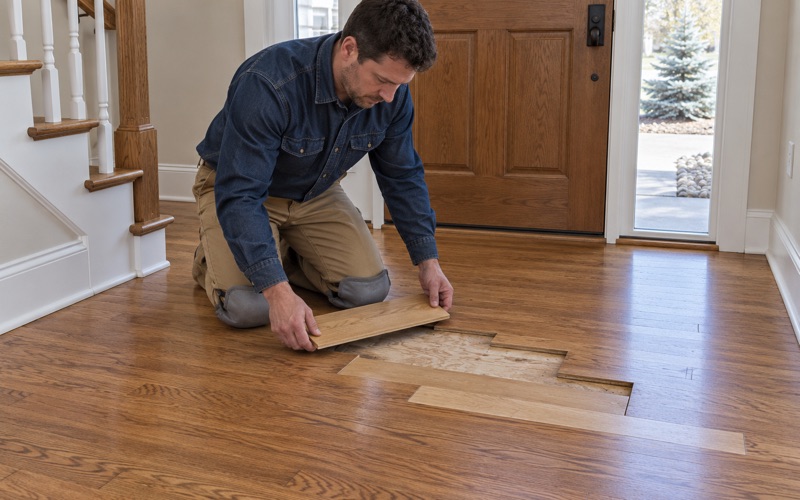
Floors in rented units tend to show their history plainly: pet urine stains near doors, gray water stains by a kitchen sink and deep traffic lanes down a hallway. Some of that sands out. Where a stain has gone black and deep into the fiber, board replacement with matched stock is usually cleaner than chasing it with bleach.
Between tenants, a screen and recoat can refresh a sound finish in a day or two without a full sanding. We tell you honestly when a floor has reached the point where recoating only seals in the damage, so the money goes where it lasts.
Replacing Tired Floors in Gunbarrel Homes
Not every floor here should be refinished. Carpet over an aging pad, a worn floating floor or boards past their last sanding can each point toward replacement, and the 1980s homes built after Gunbarrel’s biggest decade reach that point too.
Carpet to Hardwood
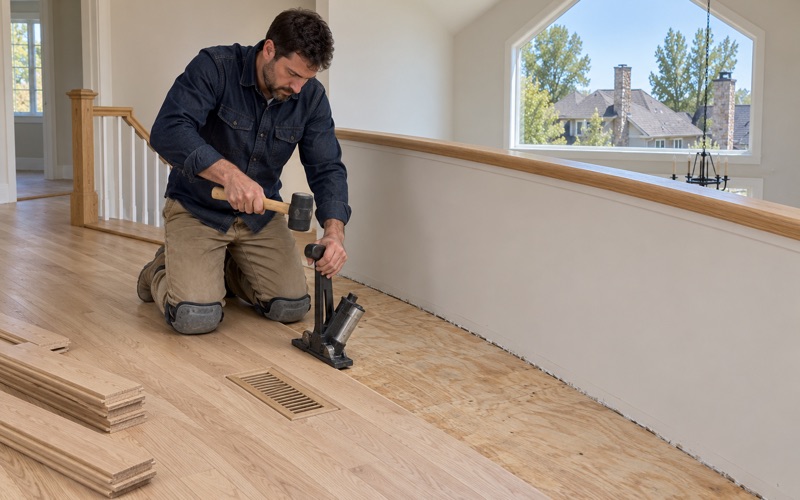
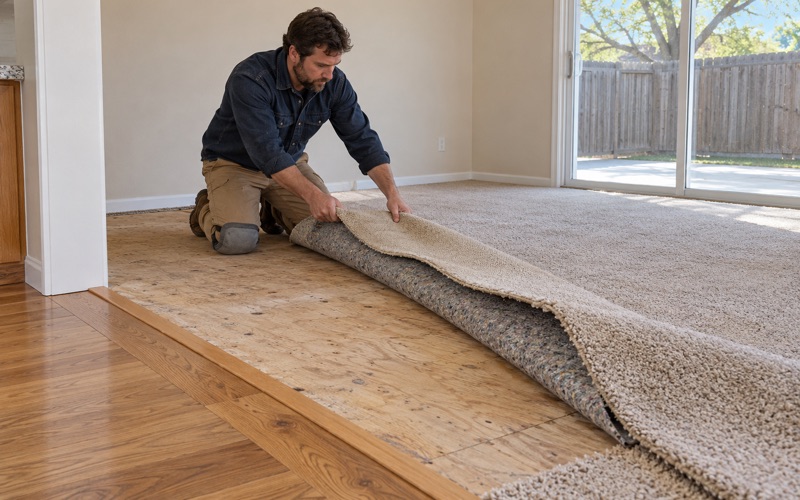
Pulling carpet shows what is underneath: the carpet pad, the tack strip around the edges and the subfloor itself. We check the subfloor for flatness and loose spots, refasten it where it has worked loose and deal with squeaks at the source before a single board is nailed.
From there, solid hardwood in tongue and groove goes down with flooring cleats or staples, or an engineered product is glued or floated where height or the room calls for it. White oak, hickory and wide plank boards are all common choices, and Janka hardness helps decide which one suits a household with dogs.
Stairs, Landings and Transitions
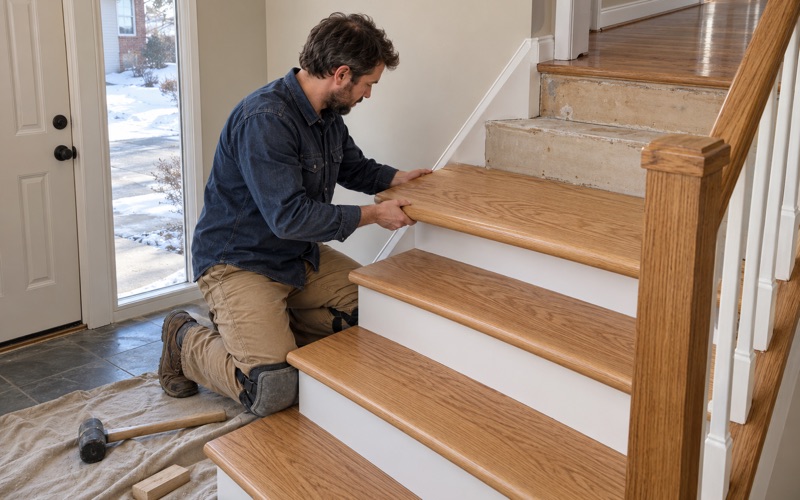
Stairs in a townhome or two-story house often carry the same carpet as the rooms around them. We quote stair work tread by tread, replacing carpet with hardwood stair treads, new stair risers and matching stair nosing so the finished run looks like part of the floor rather than an afterthought.
Landings need a closer look. Adding a new floor on a landing raises it, and if the first or last riser ends up a different height from the rest, the stairs feel wrong underfoot. We measure riser height before ordering material and plan reducers and quarter round so every transition finishes cleanly.
Water, Cracks and Board Replacement
When water from a burst pipe, a washer or a supply line reaches a wood floor, we trace the source, dry the area and take moisture readings until the boards are back to normal before any board replacement. Cupping often settles once the wood dries, and sanding or replacing boards too early locks the problem in.
We document the work room by room so an insurance adjuster sees what was wet, what dried and what had to go. Cracks, hollow spots and popping boards get the same treatment: we find why they happened before we fix them, instead of filling a gap that will just return.
- 20+ Years on Wood Floors
- Moisture Readings Before Repairs
- Stain Samples on Your Own Floor