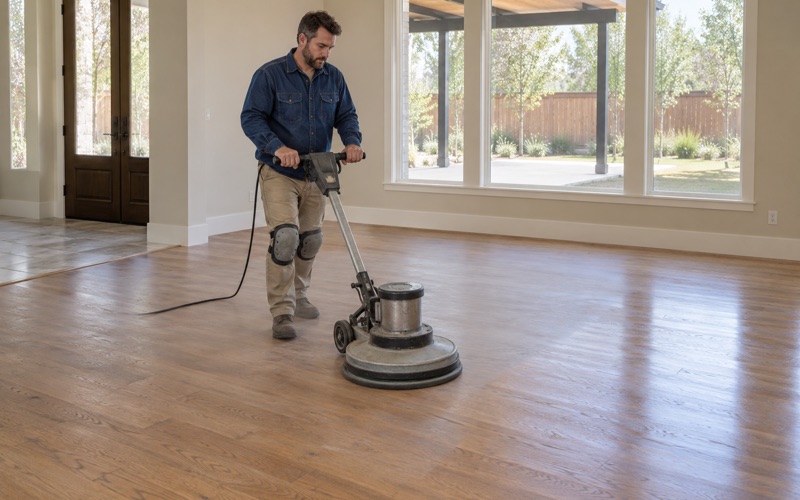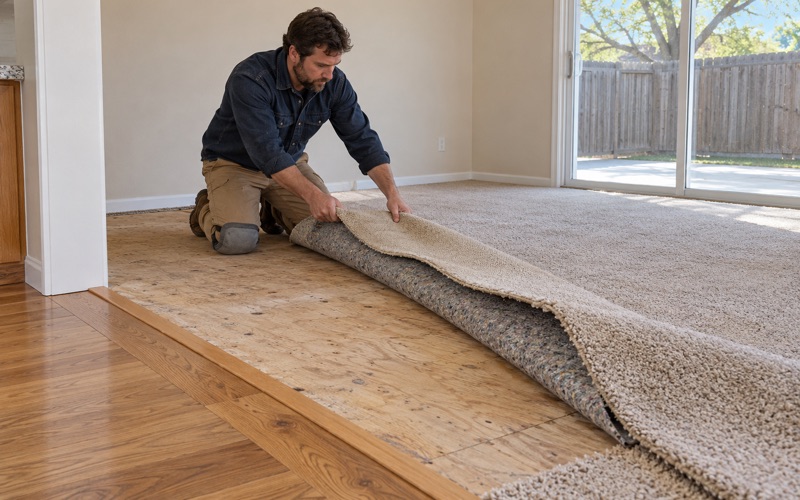
Broomfield Wood Flooring handles wood-flooring in Golden with more than 20 years behind the sanders, working on homes that range from the oldest brick houses in town to ones finished last year. We start every job by reading the room we are standing in: the boards, the finish, how the floor moves underfoot, and what earlier owners have already done to it.
Some floors need a full sand and a new finish. Others need a screen and recoat, a handful of board replacements, or a squeak traced back to a loose joist rather than a dab of filler. We tell you which one your floor needs before we quote, and we explain why the cheaper option will or will not hold.
Golden’s housing stock spans well over a century, so no single method fits every house. Before sanding anything built before 1978 we check the build year and any painted surfaces, and before recommending a new floor we talk through how dry a heated Front Range winter keeps the air inside compared with the boards on delivery.
Golden’s Three Historic Districts and the Preservation Board
Where the Districts Sit
Golden was founded in 1859 during the Pike’s Peak gold rush and served as the capital of Colorado Territory from 1862 to 1867, before the seat of government moved east to Denver. Today the city protects three locally designated historic districts: 12th Street, 8th and 9th Street, and East Street, plus individually designated sites.
The preservation program itself began in 1983, when the 12th Street Historic District was listed as a National Register Historic District. For a flooring customer, the practical point is simple: if your house sits inside one of these boundaries, the building has a formal review process attached to its exterior.
What a Certificate of Appropriateness Covers
The City of Golden states that most exterior alterations to a building within the established historic districts, or to a locally designated site, must have a Certificate of Appropriateness review by the Historic Preservation Board. Those reviews run under Chapter 18.58 of the Municipal Code. A compatibility review carries no fee, while a demolition review costs $500.
The city’s language is about exterior alterations, and we keep our own description to that. What happens to the floors inside is a separate question, so we do not tell you the board has a say in it, and we do not tell you it has none. If a flooring job would change anything on the outside of the building, we point you to the city before work starts.
Rehabilitation Credits and Refinishing Records
Federal and state tax laws offer incentives for historic preservation projects that follow the Secretary of the Interior’s Standards for Rehabilitation, and those projects are processed through History Colorado. If you are pursuing that route, we can give you a plain written account of what we did to the floors and why. Whether a floor project counts toward a credit is History Colorado’s call, not ours.
That record covers the sanding approach, how much wood remained above the tongue before we started, which boards we replaced and why, and the finish we applied, whether waterborne polyurethane, oil-modified polyurethane or a hardwax oil. Keeping the notes also helps the next crew, decades from now, understand how many sandings the floor still has left.
Looking for wood-flooring closer to Park Hill? See Wood-Flooring Services in Park Hill.
12th Street’s Brick and Frame Houses
Refinishing Floors in Pioneer-Era Homes
Visit Golden describes the Twelfth Street Historic District as holding intact homes representative of the type built by Colorado’s pioneer entrepreneurs, and as having the city’s best-preserved historic homes. The residences there are described as primarily brick or wood frame construction dating from the 1870s to 1920, mostly vernacular, with several two-story Italianate examples.
Across Golden as a whole, 583 of the city’s 8,175 housing units were built in 1939 or earlier. That is a small share of the total, 7.1 percent. We do not assume anything about what species or layout lies under a rug or old finish in one of these houses; we look, test and measure first.
Sanding Worn Solid Hardwood
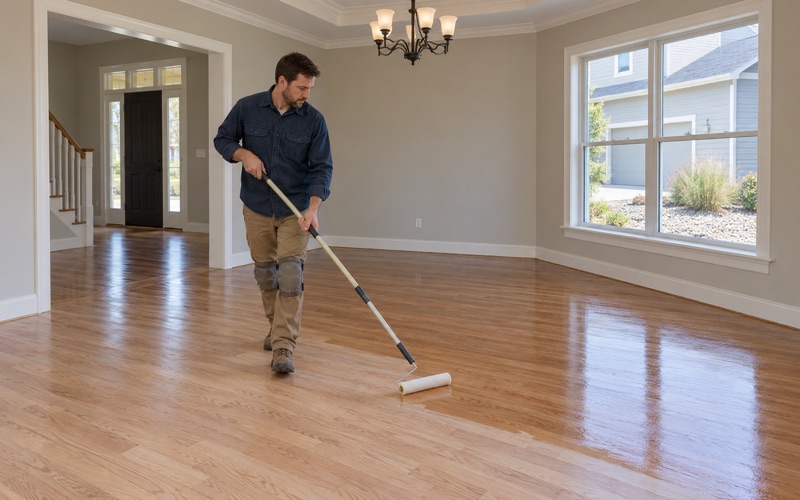
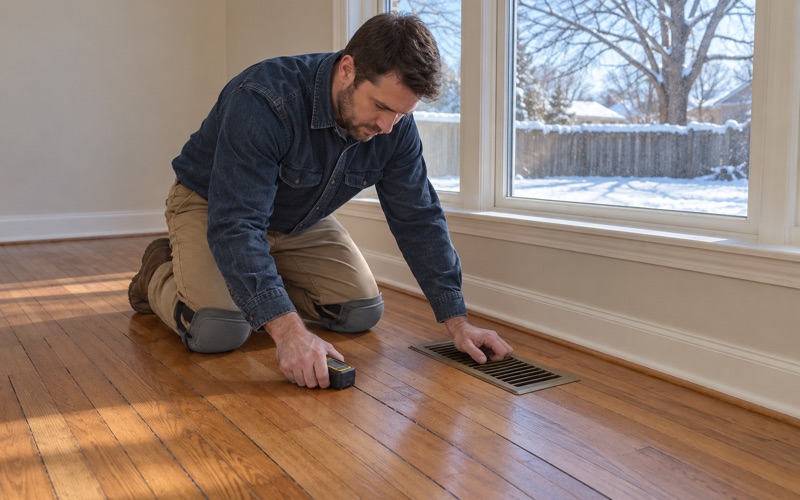
Floors in older houses have often been sanded several times already. Before any drum sander touches one, we pull a vent cover or a threshold and check how much wood sits above the tongue. If there is enough for another pass, we plan a grit sequence that takes off as little as possible and finish with an orbital sander.
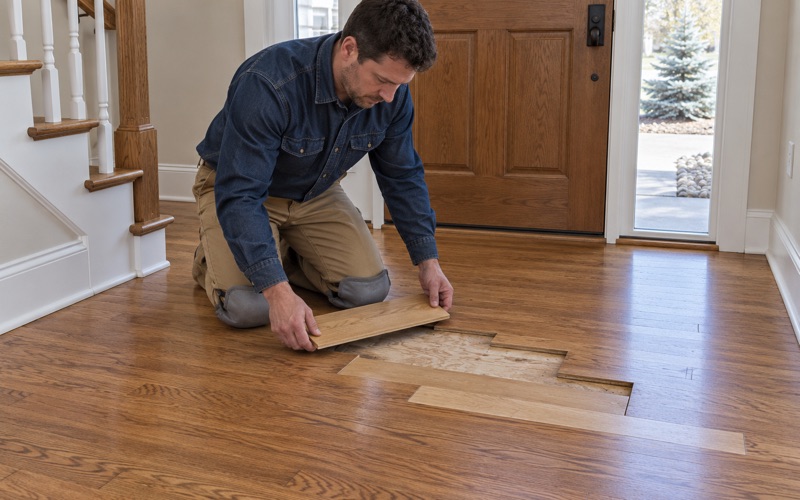
If there is not, the answer may be a screen and recoat to renew the finish, or targeted board replacement where a few pieces are worn through, cracked or checking. Sanding a thin floor again to chase a uniform look can expose tongues and nail heads, and that damage cannot be undone once it happens.
Lead-Era Paint and Dustless Sanding
A house from the 1870s to 1920 era predates 1978 by decades, and 1978 is the build-year line where we slow down and check painted surfaces before sanding. Baseboards, stair risers and painted floor borders can carry coatings from an era when lead paint was common, and sanding them releases dust into the living space.
When painted trim or borders are part of the job, we seal off the work area and use dustless sanding on the floor itself. We also plan where your family and pets will be during the work, because containment only holds when nobody is walking in and out of the room. Cleanup is checked before the room is handed back.
The 9th Street and East Street Neighborhoods
A Working Neighborhood Since 1859
The 8th and 9th Street district centers on the 9th Street neighborhood, which Visit Golden describes as a middle-class, blue-collar industrial neighborhood that began in 1859. It once included the Golden Pressed & Fire Brick Works, Rock Flour Mills and Golden Paper Mills. It sits inside the same Certificate of Appropriateness framework as 12th Street, so the exterior rules described above apply here as well.
Floors that have been lived on hard tend to show working wear: traffic lanes from the kitchen to the back door, water stains near sinks, pet urine stains in a corner, and patches where someone swapped boards decades ago with whatever stock was on hand. We assess each of these on its own rather than pricing the whole floor as a tear-out.
Board Replacement and Stain Matching
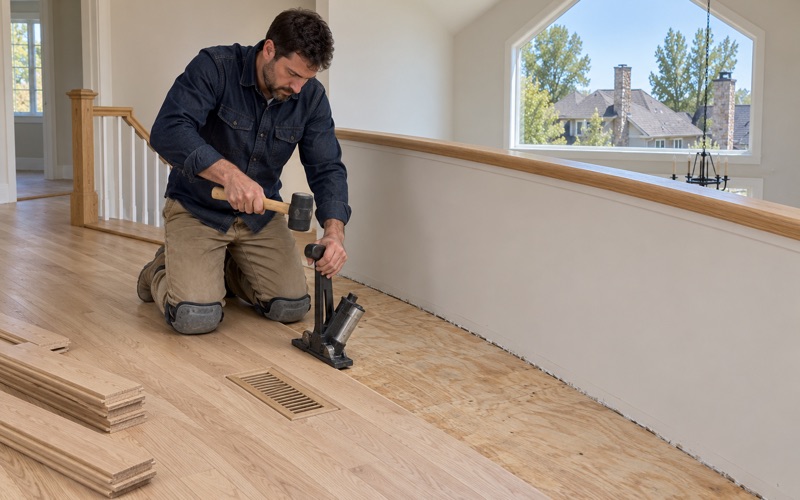
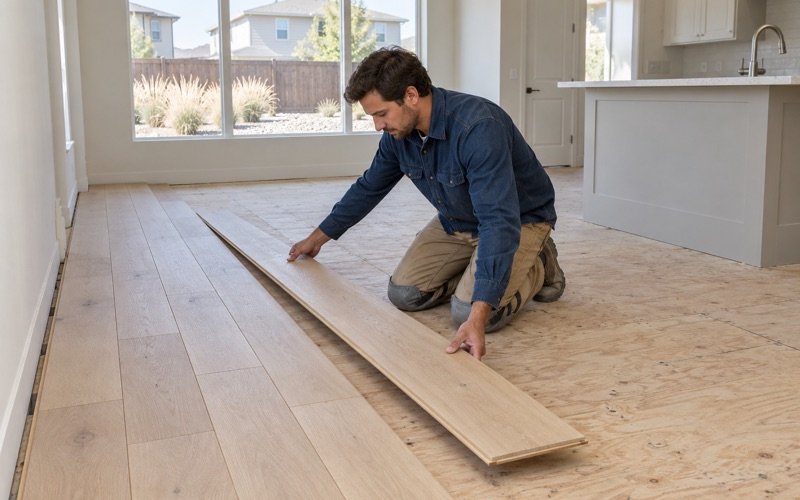
Replacing a damaged section means weaving new boards into the old ones so the joints stagger naturally, then sanding the area flush. The harder part is color. New red oak or white oak rarely matches wood that has aged under decades of finishes and sunlight, and a stain that looks right in a showroom can turn orange once it goes down.
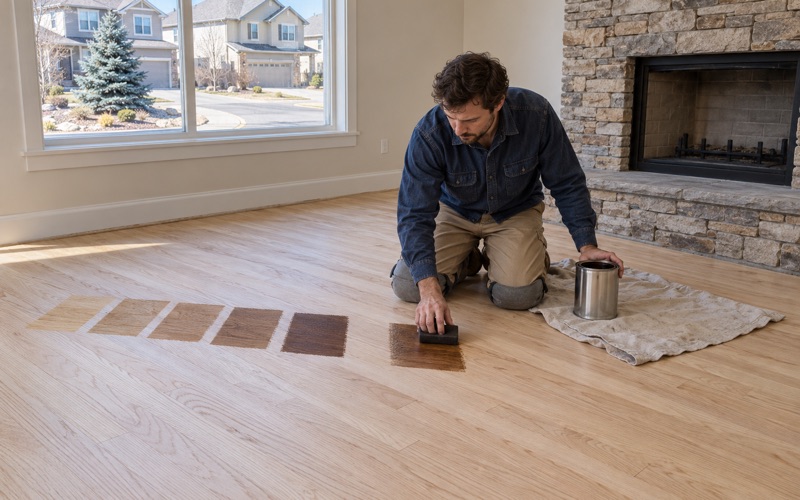
So we lay stain samples on your own floor and let you see them in your own light, morning and evening, before anyone commits. On an older floor we often water pop a test patch as well, since raising the grain changes how deeply the color takes and shows you the real result rather than a guess.
Sheen level matters as much as color on an older floor. A high gloss shows every dip and old repair, while a satin or matte finish lets the character of worn boards read as age rather than damage. We show you the sheen on a sample board next to the stain so the two are chosen together.
East Street, Once South Ford Street
East Street was known as South Ford Street. Visit Golden describes its north side as homes of prominent merchants mixed with middle-class dwellings, while historic farmhouses, neighborhood business buildings and many of Golden’s earliest postwar subdivision homes sit further south. One district can therefore hand us a merchant’s house and a postwar subdivision home on the same afternoon.
Postwar homes bring different questions from pioneer-era ones. Carpet pad and tack strip may be covering the floor we are asked to refinish, and the finish underneath may be worn thin at doorways or faded unevenly where furniture sat. We pull a corner, check the boards and the subfloor, and tell you whether refinishing or replacement makes more sense.
Floor Work Across Golden’s Mixed-Era Homes
Newer Homes and Site-Finished Oak
Golden’s housing is not only old. Across the city, 43.2 percent of housing units predate 1980 and 29.8 percent date from 2000 or later. In newer houses we usually meet one of two jobs: site-finished oak that has dulled or worn through in traffic lanes, or carpet and builder-grade flooring an owner wants replaced with wood.
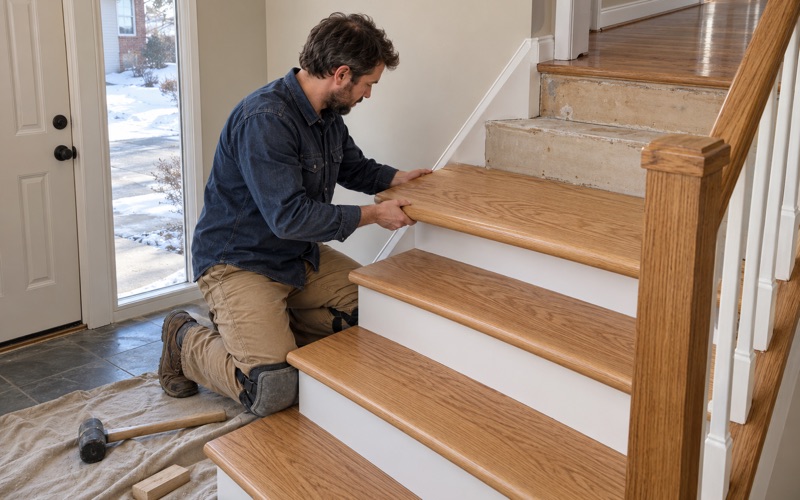
Site-finished oak from the 1990s, 2000s and 2010s can usually be sanded and refinished rather than torn out, once we confirm how much wood remains above the tongue. When carpet comes up instead, we carry the new wood through stairs and landings, quoting each tread separately and checking that the new landing floor does not throw off the riser height.
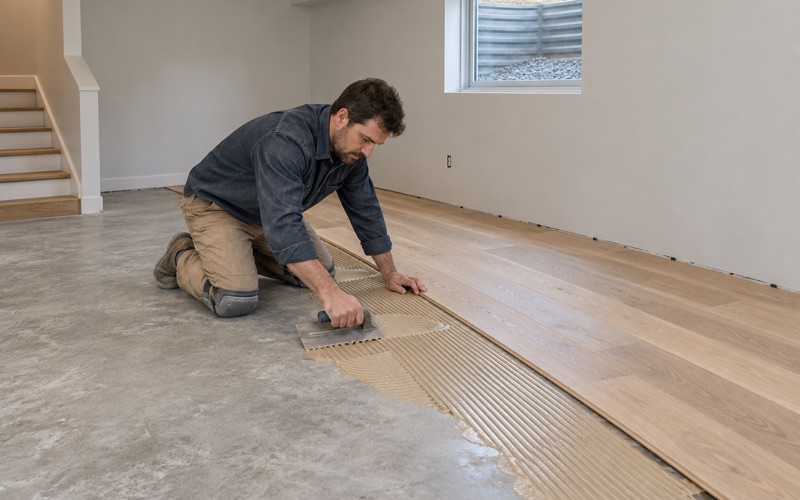
Golden also has 613 mobile homes, 559 of them owner-occupied. In a manufactured home we check the subfloor and how it flexes before recommending anything, because that decides whether solid hardwood, engineered planks or a floating floor will sit flat and quiet over time. Owners who want to swap out carpet or vinyl there get the same side-by-side comparison.
Winter Gaps, Humidity and Acclimation
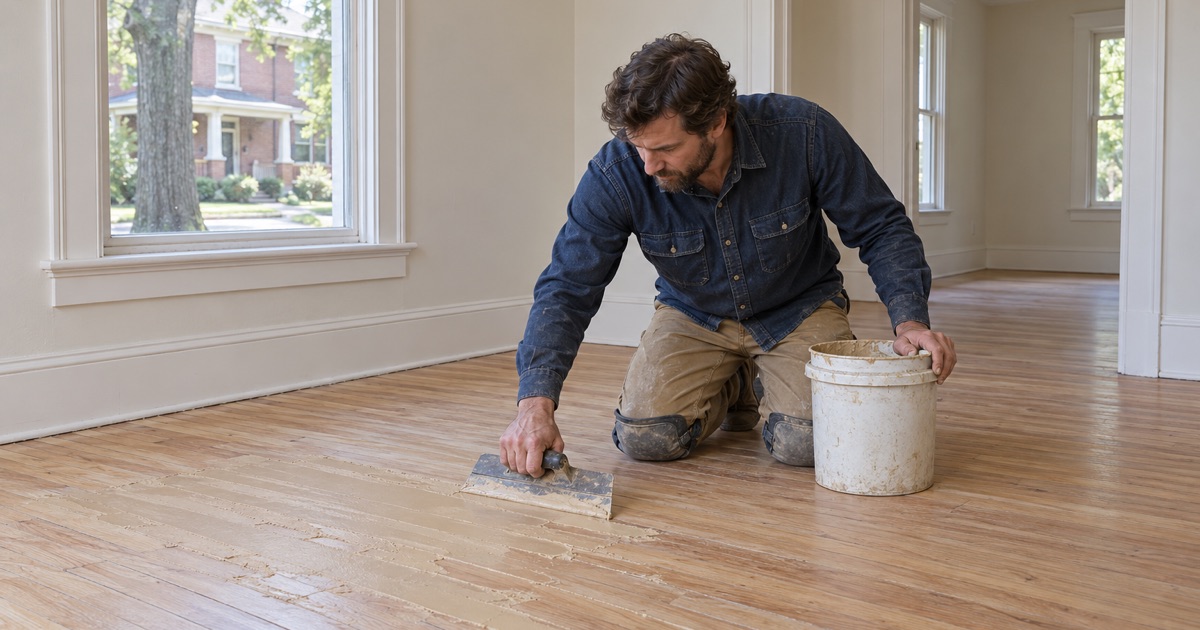
Gaps that open between boards in winter are usually seasonal shrinkage, not a failing floor. Furnace heat dries indoor air well below the conditions the wood arrived from, and the boards give up moisture until they reach a new equilibrium moisture content. Filling those seams in January often means the filler gets crushed or pushed out when the boards swell again by summer.
We take moisture meter readings before anyone touches a gap, and we compare them with the room’s relative humidity. For a new floor, we go over your indoor air before delivery, including whether a whole-house humidifier makes sense, and we let the boards acclimate and leave a proper expansion gap at the walls so the floor has room to move.
Squeaks, Leaks and Floor Repair
Squeaks and popping boards have a cause, whether a loose flooring cleat, a gap over a joist or a subfloor that has moved. We trace it and fix the fastening rather than hiding the noise under filler or a fresh coat of finish. Hollow spots in glue-down engineered flooring get the same treatment: we find the edge of the failed bond before deciding how much to lift.
When a burst pipe, a washer hose, a supply line or a roof leak soaks a floor, we trace where the water went, dry the area and measure moisture before any board is replaced. Cupping or crowning boards are read against those readings, and we document the damage room by room so your adjuster sees what we saw.
- 20+ Years on Wood Floors
- Moisture Readings Before Repairs
- Stain Samples on Your Own Floor