Broomfield Wood Flooring has worked on wood-flooring in Denver for more than 20 years, and this page is written for one group of owners in particular: people who rent out a house, a duplex, a condo or a basement unit. A tenant moves out, an inspection lands on the calendar, and the question is always which floor problems matter and which ones are just wear.
We answer that by looking at the floor itself. A split board, a hole left by a removed fixture, or a stair tread that rocks underfoot is a repair. Faded finish in a hallway traffic lane is a cosmetic call the owner gets to make. Keeping those two categories apart saves money and keeps a unit rentable.
Our work covers board replacement, stair treads, moisture readings in lower-level rooms, and sanding and refinishing when an owner decides the look is worth it. We explain what we see in plain terms, so the decision about each room stays with you and rests on the floor in front of us rather than a guess.
What Denver’s Rental Inspection Asks of a Floor
The Rental License Behind the Inspection
Denver requires owners to hold a City license to offer or operate a residential rental property. Multi-unit owners had to apply by January 1, 2023, and single-unit owners by January 1, 2024. The program reaches single-family homes, duplexes, townhouses, condominiums, accessory dwelling units and mobile homes rented for 30 days or more.
Denver is the capital and most populous city of Colorado, with a population of 715,522 at the 2020 census, and 51.2 percent of its occupied housing units are renter-occupied. For the owners of those units, the license is a standing part of the business, and the floor is one of the surfaces the inspection looks at closely.
The inspection behind that license checks what the City’s guidebook calls a subset of the most critical Residential Health Rules and Regulations. At a multi-unit property, at least 10 percent of units are inspected, chosen at random, so an owner of a small building cannot predict which unit’s floors get looked at. We treat every unit as the one that gets picked.
Holes, Cracks and Breaks in Solid Hardwood
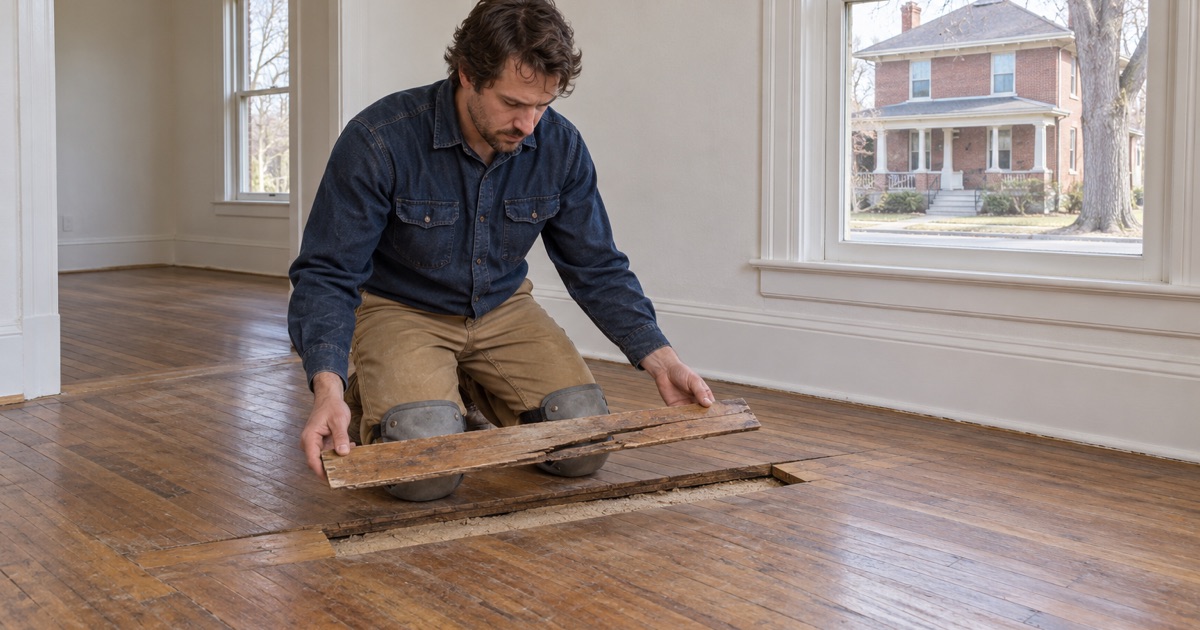
Item 5.2 of the checklist, drawn from rule RH 2-209 A 2, says floors, walls, ceilings, baseboards, moldings and door frames must be free from holes, cracks, breaks, dampness and mold associated with dampness. In a wood floor, we look first for real damage: a board split along its grain, a chunk gouged out by a dropped appliance, or a gap where a floor register was pulled.
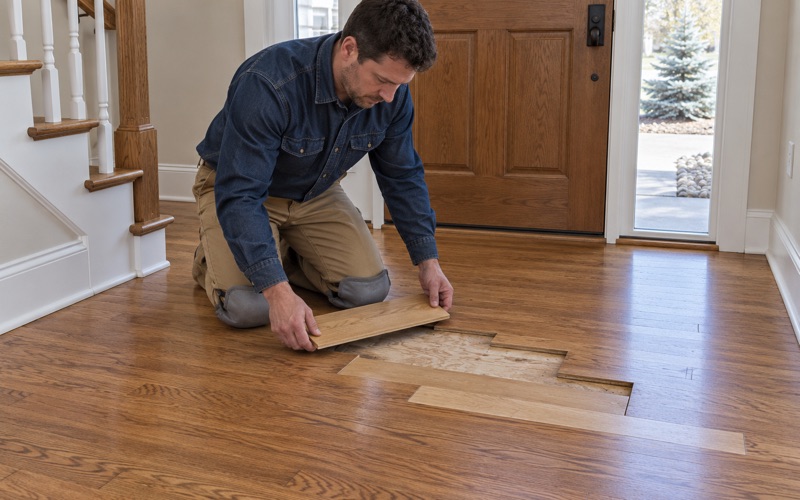
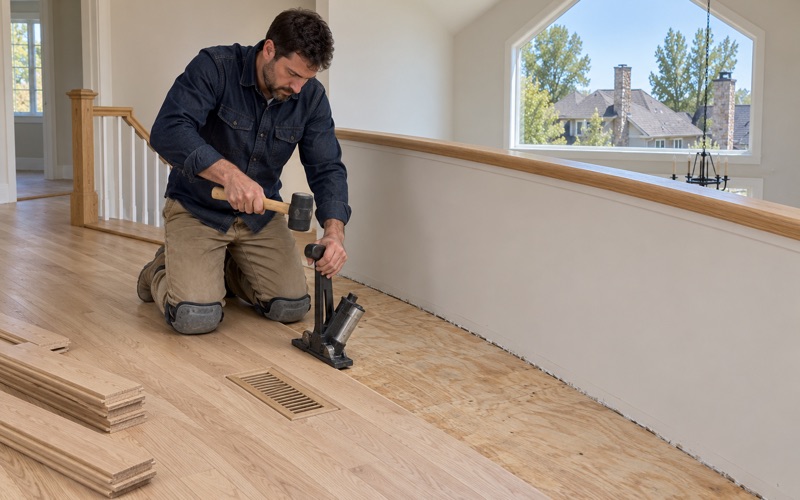
Board replacement is the usual answer. We cut out the damaged piece, weave in new tongue and groove stock of the same species and width, and blend the finish so the repair reads as floor rather than patch. Cracks and popping boards get traced to their cause first, because a crack filled over an unstable subfloor or a loose joist simply opens again.
Wear the Guidebook Calls Cosmetic
The same guidebook says purely aesthetic defects should not be considered non-compliant. Traffic lanes, sun fade, surface scratches, an orange oak tone an owner has grown tired of: none of those is a hole, a crack or a break. We say so plainly when an owner asks whether a dull floor puts a license at risk.
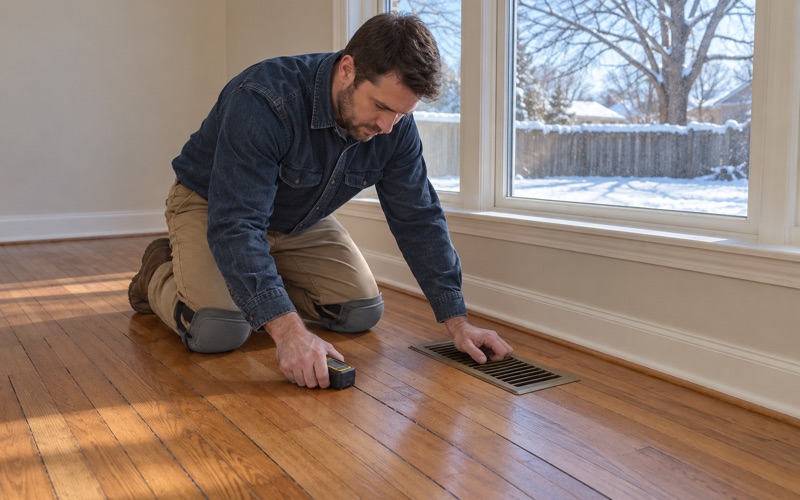
The line is not always obvious. Deep pet urine stains can go black and soft, and a board that has rotted through is no longer cosmetic. Cupping from a slow leak may mean dampness under the floor. We check those with a moisture meter and by pressing on the boards, then tell you what we found in each area.
Looking for wood-flooring closer to Alamo Placita? See Wood-Flooring Services in Alamo Placita.
Below-Grade Units and the Dampness Rule
Basement apartments get extra attention. Item 5.3, from rule RH 2-201 B 1, requires that the floor and walls be impervious to leakage of underground and surface runoff water and free from dampness, and the guidebook has that item verified in every rented below-grade unit. That item is not left to the random sample.
Drying and Measuring Before Board Replacement
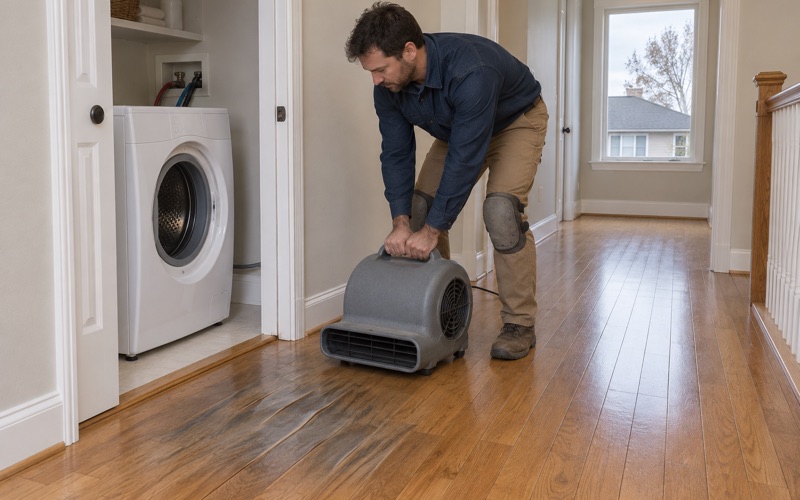
When a lower-level floor shows water stains, cupping or a musty smell, we do not start by tearing out boards. We trace the water first, whether it is a supply line, a washer, a burst pipe or runoff finding its way in, and we take moisture readings across the room so the wet area has edges.
Only after the source is stopped and the readings come down do we replace anything. Putting new wood over a floor that is still wet invites the dampness back, and with it the mold associated with dampness that the checklist names. If an insurance claim is involved, we document the readings room by room so the adjuster sees the same picture we do.
Engineered Wood for a Basement Rental
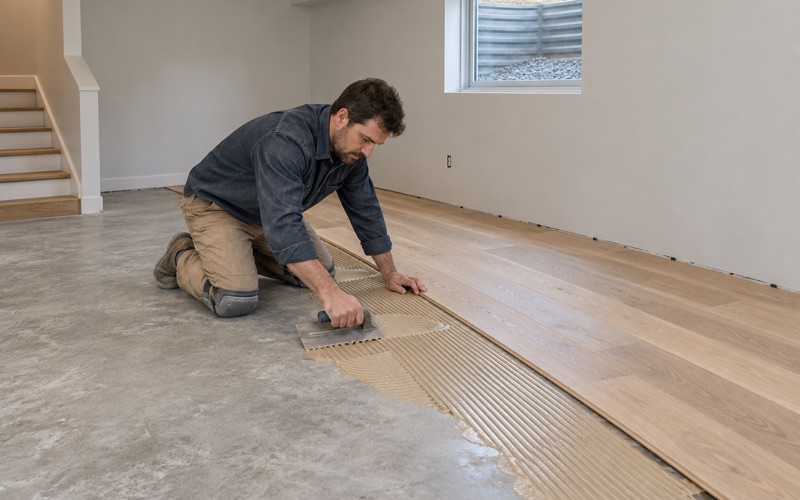
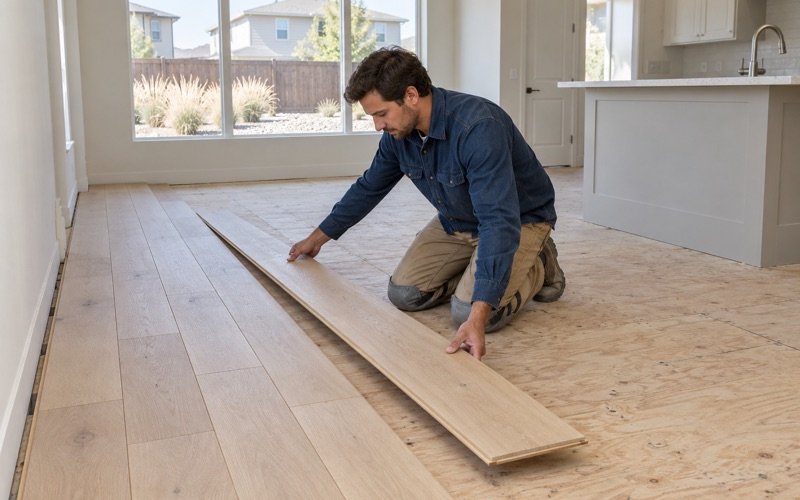
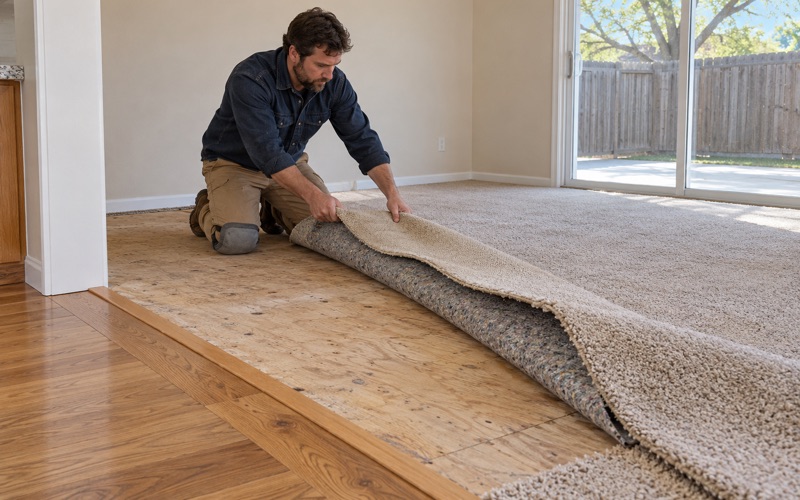
Solid hardwood does not belong below grade in most cases, and we say so before an owner buys it. Engineered wood, with a real wood wear layer over a stable core, handles the moisture swings of a lower level far better, and it can be glued down or floated depending on what the floor underneath allows.
We answer the basement question house by house. Some lower levels are dry enough for wood once the water source is fixed; others are better served by luxury vinyl plank, and we will tell you that too. A floor that stays dry through the next inspection is worth more to a rental owner than the prettiest board in the showroom.
Subfloor and Vapor Retarder Checks
Engineered flooring in a basement is only as good as what sits under it. We look at the subfloor for flatness and for old stains that point to past water, and we plan a vapor retarder where the manufacturer’s installation instructions call for one. It is one layer of protection, not a substitute for fixing the water source.
We also leave an expansion gap at every wall and at the base of stairs, then cover it with base or quarter round. Engineered boards still move a little with relative humidity, and a floor pinned tight against the walls can buckle once the humidity climbs.
Stairs, Treads and Trim in a Rented Home
Floors are not the only checklist item we get called about. Item 1.1, from rules RH 2-202 A-C, requires every inside stairway to be maintained and kept in sound condition and good repair, and item 5.2 reaches the baseboards, moldings and door frames that border a floor. Those edges take hard use in a rented home.
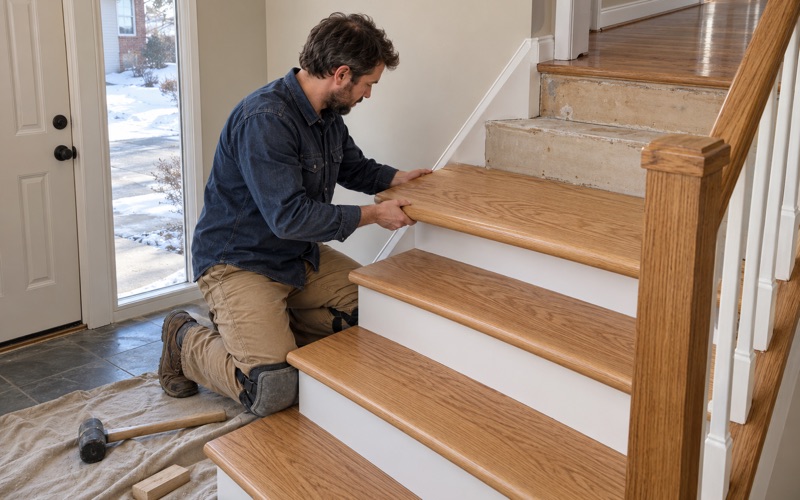
Stair Treads and Nosing Repair
A cracked tread, a nosing that has split away, or a step that shifts under weight is the kind of stair problem that makes a flight feel unsafe. We quote stairs tread by tread, so an owner pays to replace the two damaged steps rather than the whole flight when the rest are sound.
Squeaks and loose treads get traced before anything is replaced; sometimes a tread has pulled away from its stringer and needs to be refastened, not swapped. When a landing gets a new floor, we check the finished height so it does not throw off the riser height at the top or bottom step.
Baseboards, Quarter Round and Older Paint
Quarter round and baseboard take the knocks from vacuums, furniture and move-outs. Where a piece is split or broken, we replace it as part of the floor work, and we reset trim that pulled loose when boards were replaced, so the finished room has no open gaps along the walls.
Painted trim in an older unit raises a separate question. Denver’s lead hazard rule applies to dwellings built before January 1, 1979, and interior peeling paint over six square feet triggers a test. We check build year and painted surfaces before sanding or pulling trim, and in an older building that check comes before any dust does.
That question comes up often in Denver. Census figures put 16.9 percent of the city’s housing units at 1939 or earlier and 55.5 percent before 1980, so much of the city’s housing stock is old enough for the question to matter. Painted stair risers and trim in those buildings get checked before we touch them.
Planning Floor Work Around Your Rental License
A rental floor gets planned around three things: what the checklist requires, what the owner wants the unit to look like, and when the unit is empty. Keeping those separate is how an owner avoids paying for cosmetic work under the belief that the inspection demands it.
When a Floor Repair Needs a Permit
A rotted board is sometimes the visible end of a bigger problem. The guidebook notes that floor repairs require building permits if drywall, in-wall or ceiling systems, framing or any other structural members must be added, removed or altered as part of the repair. Community Planning and Development is Denver’s building department.
When we open a floor and find a joist that has rotted under a leaking fixture, the job has changed. We stop, show the owner what we found, and leave the permit question to the owner and the City rather than guessing at it. The board work waits until the framing repair is settled.
Sanding and Refinishing as an Owner’s Choice
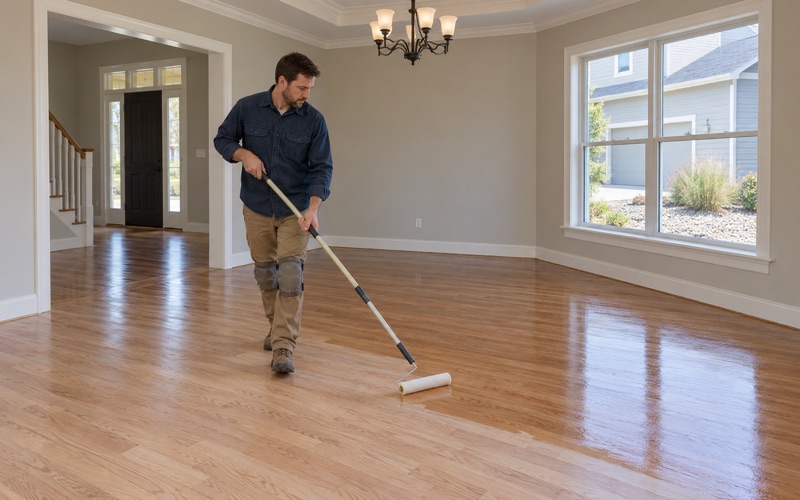
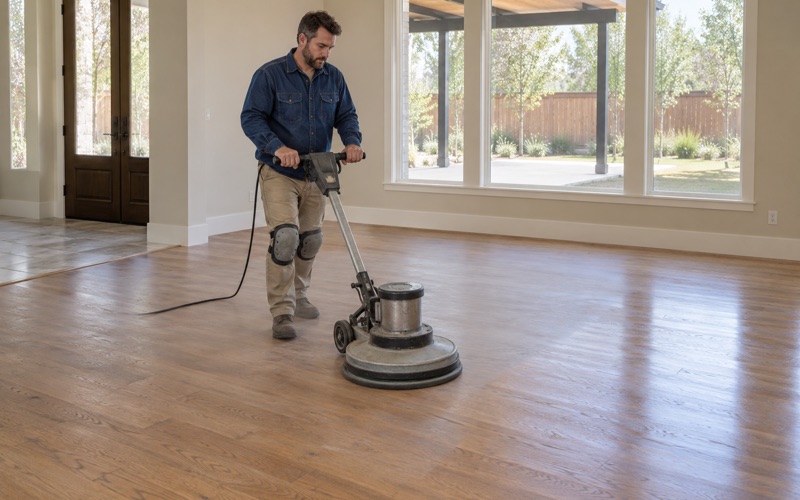
Refinishing is not a checklist item, and we never sell it as one. It is a decision about how a unit shows and rents. A screen and recoat can freshen a finish between tenants in a day or two, while a full sanding with a dustless system removes traffic lanes and deeper scratches and resets the color.
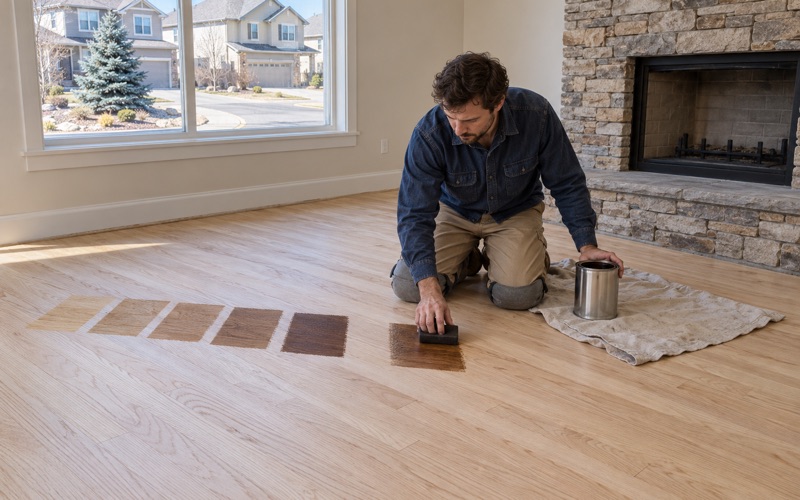
Before a full sanding, we check how much wood is left above the tongue, since a floor sanded several times has less to give. For rentals, a waterborne polyurethane in a satin sheen level is a practical pick: it dries fast, holds its color and hides everyday scuffs better than gloss. Stain samples go down on your own floor before any color is chosen.
Timing Floor Work Between Tenants
The cleanest window for floor work is the gap between leases. We plan repairs first, then any refinishing, so moisture readings, board replacement and finish curing all fit before the next tenant carries furniture in. A unit with a damp basement floor needs the most lead time, because drying cannot be rushed.
Winter adds one more consideration in Denver, a consolidated city and county at 5,280 feet. During the furnace season, heated indoor air dries out, and seasonal gaps open between boards, then close again by summer. We take moisture readings before filling any seam, so an owner does not pay to fill a gap that would have closed on its own.
- 20+ Years on Wood Floors
- Moisture Readings Before Repairs
- Stain Samples on Your Own Floor