Broomfield Wood Flooring has handled wood flooring in Dacono for more than 20 years, and much of that work begins the same way: someone has recently bought a house and is standing on floors they did not choose. We sand, refinish, recoat, repair and install solid hardwood and engineered wood, and we start every job by working out what the floor already is.
That first step matters because a floor bought with a house carries decisions made by other people. It may be solid wood under a tired finish, an engineered floor with a thin wear layer, or luxury vinyl plank that only looks like wood. Each one points to a different job, and guessing wrong is how a new owner pays twice.
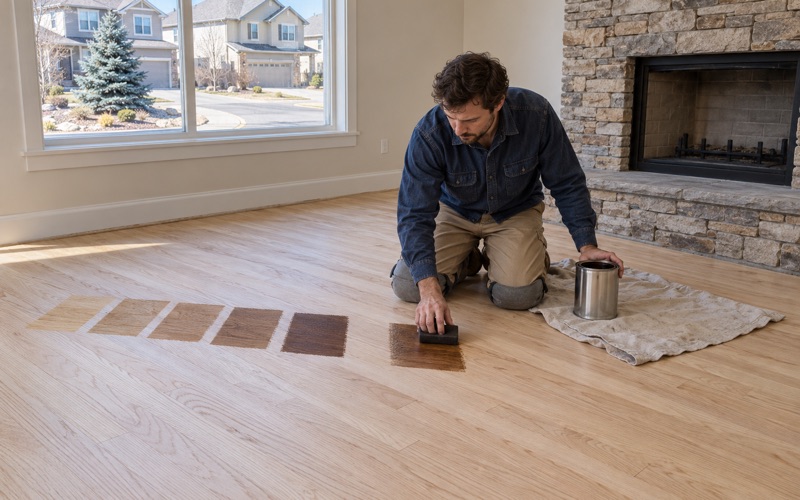
We lay stain samples on your own boards, in your own light, before anyone commits to a color. We also trace squeaks, popping boards and cracks to their cause rather than filling them, so the first project in a new house fixes the problem instead of covering it for a season.
Wood Floors for Dacono’s Newer Owners
Dacono is a home rule city in southwestern Weld County, and its owners are, by the numbers, mostly recent arrivals. Census estimates show 76.7 percent of the city’s owner households moved into their home in 2010 or later. That follows a decade in which the population grew 51.66 percent, from 4,152 at the 2010 census to 6,297 at the 2020 count.
Only 166 owner households have been in place since before 2000. Put another way, a Dacono owner is far more likely to be in the first years with a floor than the twentieth, still learning how it moves through a heated winter. That is the lens we bring to every quote here.
Recent Buyers’ First Floor Projects
The first floor project after closing tends to be one of three things. Carpet comes out of a bedroom or stairway and wood goes in. A worn finish in the main living area gets sanded and refinished before furniture settles in. Or a floor with a problem the inspection noted, a soft spot or a stain, gets looked at properly.
Timing favors doing it early. An empty house lets us sand wall to wall, run the drum sander without working around a sofa, and let a finish cure without foot traffic. Once a household has moved in, the same job means clearing rooms in stages, and each room done that way adds furniture moving to the schedule.
Carpet to Hardwood, Stairs Included
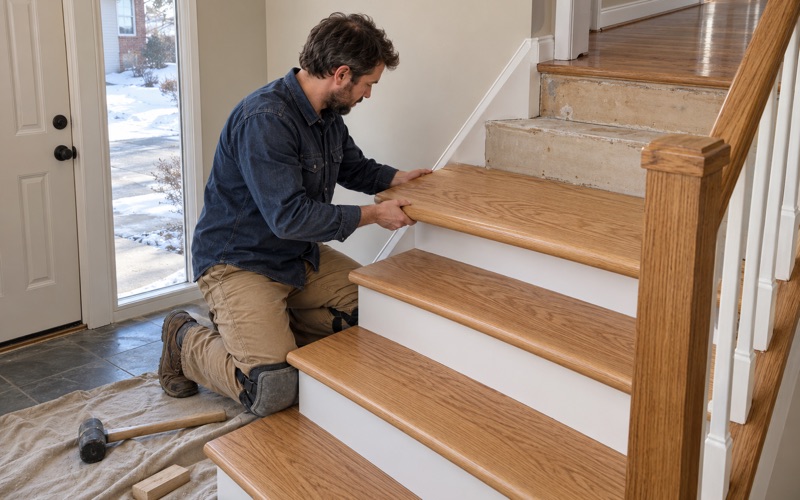
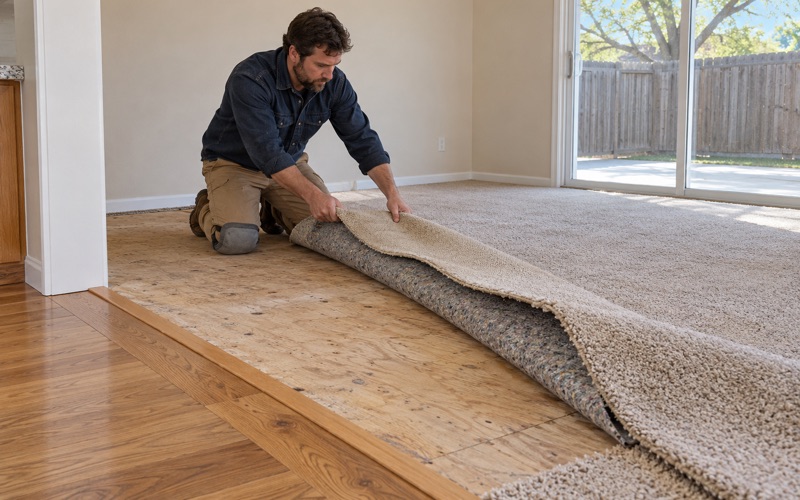
Replacing carpet with wood is a frequent request from newer owners, and the stairs are where it gets detailed. We quote stair treads one at a time, with new nosing where it meets the landing, and we check that a new floor on the landing does not change the riser height at the top or bottom step.
Under the carpet we pull the pad and the tack strip and read the subfloor before anything is ordered. That is where many squeaks start, and it is far easier to add fasteners into a joist with the floor open than to chase a noise through finished boards later. The wood we recommend depends on what that subfloor tells us.
Looking for wood-flooring closer to Arvada? See Wood-Flooring in Arvada.
Dacono’s 1970s Houses and 2010s Houses
Dacono’s housing comes in two distinct layers. Of 2,344 housing units, 990 were built between 2010 and 2019, which is 42.2 percent of the stock, and 478 date from the 1970s, or 20.4 percent. The 1980s and 1990s together add only 143, so the two layers sit on either side of a quiet stretch.
2010s Houses and Engineered or Site-Finished Floors
In a house from the last decade, the first thing we establish is what the floor actually is. Prefinished engineered wood, site-finished solid hardwood and luxury vinyl plank can look similar from standing height, and each takes a different answer. An engineered wear layer can only be sanded so many times, and a thin one may call for a recoat or replacement instead of the sander.
Where a 2010s house has site-finished oak, we sand and refinish it rather than tear it out, after checking how much wood remains above the tongue. Floors from this period are also young enough that seasonal gaps are often their first surprise, and we read those against the furnace season before anyone fills a seam that will close again by summer.
1970s Houses and Solid Hardwood Repairs
The 1970s layer is a different kind of job. A floor in a house that age may have been redone several times, patched between rooms, or covered and uncovered by successive owners, so we do not assume anything about the species or the subfloor until we have looked. Board replacement, reducers at mismatched transitions and hollow spots tend to come up here.
Age brings one more step. Before we sand in a home built before 1978, we check the build year and any painted surfaces, including painted trim, stair risers and quarter round, because sanding disturbs whatever coating is there. That check comes before the grit sequence is chosen, not after the dust is already in the air.
Refinish, Recoat or Replace After Closing
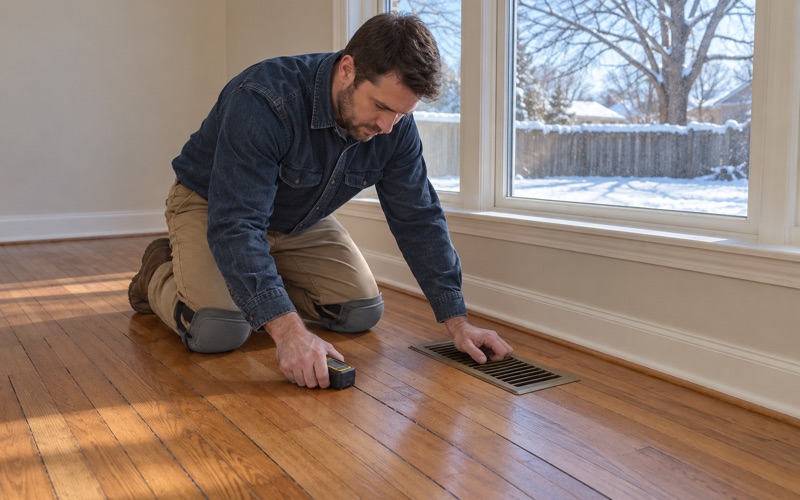
A first floor project comes down to one of three choices, and the right one depends on the floor rather than on what the last owner did. We walk the rooms with a moisture meter, look at traffic lanes, water stains and pet urine stains, and check how the boards sit before we say which of the three makes sense.
Screen and Recoat for Sound Finishes
If the finish is dull and scuffed but the wood beneath it is clean, a screen and recoat is the lightest option. We abrade the existing finish and apply a fresh coat of polyurethane, which restores the sheen level without removing wood. It suits a newer house whose floor has seen a few years of ordinary wear.
A recoat has limits. It will not remove gray water marks, sun fade or deep scratches, and it needs to be compatible with the finish already on the floor. If a previous owner applied a hardwax oil or a polish product, we test a small area first, because a coat that will not bond is worse than no coat.
Full Refinishing of Red Oak and White Oak
When stains have reached the wood, or when an owner wants to change color, a full sanding and refinish is the answer. We run a drum sander and an orbital sander through a grit sequence matched to the floor, with dustless sanding equipment to keep an occupied house livable. Red oak and white oak take stain differently, so the choice of color follows the species.
Finish choice comes next. Waterborne polyurethane dries clear and keeps the color close to natural, while oil-modified polyurethane ambers over time and can turn a pale floor toward orange oak. We talk through sheen and the tradeoffs with you rather than defaulting to whatever we used on the last job.
Replacement With New Wood Flooring
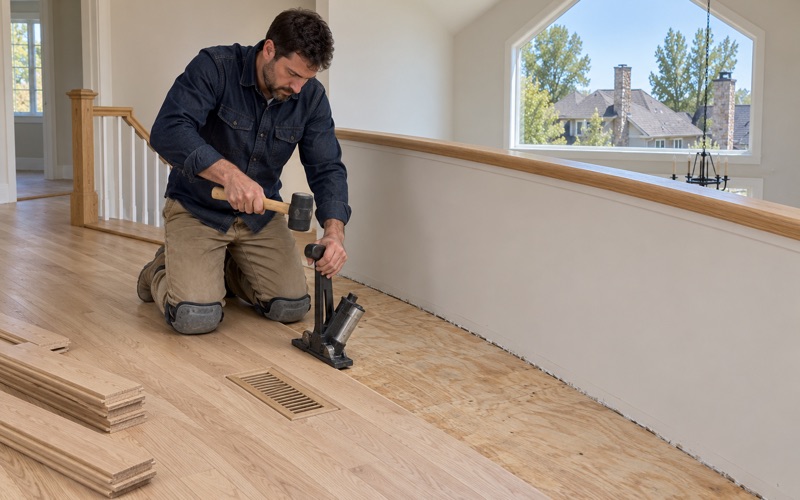
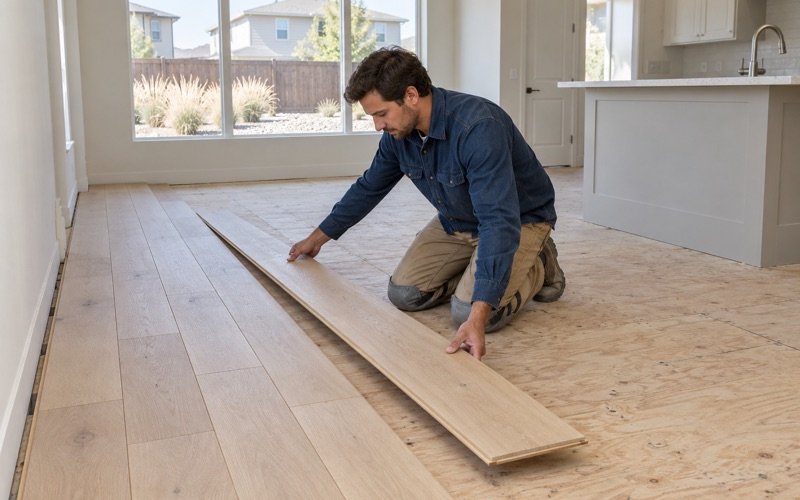
Replacement is the right call when a floor is cupped, buckled or delaminating, when an engineered wear layer is worn through, or when the existing surface is not wood at all. We match solid hardwood or engineered wood to the room, choosing species by Janka hardness where dogs and chairs are part of daily life.
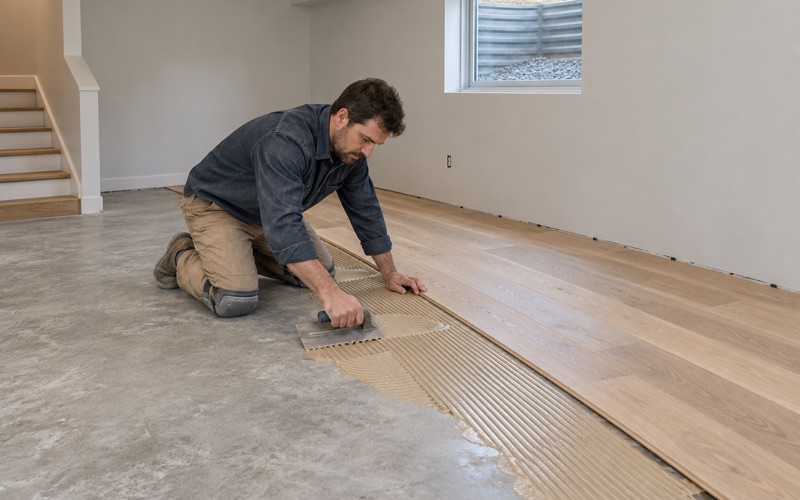
Before new boards go down, we check the subfloor for flatness and moisture and let the wood acclimate. Indoor air in a heated Front Range winter runs far drier than the boards were when they shipped, so we talk through relative humidity in the house, and whether a whole-house humidifier makes sense, before installation starts.
Planning a Wood Floor Project in Dacono
Dacono’s owners skew toward households still settling in. Of occupied homes, 85.1 percent are owner-occupied, and 49.8 percent of owner householders are between 25 and 44. When the floor is one project among several, we plan the work around how the household lives, room by room or all at once.
Your Own Documents and the Sweetgrass Neighborhood
Some Dacono homes sit in neighborhoods with their own governing documents, including Sweetgrass, a KB Home neighborhood served by Sweetgrass Metropolitan District Nos. 1-3. Any interior flooring rule would come from your own HOA or metro district documents, so we read what you have before work starts rather than guessing.
Documents like these can also speak to practical matters such as dumpsters, parking or work hours. We would rather find that out from the page than from a neighbor, so a quick read comes before the schedule is set.
Water-Damaged Boards and Board Replacement
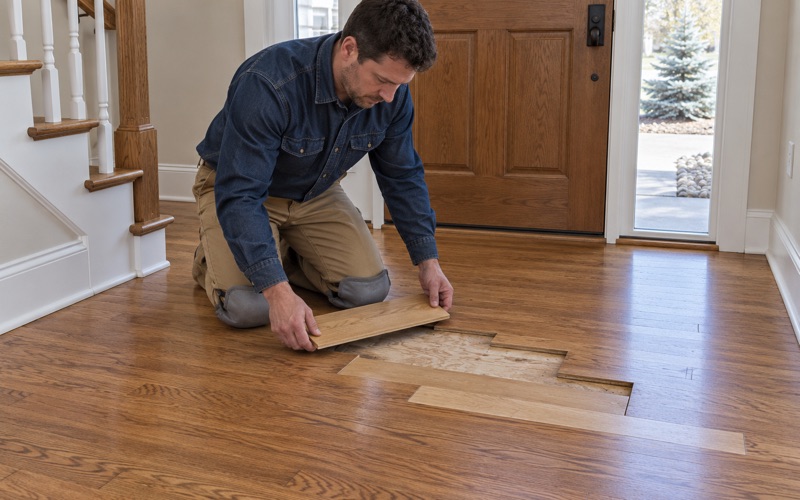
Newer owners sometimes discover a problem only after the first winter: a supply line under a sink, a washer hose or an ice maker that leaked slowly. We trace the water, dry and measure the subfloor and surrounding boards, and only then replace what cannot be saved.
When insurance is involved, we document moisture readings and damage room by room so the adjuster sees the same picture we do. Cupping that flattens once the subfloor dries may need only sanding, while severe buckling usually means boards come out. Knowing which is which before anyone signs off saves a floor that could have stayed.
Scheduling Finish Work and the Walkthrough
Dacono falls in the National Weather Service forecast zone for Central and South Weld County, which we check when scheduling finish work. Dry air speeds some finishes and complicates others, and a cold snap means the furnace runs harder and dries the house further. We time sanding and coating around conditions inside the house, measured on the day.
Finish work also depends on ventilation and access. Waterborne coats let a household return to rooms sooner, and we sequence rooms so bedrooms or the kitchen stay usable while the rest cures. We give you a day-by-day plan before the first board is touched, including when furniture can go back.
Every project starts with a walkthrough of the rooms in question. We identify the floor, take moisture readings, look at stairs and transitions, and ask what you want the floor to do for the next ten years rather than the next ten weeks. That conversation usually settles whether the job is a recoat, a refinish or new wood.
From there you get a written scope that names the species, the finish, the sheen and the order of rooms. For a Dacono owner in the first years of a house, that scope can serve as the reference for later projects too, so we write it to be read long after the crew has left.
- 20+ Years on Wood Floors
- Moisture Readings Before Repairs
- Stain Samples on Your Own Floor