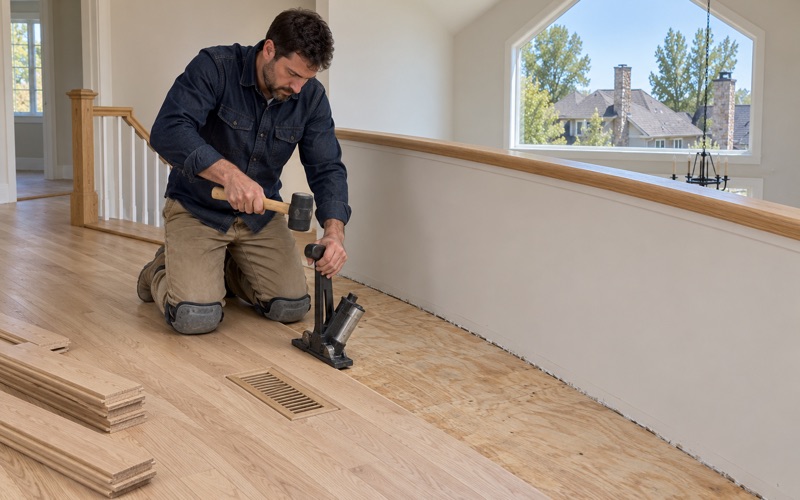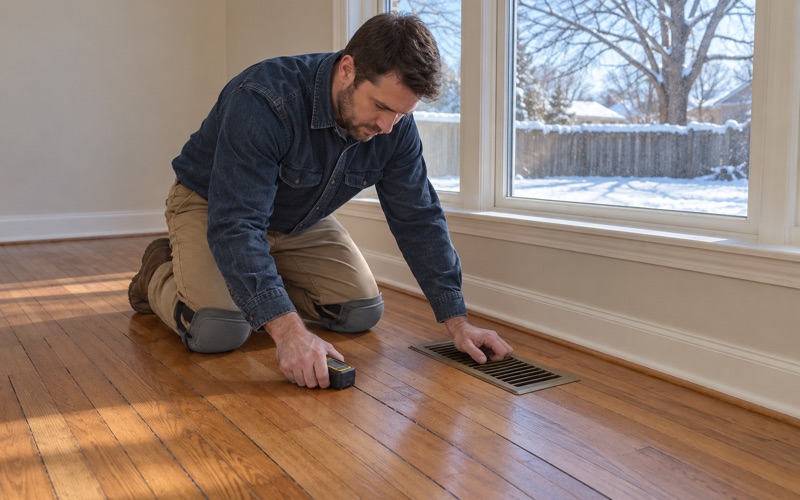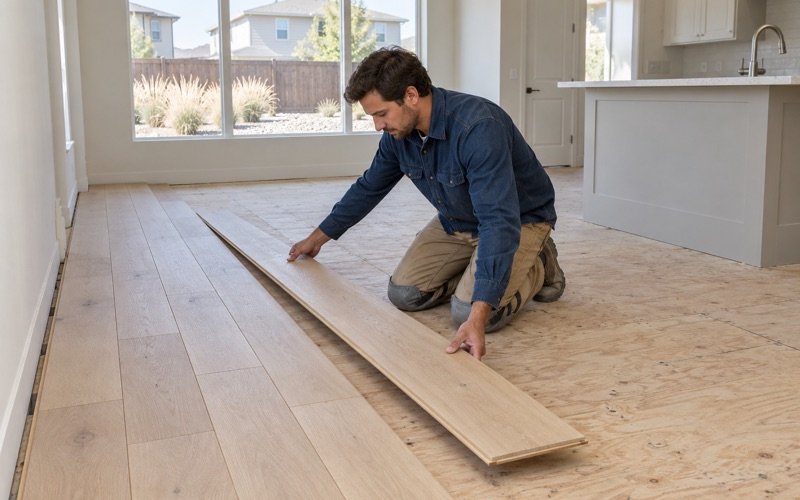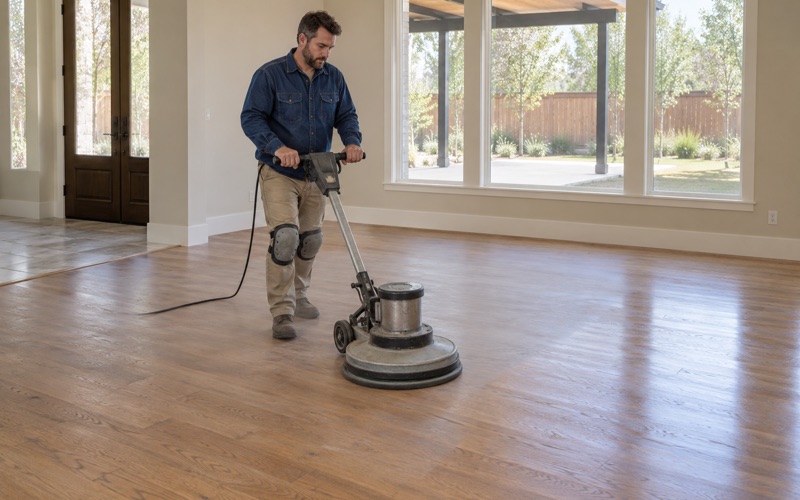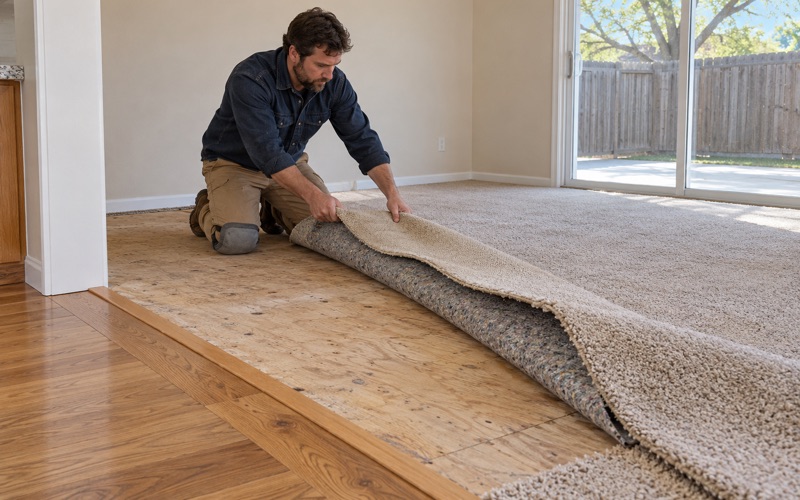
Broomfield Wood Flooring handles wood-flooring in Commerce City with more than 20 years behind us, and much of the work we see here involves newer houses. We sand and refinish site-finished oak, replace tired carpet and builder-grade floors with wood, and trace squeaks and popping boards back to what causes them.
Commerce City also carries a rule that shapes how a flooring quote is put together before anyone lifts a board. The city asks contractors to estimate and prepay its use tax on construction materials, including on projects outside the city permit process, so a number on a quote here can be built differently from one written a few miles away.
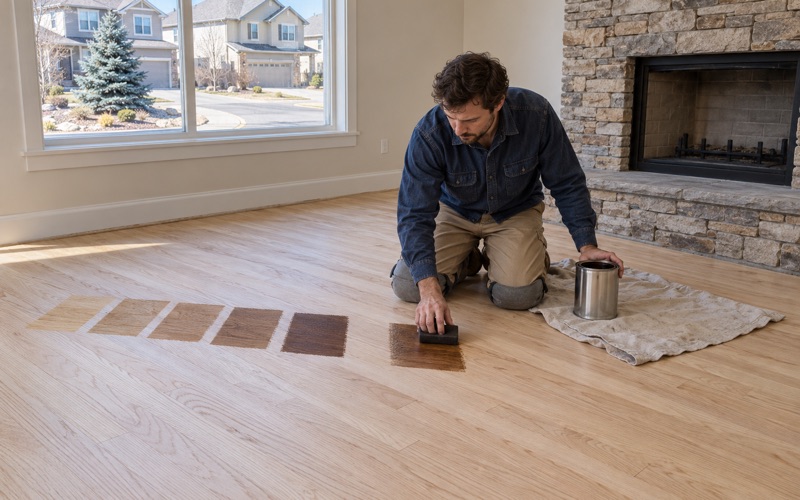
We walk through that part of the price with you in plain terms, then get to the floor itself: moisture readings, board gapping, the wear on stair treads and the finish you want to live with. Stain samples go down on your own floor, in your own light, before anyone commits to a color.
How Commerce City’s Use Tax Reaches a Floor Project
A Home Rule City With Its Own Tax Code
Commerce City is a home rule city in Adams County, and it administers its own sales and use tax through the Sales/Use Tax Division of the city’s Finance Department. Under the Revised Municipal Tax Code, Section 20-6-5, all contractors at job sites in the city must pay the city’s sales and use tax.
Regulation 20-S.I.15 goes a step further and treats the contractor as the consumer of the construction materials and supplies used on a project. On a flooring job, the contractor is the party the city looks to for the tax on those materials, which is why the rule surfaces in the way a contractor prices the work.
Why the Rule Reaches Jobs Without a Permit
The city publishes a form titled Prepaid Tax Estimate for Contractors Working on Construction Projects Not Requiring a City Permit. The title matters: the use tax obligation does not wait for a permit to trigger it, so work that never passes through the building counter can still carry the estimate.
Whether a particular floor project needs a permit is a separate question, and we do not answer it from memory. Commerce City Building Safety asks residents to call 303-289-3790 before work begins to find out, and for projects valued at $500 or less a permit costs $23.50 online plus a 4.5 percent tax on building materials.
The 60 Percent and 4.5 Percent Steps
The estimate itself follows the city’s steps. A contractor starts from the total cost of construction, multiplies it by sixty percent to reach an estimated taxable cost, then multiplies that figure by 4.5 percent to get the estimated city tax due. The form says that estimated use tax is remitted to the city before the project starts.
Two more lines on the form explain why a Commerce City number can look different. No exemption certificate issued by the Colorado Department of Revenue or any other taxing authority is recognized for city sales or use tax, and credit is not allowed for sales tax paid to other jurisdictions. At the end of a project, the city may conduct a formal audit.
Looking for wood-flooring closer to Golden? See Wood-Flooring in Golden.
Reading a Wood Floor Quote in Commerce City
Why Quotes Differ Across the City Line
A floor quote usually separates materials from labor, while the city’s estimate starts from the total cost of construction rather than the price of the boards alone. When two quotes for the same room are far apart, it is fair to ask each contractor whether the Commerce City use tax rule has been accounted for in the price.
We keep that conversation short and factual. We can show you where the city publishes its form and what the steps say, but questions about your own taxes belong with the city’s Sales/Use Tax Division at 7887 E 60th Ave or with your tax adviser, not with a flooring crew.
Scope Lines for Hardwood Installation
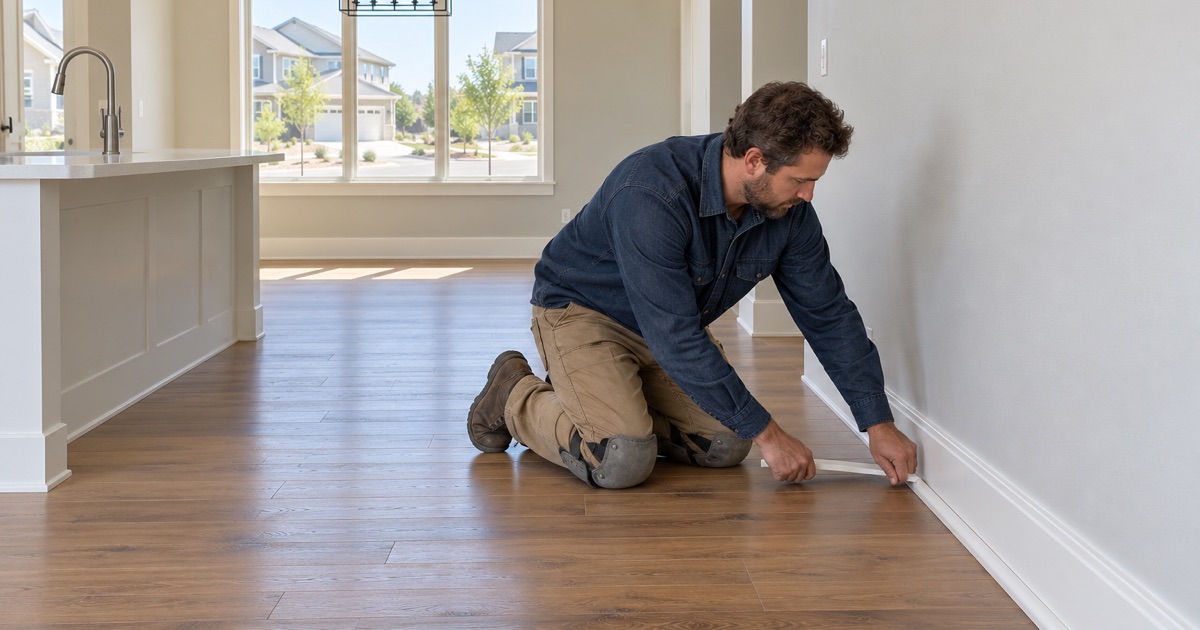
Beyond tax, the lines on a Commerce City quote should read the way the work will actually happen. For a new floor, that means removing carpet, pad and tack strip, checking the subfloor for flatness and squeaks, letting the wood acclimate to the house, and setting an expansion gap at the walls before quarter round or base goes back.
We also talk through indoor humidity before the boards go down. A heated Front Range winter pulls a house far drier than the wood was when it arrived, so a moisture meter reading and a plan for relative humidity, sometimes a whole-house humidifier, belong in the conversation before installation rather than after the first seasonal gaps open.
HOA Rules and Stair Treads
If an HOA or similar organization manages your property, the city itself notes there may be other restrictions to check. We read your own HOA or metro district documents before work begins, since any interior flooring rule comes from those papers and not from a general assumption about the neighborhood.
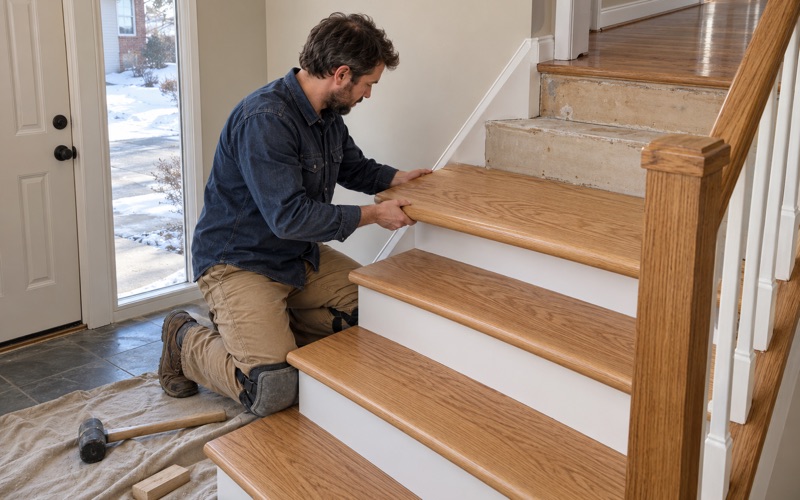
Stairs get their own lines. We price stair treads, risers and nosing one tread at a time, and when a new floor meets a landing we check the added height so the top or bottom riser does not end up taller than the rest.
Floors in Commerce City’s 2000s and Newer Homes
The city’s housing numbers shape what a floor job here tends to look like. Census estimates count 23,169 housing units in the city, and 68.7 percent of them were built in 2000 or later, including 9,053 from the 2000s alone. With 77.2 percent of occupied homes owner-occupied and 78.8 percent of units detached houses, most of these floors belong to the people living on them.
Sanding and Refinishing Site-Finished Oak
Where a house from this era has site-finished oak in the entry, kitchen or halls, two decades of traffic lanes, pet urine stains and sun fade raise the same question: sand it or replace it. We check how much wood is left above the tongue first, because that decides how many more sandings the floor can take.
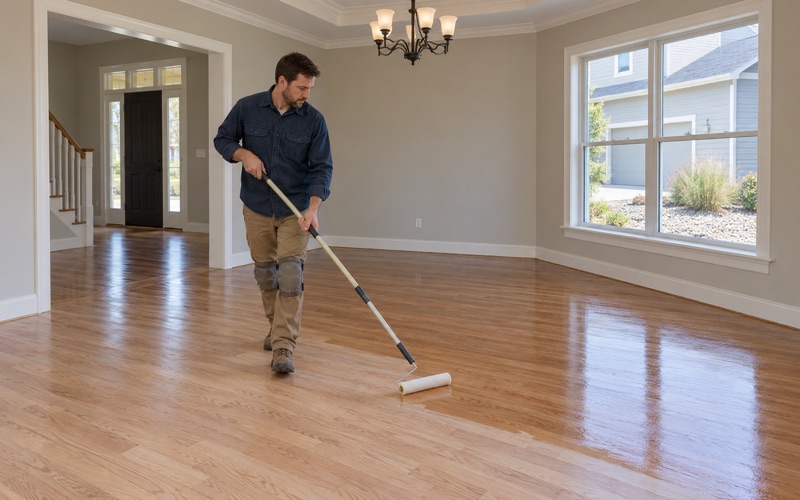
When there is enough, a full sand with a drum sander and orbital sander, run through a proper grit sequence, brings the surface back to bare wood. From there you choose between waterborne polyurethane, oil-modified polyurethane or a hardwax oil, and a sheen level that suits how the room is used. If the old finish is only worn, a screen and recoat may be enough.
Replacing Carpet and Builder-Grade Floors
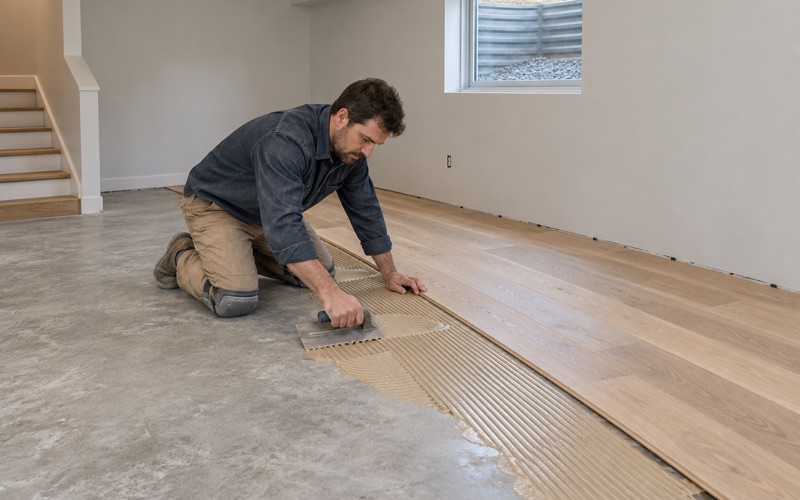
Other owners want the carpet and builder-grade flooring gone altogether. We replace it with solid hardwood or engineered wood in white oak, hickory, maple or red oak, and we carry the new floor onto the stairs and landings so the house reads as one floor rather than a patchwork.
Species choice is partly a matter of Janka hardness and partly of look. Wide plank white oak shows fewer seams, hickory hides wear well, and herringbone suits an entry that deserves attention. Whatever the species, the engineered wear layer or solid thickness sets how many times the floor can be sanded down the road.
Gaps, Squeaks and Water Damage
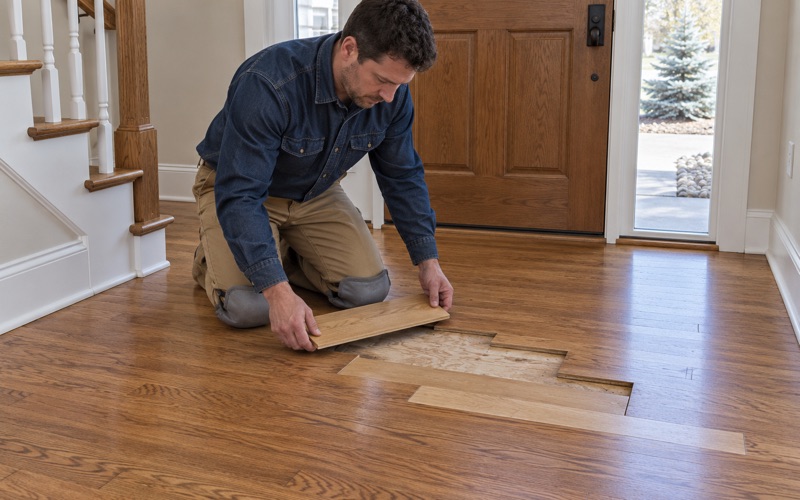
Winter gaps in these floors are read against the furnace season, not filled on sight. We take moisture readings first, because a seam filled in January is often a seam that closes again by summer and pushes the filler back out. Cracks, squeaks and popping boards get traced to their cause, whether that is loose fasteners, a dry house or subfloor movement.
Water from a burst pipe, washer, supply line or roof is a different job. We trace the source, dry the floor and measure it before replacing any board, and we document the damage room by room so the adjuster has a clear record of cupping, crowning or buckling.
Older Floors in Derby and the 1950s Core
Not every Commerce City floor is recent. The city incorporated as Commerce Town in 1952 and became a city in 1962 after annexing part of Derby, and Census estimates count 2,866 housing units from the 1950s. In all, 24.1 percent of the city’s homes predate 1980, and those floors bring a different set of questions.
Lead-Safe Prep Before Sanding
Before we sand a floor in a home built before 1978, we check the build year and look for painted surfaces, such as painted trim, stair risers or old floor paint at the edges. Sanding raises fine dust, and the EPA RRP Rule sets work practices for renovation in older housing where lead-based paint may be present.
That check shapes the plan, the containment and the cleanup, so it happens at the estimate rather than on sanding day. Dustless sanding equipment helps with everyday dust, but it does not replace the lead-safe steps an older house may call for.
Board Replacement and Refinishing in Older Rooms
Floors in these older rooms often show their age as shrinkage, checking and hollow spots rather than one dramatic failure. We match species and width for board replacement where damaged boards have to come out, and we lay stain samples beside the old wood so a repair does not stand out once the finish is on.
Some owners of older homes ask whether to refinish what is there or cover it with a floating floor or luxury vinyl plank. We give a straight answer after looking at the wood and the subfloor, because a floor with enough wood left is often worth sanding rather than hiding.
Finish Choices for an Older Floor
Older red oak and white oak often turn amber under years of oil-based finish, the orange oak look many owners want gone. After sanding, water popping opens the grain so a stain takes evenly, and a waterborne polyurethane keeps the color closer to natural wood than an oil-modified finish will.
Rooms in older houses can have more transitions to solve, where hardwood meets tile or vinyl at a doorway. We plan each reducer and threshold before the first board is cut, so the finished floor sits flush where it can and steps down cleanly where it cannot.
- 20+ Years on Wood Floors
- Moisture Readings Before Repairs
- Stain Samples on Your Own Floor