Broomfield Wood Flooring brings more than 20 years of work to wood-flooring in Capitol Hill, and most of what we do here is restore old floors rather than tear them out. Sanding, board repair, stain matching and fresh finish on floors that have outlasted several owners make up the bulk of our calendar in this part of Denver.
The jobs look different from a suburban refinish. A floor might run through the formal rooms of a mansion, or it might be one unit on the third story of a prewar apartment building where the sander, the dust control and the finish fumes all have neighbors on the other side of the wall. We plan each of those settings on its own terms.
Before any machine touches the wood, we look at what is actually there: the species, how much wood is left above the tongue, where past repairs were patched in, and whether painted trim or old coatings date the room to before 1978. That inspection decides whether a floor gets a full sand, a screen and recoat, or targeted board replacement first.
Floors Built for Capitol Hill’s Mansion Era
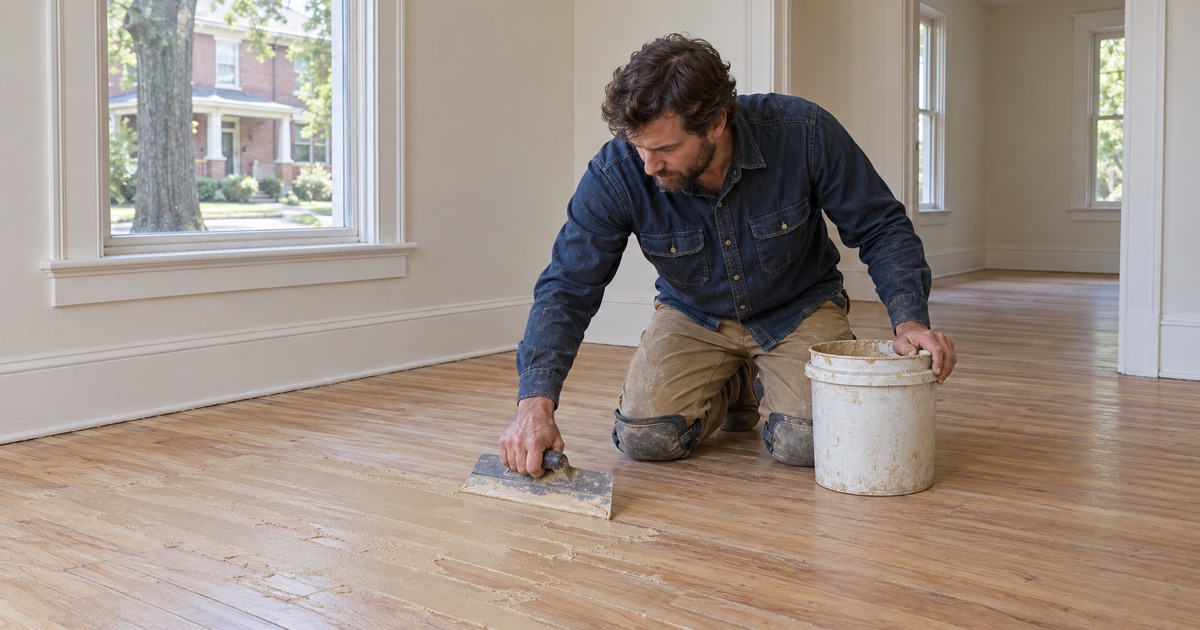
Capitol Hill is the Denver neighborhood bounded by Broadway, Downing Street, Colfax Avenue and Seventh Avenue. The City’s own tabulation of American Community Survey data for 2017-2021 counts 4,023 of the neighborhood’s 12,488 housing units as built in 1939 or earlier. That is roughly a third of the housing stock, and it shapes much of the flooring work we see here.
Quality Hill’s Neoclassical and Mediterranean Revival Mansions
The Denver Architecture Foundation describes the area known as Quality Hill, roughly 6th Avenue to 11th Avenue and Lincoln to Downing, as the place where many fine mansions went up after the turn of the twentieth century. Their styles were mostly Neoclassical and Mediterranean Revival, which set them apart from the Queen Anne and Romanesque mansions of northern Capitol Hill.
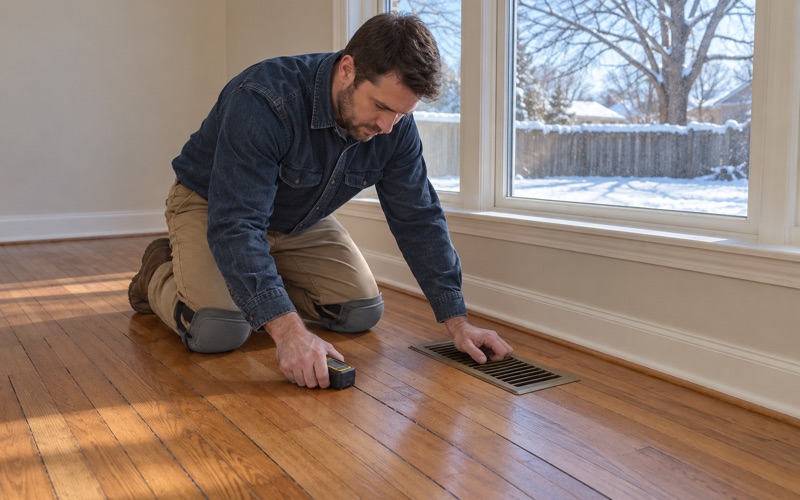
For floor work, the age matters more than the style label. A mansion floor from that era may have been sanded more than once, so we check remaining thickness at a floor register or a threshold before we plan a grit sequence. Where the wood above the tongue is thin, a lighter cut or a screen and recoat protects what is left.
Solid Hardwood Repair in Older Northern Mansions
The Queen Anne and Romanesque houses to the north are older still, and their floors tend to show a longer repair history. We often find patched areas where a wall moved, a radiator came out or a doorway was closed, each with boards that do not quite match the field around them.
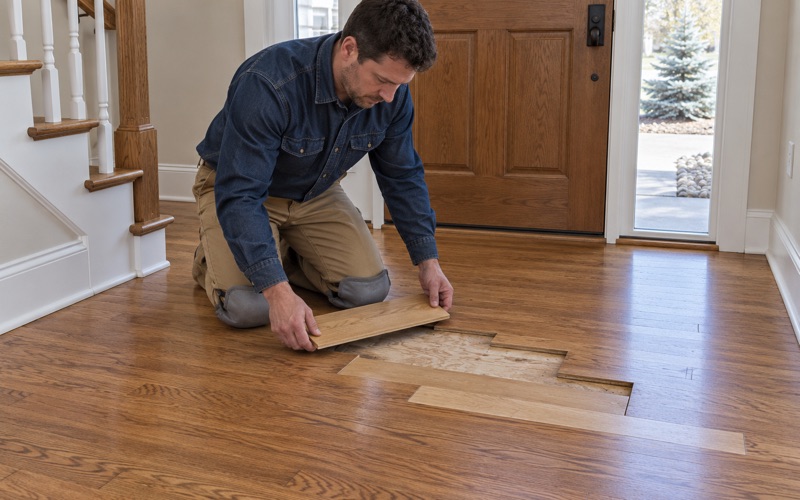
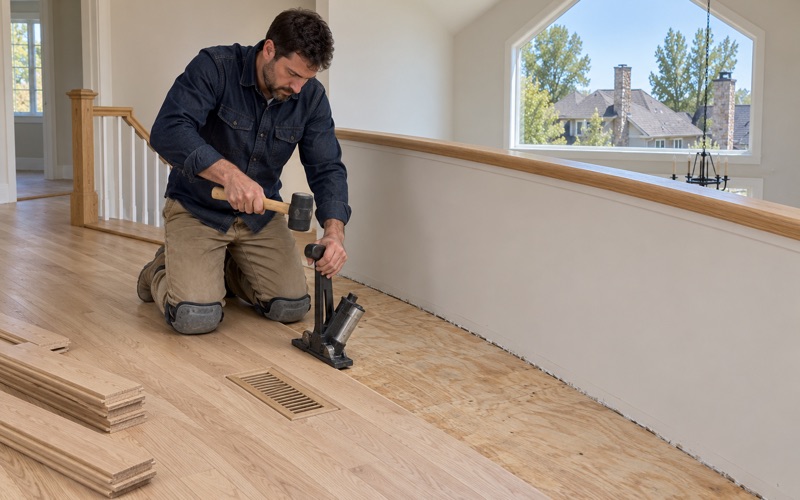
We handle those spots with board replacement, weaving new tongue and groove stock into the existing rows rather than laying a square patch. Squeaks and popping boards get traced to a loose board, a gap over a joist or a failed fastener, and fixed there, so the repair holds after the new finish goes on.
Checking Build Year Before Sanding
With so much of the neighborhood built long before 1978, we confirm the build year and look at painted trim, thresholds and any coated surfaces before a sander starts. Painted surfaces that may contain lead get handled under the EPA RRP Rule where it applies, and that step is planned into the schedule rather than discovered halfway through.
The same tabulation shows 83.4 percent of Capitol Hill’s housing units predate 1980, so even a midcentury apartment is old enough for this check. Asking the question at the estimate costs nothing and keeps a refinish from stalling once the room is cleared.
Looking for wood-flooring closer to Lochbuie? See Wood-Flooring in Lochbuie.
Refinishing Prewar Apartment, Condo and Converted Mansion Floors
After the 1893 Silver Crash, construction on Capitol Hill shifted away from mansions and toward apartments. A considerable number of the mansions themselves were later converted to office uses. Both histories leave us with floors that sit inside shared buildings, where the work has to fit around neighbors, building rules and a tighter footprint.
Dustless Sanding in Prewar Apartment Units
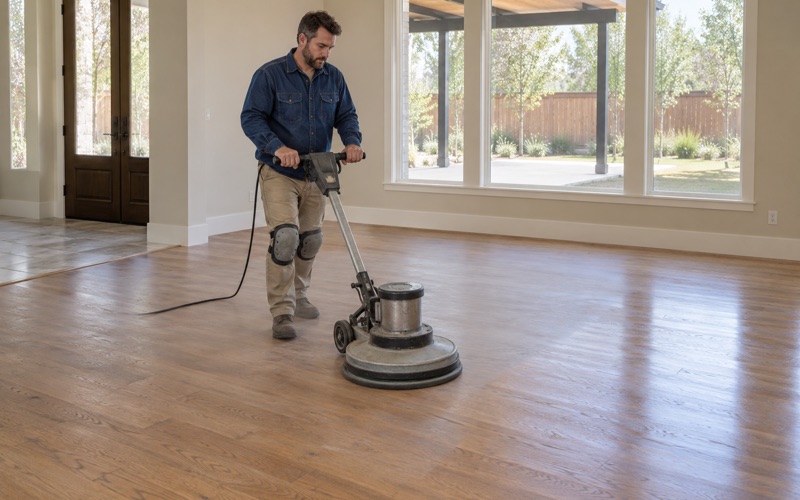
In a condo or apartment unit, dust and noise travel. We run dustless sanding with vacuum-connected machines, seal the doorway to the hall, and set a working schedule the building can live with. A drum sander does the heavy cut on the open field, and an orbital sander handles edges and tight spots near radiators and built-ins.
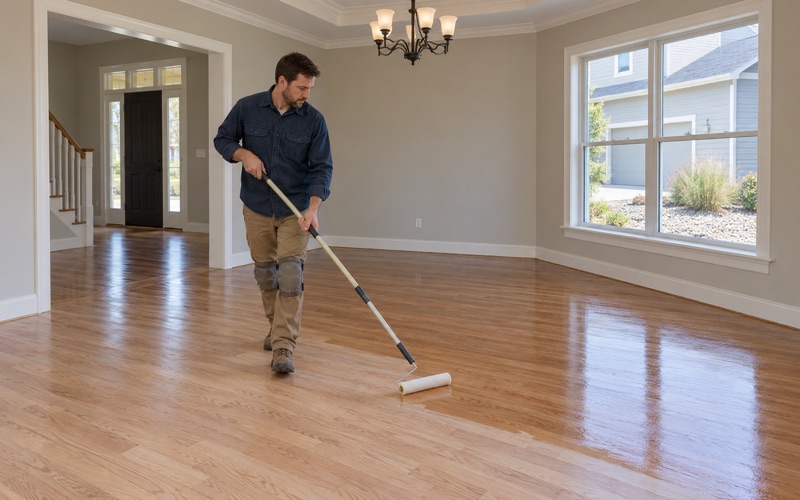
Finish choice matters more in a shared building. A waterborne polyurethane cures with far less odor than an oil-modified polyurethane, which keeps the hallway and the unit next door more comfortable, and it dries clear rather than amber. We talk through sheen level and cure time before we start so furniture and move-in dates line up.
Condo Rules for Old Floors in Multi-Unit Buildings
Any interior flooring rule in a condo building comes from your own association documents, so we read them before the work starts. Some buildings set working hours, elevator reservations or requirements for what goes under a new floor, and it is better to know that at the estimate than on the first morning.
Old floors in multi-unit buildings also show wear in predictable places: traffic lanes from the entry to the kitchen, water stains near a sink or radiator, and sun fade along tall windows. We sand through what the wood allows, and where a stain has gone too deep, we replace those boards before the finish coats go down.
Planning Floor Work in a Converted Mansion
A converted home brings its own puzzles. Where a large house was split into offices or smaller units, we often find floors that change height, direction or species at an old wall line, plus reducers and thresholds added over decades. We plan transitions so the rooms read as one floor wherever the layout allows it.
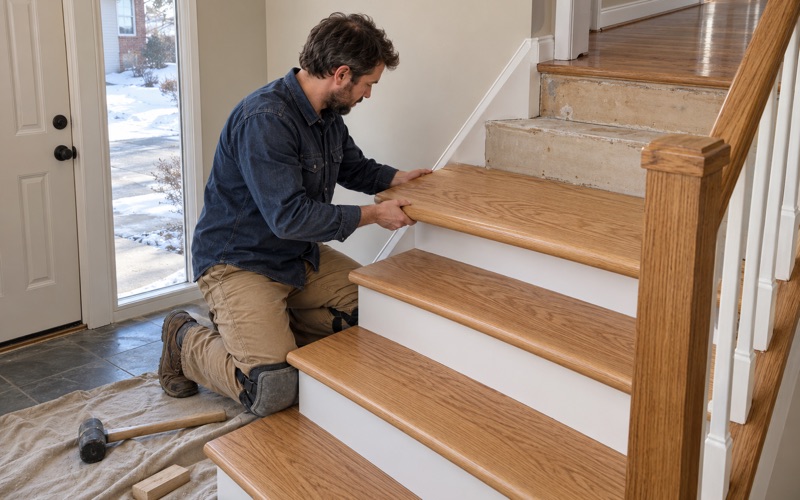
Stairs in these houses get the same attention. We quote stair treads one by one, check the nosing on each, and measure riser height at the landing if new flooring goes on it, so the first or last step does not end up taller than the rest.
Quality Hill, Pennsylvania Street and Landmark Review
Much of Capitol Hill’s architecture sits inside Denver landmark districts, and owners there often ask what that means for a floor project. The City’s design review process is written around exterior projects, and the details below are drawn from the City’s own documents.
The Quality Hill and Pennsylvania Street Districts
The City’s landmark district list, dated May 21, 2025, includes Quality Hill as district D-19, designated in 1992 with a period of significance through 1932. Pennsylvania Street is district D-31, designated in 1997 and covering the period up to and including 1955. The Denver Architecture Foundation places the area’s architectural treasures inside three districts: Quality Hill, Pennsylvania Street and Seventh Avenue.
Nearby, the same list carries Sherman-Grant (D-33, designated in 1997), Swallow Hill (D-35, designated in 1999) and Humboldt Street (D-2, designated in 1972). If your building sits in one of them, that history is a good reason to restore the old floor rather than cover it with luxury vinyl plank or a floating floor.
What Denver Landmark Review Covers
According to the City, Landmark Preservation staff and the Landmark Preservation Commission review the design of all exterior projects that need building or zoning permits at individual landmark properties and properties in historic districts. That review also reaches curb cuts and encroachment permits. The City’s description of it does not mention interior work.
The City’s design review checklist goes a step further for applicants, telling them not to include interior finish plans or other interior work unless a building or zoning permit calls for it. We do not treat that as a permit ruling for your floor. Whether any permit applies to a given project is a question for Denver Community Planning and Development.
Stain Samples for Historic Rooms
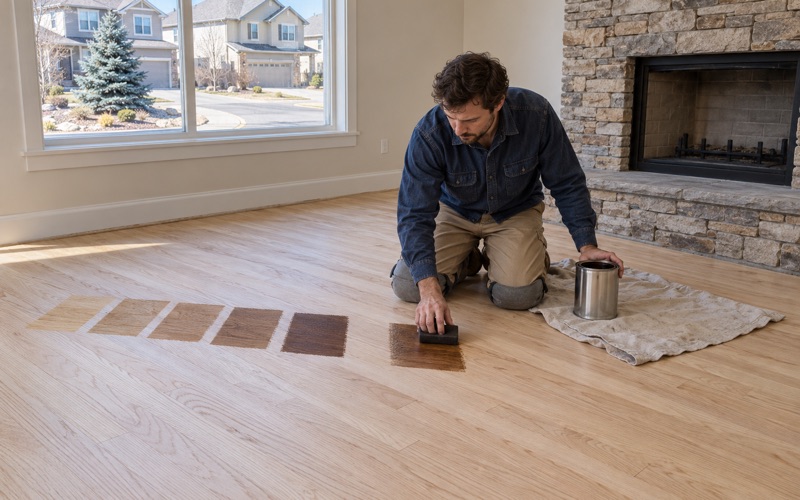
Owners in these districts often want the finish to suit the house’s age. We lay stain samples on your own floor and look at them in your own light, because a color that reads warm in a north-facing room can look flat by a bright window. Red oak and white oak take the same stain very differently.
Where an old floor has turned orange from aged finish, a full sand usually brings the wood back to a lighter base. Some owners then choose a hardwax oil for a softer, low-sheen look, and others want the harder wear of polyurethane in a busy hallway. We show both on your floor before you decide.
Seasonal Gaps, Humidity and Water in Old Denver Floors
Capitol Hill sits in the National Weather Service forecast zone COZ040, the zone that covers Denver along with parts of Douglas, Adams, Arapahoe and Broomfield counties. With the furnace running, a heated Front Range winter leaves indoor air far drier than the boards were when they arrived, and old floors show it.
Seasonal Gaps and Board Shrinkage
Winter gaps between boards are a frequent call from older buildings. Before anyone fills a seam, we take moisture meter readings and read the gap against the heating season, because a gap that opens with the furnace often closes again by summer. Filler packed into it then gets crushed or pushed up.
Where the gaps stay open year-round, the cause is often shrinkage or old repairs, and board replacement or a tighter patch is the lasting fix. We also talk through relative humidity in the unit, including whether a humidifier is practical in an apartment, before a new floor goes down.
Water-Damaged Hardwood in Shared Buildings
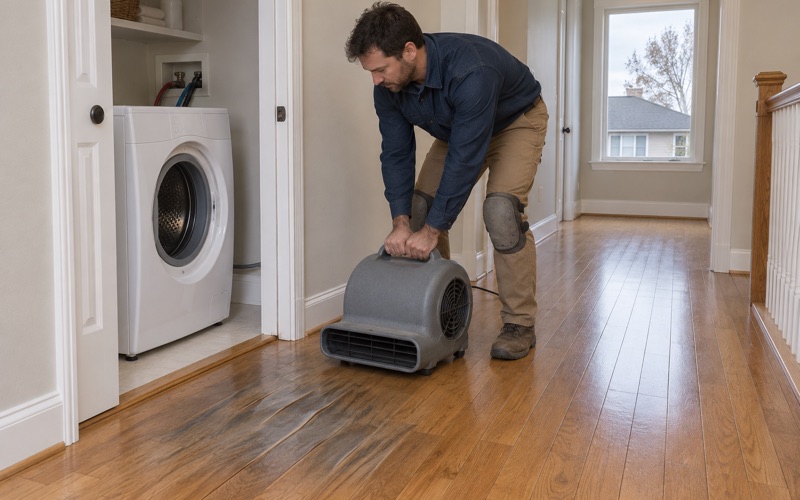
In a building with units above and below, water from a burst pipe, a washer, a supply line or a roof leak can reach a floor from someone else’s space. We trace where it came from, dry the area and measure moisture before any board is replaced, so the repair is not laid over wood that is still wet.
Cupping, crowning and buckling tell us how long the water sat and where it traveled. We document the damage room by room for the adjuster, which helps when a claim involves more than one unit owner or the building’s own policy.
Screen and Recoat for Well-Kept Floors
Not every old floor needs a full sand. If the finish is worn but the wood beneath is sound and free of old wax, a screen and recoat adds a fresh coat of finish without removing wood, which matters on a floor that has already been sanded down over the decades.
We test adhesion on a small area first, since older finishes and cleaning products can keep a new coat from bonding. When the test passes, the work is quicker and quieter than a full refinish, which suits a condo building where neighbors share the hallway and the stairwell.
- 20+ Years on Wood Floors
- Moisture Readings Before Repairs
- Stain Samples on Your Own Floor