Broomfield Wood Flooring has handled wood flooring in Brighton for more than 20 years, and much of that work starts in a house somebody else chose the floors for. Buyers who pick an older resale home usually inherit boards with a history: worn traffic lanes, a finish that has gone amber, gaps that open each winter. Our job is to read that history before recommending anything.
That usually means a refinish rather than a tear-out. A solid hardwood floor that has been sanded once or twice may still have plenty of wood above the tongue, and a careful sand and fresh finish can make it look deliberate again. When a floor has reached the end of its sanding life, we say so and explain what replacement involves.
This page is for owners who bought an existing house rather than a new build, and who now want the floors they found to work for them. We cover what the city’s own housing research says about those homes, when refinishing beats replacing, and how we plan a project so the finished floor suits the house you actually live in.
Wood Floors in Brighton’s Older Resale Homes
What the City’s 2023 Housing Study Found
The City of Brighton’s Housing Needs and Incentive Strategies Assessment, prepared by Gruen Gruen + Associates and dated October 12, 2023, states it plainly: older, existing single-family homes in Brighton are typically more affordable than new construction. For many buyers, that difference is the reason they ended up in a house with floors already down.
The study put a figure on it. Across sales from June 2022 to May 2023, homes built before 2000 averaged $445,000, roughly 20 percent below the average for new construction, which the report put at about $550,000 per unit. Those are the study’s numbers for that window, not a statement about what a house sells for today.
Ownership matters here too. Census data shows 71.5 percent of Brighton’s occupied homes are owner-occupied, so most of the city’s floors belong to the people walking on them. We write this page for that client: someone fixing a floor to live on, choosing finishes they will see every morning.
Brighton’s Pre-1980 Houses and Their Floors
Brighton is a home rule city in Adams and Weld counties and serves as the Adams County seat, and its housing stock is more layered than its recent growth suggests. Census figures from the 2024 five-year American Community Survey show 31.4 percent of the city’s housing units were built before 1980, and 775 predate 1940.
The Hughes post office took the Brighton name in 1879, and the city was incorporated eight years later, so some of its houses have been lived in for a long time. Our aim on every project here is to keep what still works in a floor and to fix what does not.
Some Brighton owners have lived with their floors for a long stretch. Census data counts 1,406 owner households that moved in before 2000, and floors in those homes have seen decades of daily traffic. When those houses change hands, the next owner inherits whatever finish and wear the last one left behind.
Those houses reach us with decades of wear, and sometimes with a later owner’s choices laid over the wood. We never assume there is wood under carpet or vinyl, or what species it is, until we lift a corner and look. Once we know what is there, we can tell you whether it can be sanded, patched or simply cleaned and recoated.
Looking for wood-flooring closer to Edgewater? See Wood-Flooring Services in Edgewater.
Refinish or Replace in a Pre-2000 House
Sanding and Refinishing Site-Finished Oak
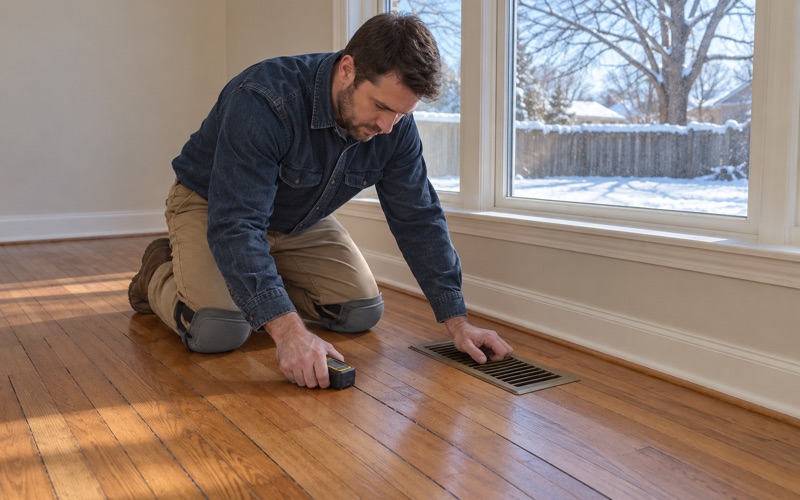
Resale homes from the 1990s often carry site-finished oak, frequently red oak or white oak nailed down tongue and groove and finished in place. Before we quote a full sand, we check how much wood is left above the tongue, often at a floor register where the board edge is visible. That measurement decides whether a drum sander is safe to use.
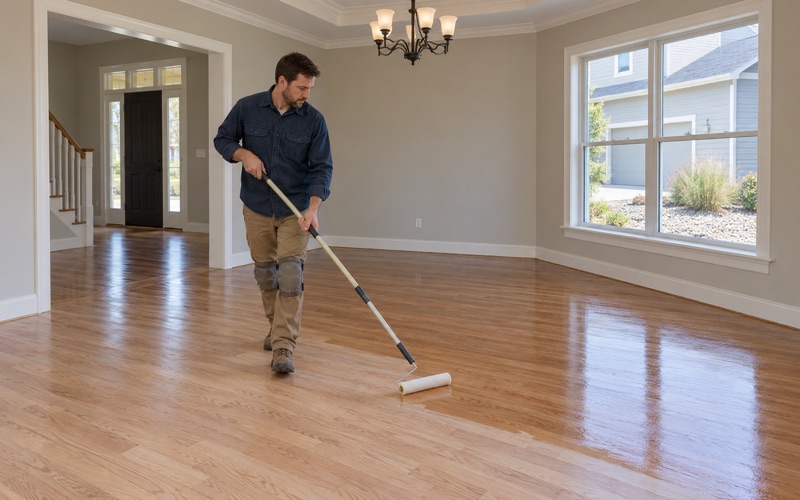
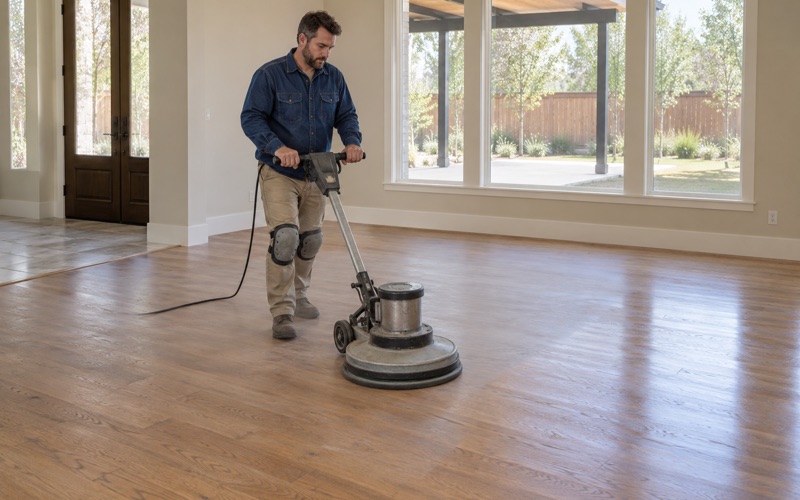
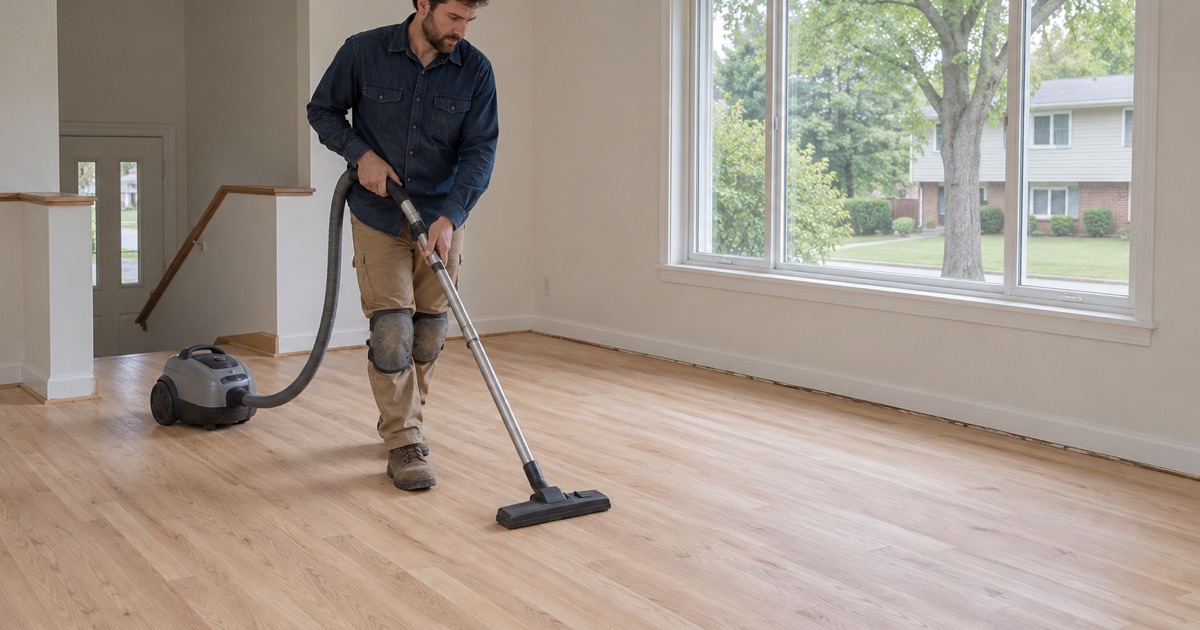
If there is room, we work through a grit sequence with the drum sander and finish with an orbital sander, using dustless sanding to keep fine dust out of the rest of the house. Where the finish is dull but intact, a screen and recoat can restore the sheen for a fraction of the effort, without removing wood.
Gaps, Squeaks and Cupping in Older Boards
An older floor tells you what it has been through. Seasonal gaps that open during furnace season, cupping near an exterior door, popping boards in a hallway: each has a cause, and filling or hiding the symptom rarely lasts. We take moisture meter readings first, because a seam filled during January may close tight again by summer and push the filler out.
Squeaks usually trace to the subfloor or a loose fastener over a joist rather than the board itself. Where we can reach the problem, we secure it before refinishing so the new finish goes onto a quiet floor. Cracking, checking and hollow spots get the same treatment: we find out why before deciding what to do.
Board Replacement and Stair Treads
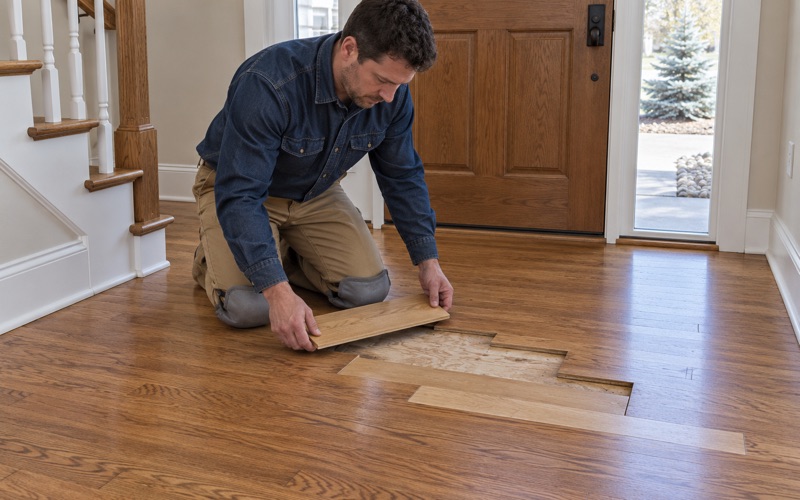
Pet urine stains, water stains and deep gouges do not always sand out. In those spots we cut out the damaged boards and weave in matching stock so the repair blends in once the whole floor is sanded and finished together. A patch done this way usually costs far less than replacing a room.
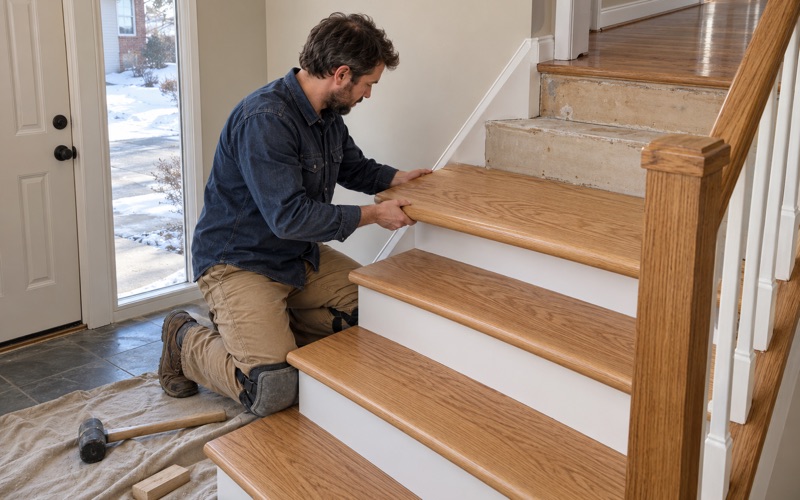
Older staircases get their own quote, tread by tread, because worn nosing and loose treads vary step to step. If a new floor meets a landing, we check the added height against the riser height so the top or bottom step does not end up taller than the rest. It is a small detail that people feel with their feet long before they notice it with their eyes.
Sometimes the honest answer is replacement. If earlier sandings have worn the boards close to the tongue, or a floor has buckled from a long leak, we will show you what we found and quote new solid hardwood or an engineered floor instead, rather than risking another pass with the sander.
Newer Subdivisions and Their Floor Decisions
Farmlore, Mountain View and Builder-Grade Floors
Not every Brighton house is older, of course. The city’s housing study notes that most of the inventory was built over the past 20 years, and that large subdivisions such as Farmlore and Mountain View are actively developing about 1,300 more single-family lots. Owners of those homes face a different decision: what to put down, not what to save.
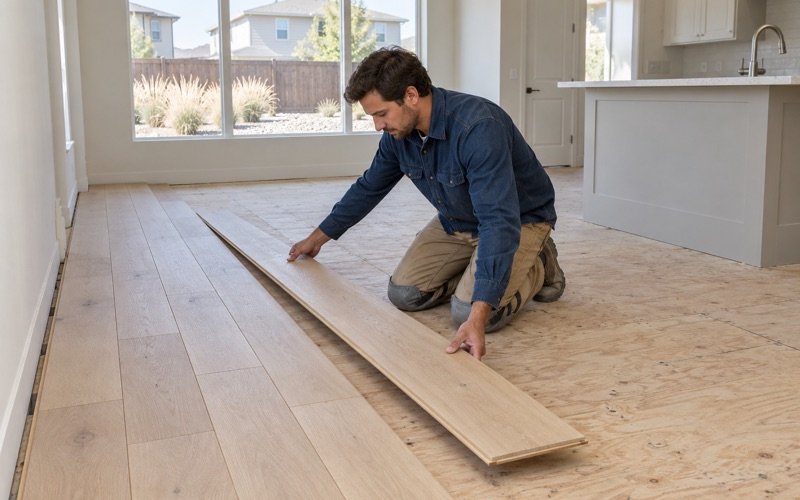
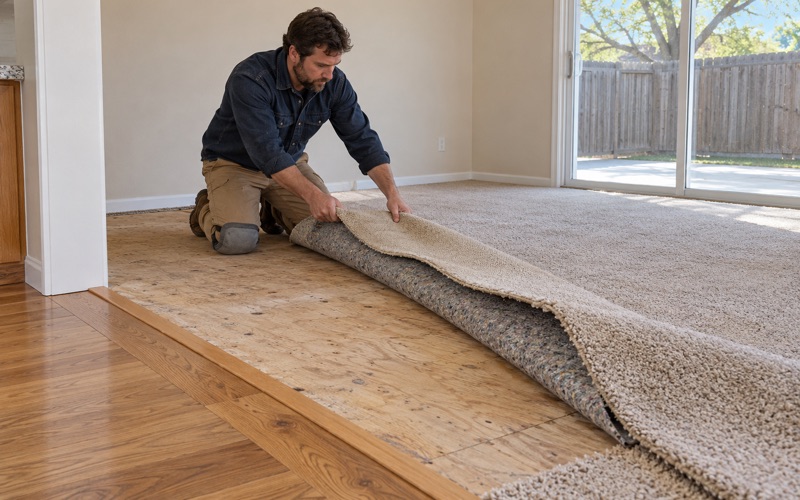
In a newer house, that often means replacing carpet or builder-grade flooring with wood, stairs and landings included. We pull the tack strip and carpet pad, check the subfloor for flatness, and match the new floor to the existing reducers and transitions so rooms meet cleanly. Where a homeowners association or metro district governs the lot, we read your own documents before work starts, since any interior flooring rule comes from them.
Engineered Wood, Solid Hardwood and Below-Grade Rooms
Solid hardwood and engineered wood each have a place. Solid boards can be sanded several times over their life, while an engineered wear layer allows fewer sandings but tolerates moisture swings better. Species matters as well: hickory and white oak rank higher on the Janka hardness scale than red oak, which can matter in homes with dogs.
If your house has a finished or unfinished basement, we look at it room by room before recommending anything below grade. A slab on grade, a structural wood floor and a structural concrete floor each call for a different approach, and engineered wood is usually the right choice where solid wood does not belong. We confirm which one you have rather than guessing.
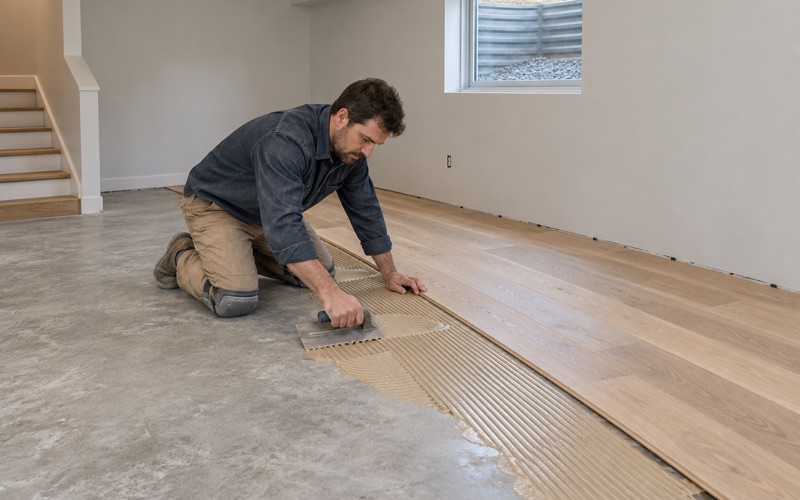
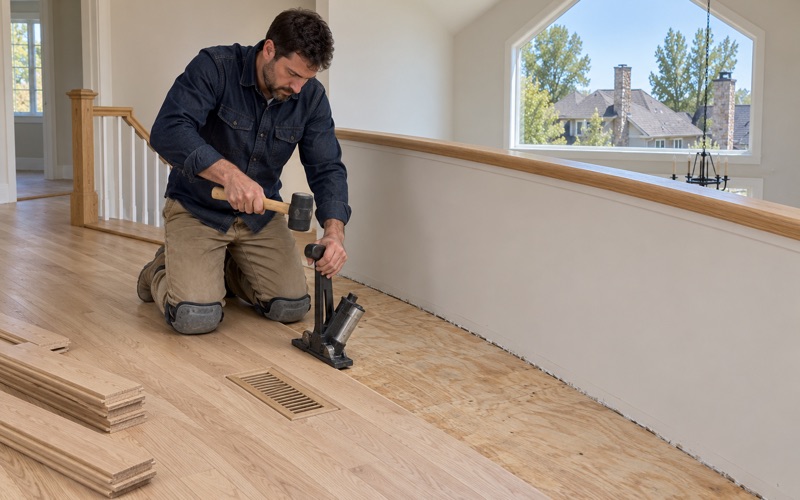
Installation method follows the product. Solid boards are nailed down with flooring cleats or staples over a wood subfloor, glue-down engineered suits many concrete surfaces, and a floating floor sits over a pad with a vapor retarder where the substrate calls for one. We explain which method fits your rooms before you commit.
Matching New Wood to an Existing Floor
Resale owners often want wood carried into a room that never had it, such as a converted den or a kitchen that was tiled. Matching an older floor means matching board width, species and the way the existing finish has aged, which is why we sand and finish old and new sections together whenever the layout allows.
Planning a Wood Floor Project in Brighton
Stain Samples, Sheen and Finish Choices
Orange oak is a frequent complaint in older houses. An aged oil-modified polyurethane can push red oak toward orange, and once it is sanded off, a waterborne polyurethane or hardwax oil lets the natural tone read more neutral. That change alone can make a pre-2000 floor feel current without replacing a single board.
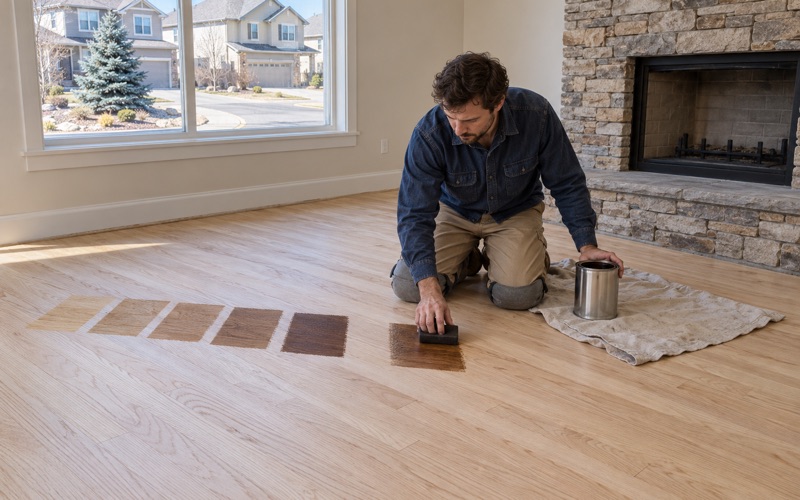
Color is easier to get right on the floor than in a showroom. We lay stain samples on your own boards, in your own light, and let you look at them across a morning and an evening before choosing. Sheen level gets the same care, since a matte or satin finish hides everyday scuffs better than gloss.
Humidity, Acclimation and Timing
Indoor air during a heated Front Range winter is far drier than the boards were when they arrived, and that difference drives much of the shrinkage and board gapping. Before new wood goes down, we talk through your home’s relative humidity, whether a whole-house humidifier makes sense, and how long the flooring should acclimate.
We check the subfloor and the new boards with a moisture meter so both sit near the equilibrium moisture content the house will hold, and we leave a proper expansion gap at the walls under the quarter round. A floor installed this way still moves with the seasons, but it moves the way it was planned to.
Water Damage and Insurance Documentation
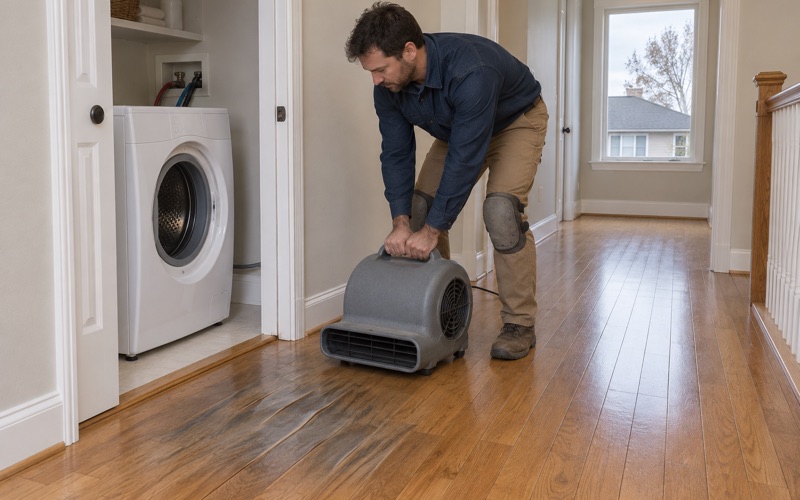
Leaks are another reason resale floors come to us stained, cupped or buckled. Whether the source is a burst pipe, a washer, a supply line or a roof leak, we trace it, dry the area and take moisture readings before any board is replaced, so the new wood does not go down over a problem that is still wet.
When an insurance claim is involved, we document the damage room by room for the adjuster, with readings and photos tied to each space. That record helps everyone agree on what needs repair and what can be saved with sanding and refinishing.
- 20+ Years on Wood Floors
- Moisture Readings Before Repairs
- Stain Samples on Your Own Floor