Broomfield Wood Flooring handles wood flooring in Boulder with more than 20 years in the trade, and most of the calls we answer here concern floors that already exist. Homeowners want a worn living room brought back, a stained hallway repaired or a tired finish renewed, far more often than they want a bare subfloor covered for the first time.
That shapes how we work. Before a drum sander touches a board, we check how much wood is left above the tongue, read the moisture in the boards and the subfloor, and look at the build year and any painted trim. A floor that can take another sanding is usually worth keeping, and we would rather tell you that than sell you new boards.
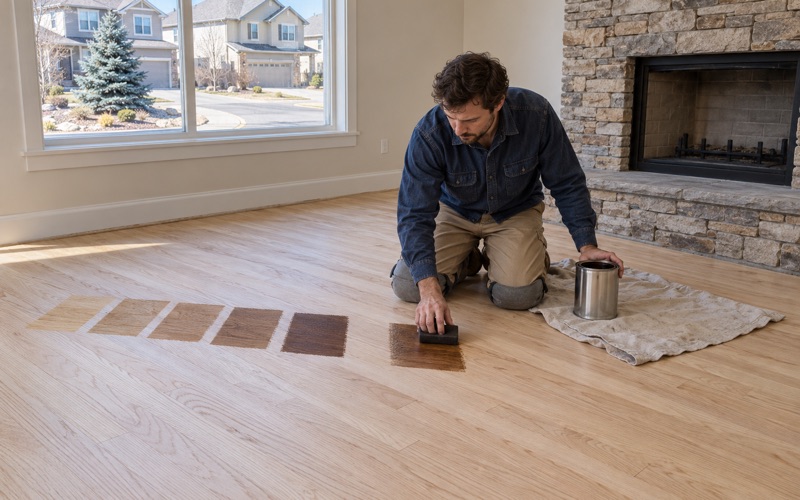
Stain colors are chosen from samples laid on your own floor, in the light your rooms actually get. Cracks, squeaks and popping boards are traced to a cause rather than filled over, because a hidden problem in an older house tends to come back through the new finish.
Boulder’s Permit Cap and the Age of Its Homes
A Growth Plan From 1976, Repealed in 2024
Boulder took an unusual path. In 1976 the city adopted a formal growth management plan that limited the number of housing permits issued each year, and the program, often called the Danish Plan, limited residential growth to about 2 percent a year and allocated permits by a merit point system.
That system lasted nearly five decades. The city repealed its Residential Growth Management System in 2024 to comply with state law, following a 2023 statute that barred local anti-growth limits that impede housing supply. The cap belongs to the past, while the homes built before and during it hold the floors we work on most.
The city layered other housing rules on top. In 2000 Boulder adopted Inclusionary Zoning, which requires 20 percent of all new residential development to be permanently affordable. Neither program dictates anything about floors, but both belong to the housing history a Boulder floor job sits inside.
What the Census Counts Show
The American Community Survey’s 2024 five-year estimates count 47,465 housing units in Boulder. Of those, 26,313, or 55.4 percent, were built before 1980, and the 1970s is the single largest decade, at 20.5 percent of the stock. Another 7,904 units date to the 1960s, and 3,576 go back to 1939 or earlier.
The newer end of the range is thin. Only 17.8 percent of units were built in 2000 or later. We set those figures beside the permit history without claiming one explains the other, but for a flooring contractor the practical result is plain: most of the Boulder floors we see have lived through decades of wear, often with an earlier sanding or a stain someone else chose.
Solid Hardwood With Decades of Wear
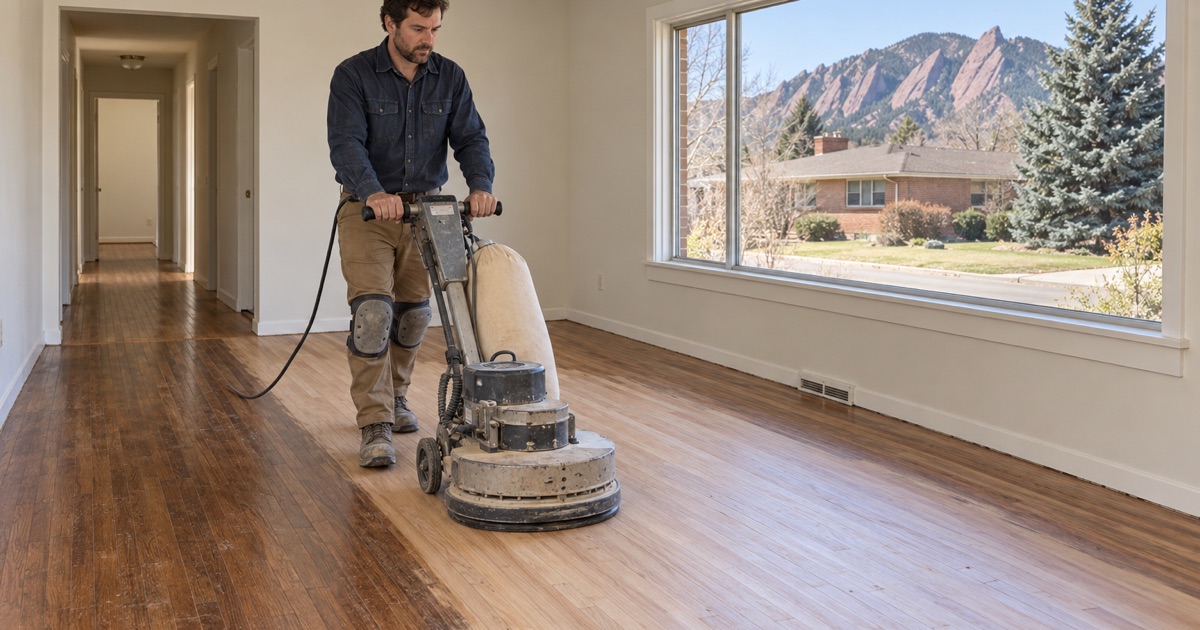
Solid hardwood can be sanded several times over its life, but each pass takes wood off the top. On a floor that has been sanded before, the margin above the tongue and groove can get thin, and the nail heads or the tongue itself can start to show.
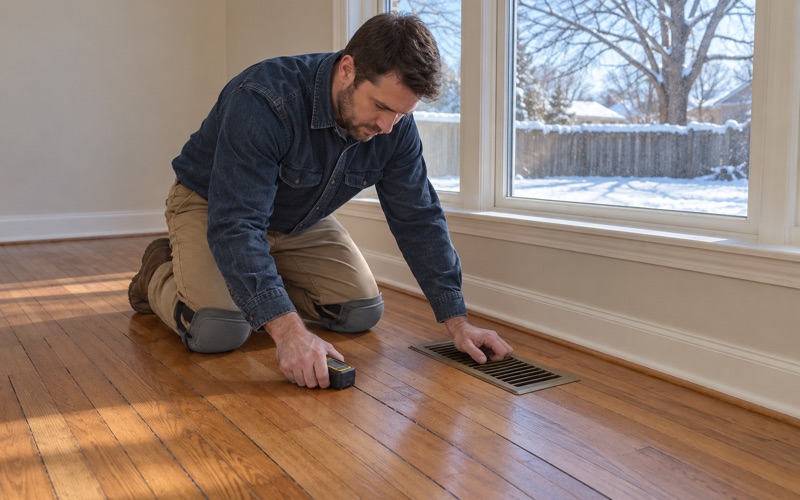
We pull a floor register or a threshold to measure what is left before we quote a full sanding. Where the wear layer is still healthy, a complete refinish makes sense. Where it is not, a lighter screen and recoat or targeted board replacement is often the smarter spend.
Checking along the grain, deep cracking and hollow spots are the other signs we look for in a floor this age. A hollow spot usually means the boards have lost their bond or fastening to what sits underneath, and we secure that before any sanding starts, since a drum sander rides unevenly over a loose area.
Looking for wood-flooring closer to Wheat Ridge? See Wheat Ridge Wood-Flooring.
Refinishing Floors in Boulder’s 1960s and 1970s Homes
Lead Checks Before the Drum Sander
Every house built before 1978 gets the same first question from us: are there painted surfaces we will disturb? Baseboards, shoe molding, door casings and stair parts in homes of that era may carry old paint, and sanding a floor edge runs right against them. The EPA RRP Rule sets the work practices for that situation.
Given how much of Boulder’s housing predates 1980, that check is routine here rather than occasional. We confirm the build year, look at every painted surface near the work, and plan containment and cleanup before the first pass, so the refinish does not turn into a paint problem.
Sanding and Finishing Site-Finished Hardwood
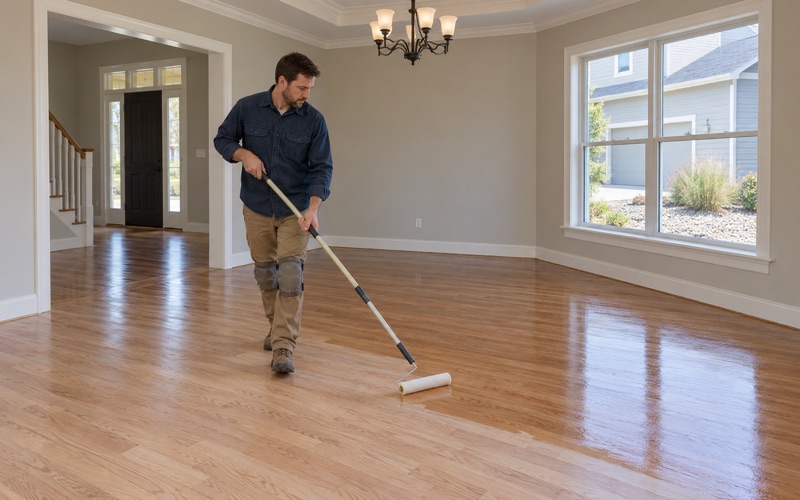
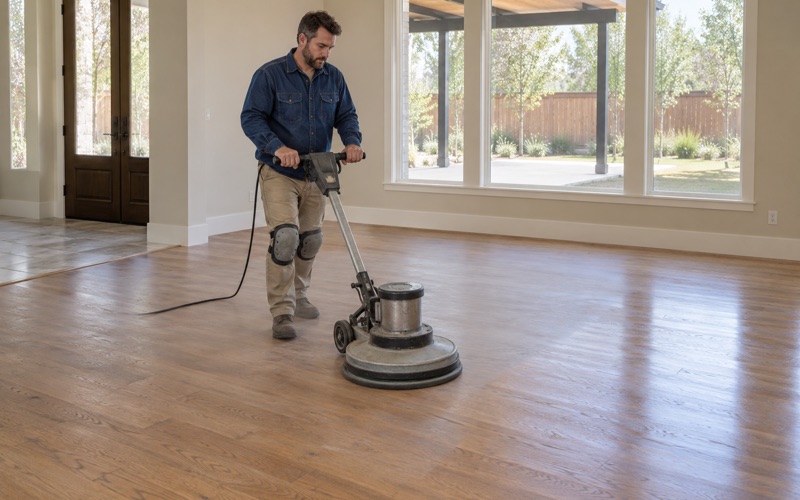
Site-finished hardwood, the kind sanded and coated in place, responds well to a full refinish. We run a drum sander through a measured grit sequence, follow the edges with an orbital sander, and use dustless sanding equipment so the rest of the house is not coated while we work.
Finish choice comes next. Waterborne polyurethane stays clearer and cures with less odor, while oil-modified polyurethane ambers over time and suits some older rooms, and hardwax oil gives a low-sheen look that is easy to spot-repair. When a darker tone is wanted, water popping opens the grain so the stain takes evenly.
Sheen level is the last decision. Satin and matte finishes hide the fine scratches of daily life better than gloss, which suits a busy older house, and we apply enough coats to protect a floor that may have been sanded more than once already.
Gaps, Squeaks and Cupping in Older Floors
Boulder sits at 5,430 feet at the base of the foothills, within the National Weather Service forecast zone for Boulder and Jefferson counties below 6,000 feet. Winter air indoors gets dry once the furnace runs, and finishes and fillers behave differently than they do in a humid summer week.
Older floors move with it. Boards shrink and seasonal gaps open over the heating months, then most of them close again by summer. We take moisture meter readings before filling anything, because filler packed into a seam that will close later gets crushed out or cracks.
Squeaks and popping boards usually trace back to fasteners that have loosened against the subfloor or a joist over the years. Cupping and crowning point to moisture on one face of the board. Securing the floor before sanding means the new finish goes down on boards that stay quiet.
When Restoration Beats Replacement
Board Replacement and Weaving In New Wood
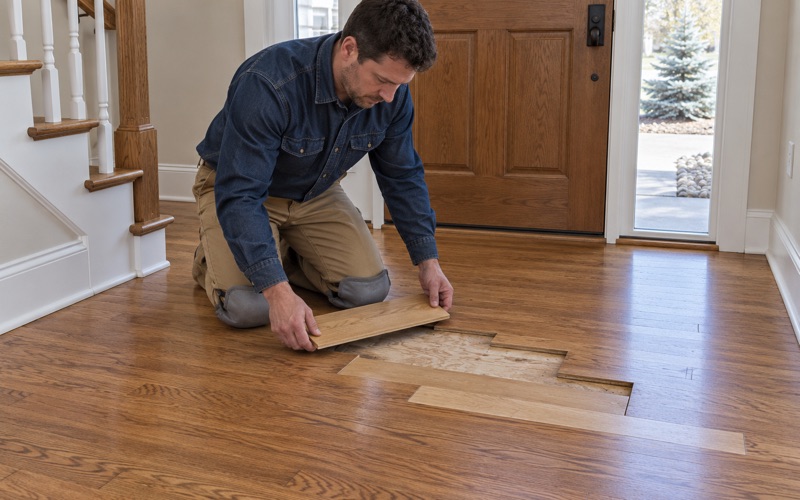
A damaged area rarely means a whole new floor. Pet urine stains, water stains and deep gouges can be cut out board by board, with new tongue and groove stock woven into the existing pattern so the seams stagger naturally. Once the whole room is sanded and finished together, the repair disappears into the floor.
Matching species and width matters more than anything else here. We identify what is on your floor before ordering, and where a close match is hard to find, we look to less visible spots such as a closet to borrow boards for the main room.
Screen and Recoat for Sound Finishes
Not every tired floor needs bare wood. If the finish is dull and scratched but has not worn through to the wood, a screen and recoat scuffs the top coat and adds fresh polyurethane in a day or two, with far less dust and far less wood removed.
It is the right call for a floor with plenty of life left and the wrong one for traffic lanes worn gray, sun fade, or any finish that has been waxed. We test adhesion in a corner first, since a new coat will not bond to a surface that is contaminated.
When New Wood Flooring Is the Better Answer
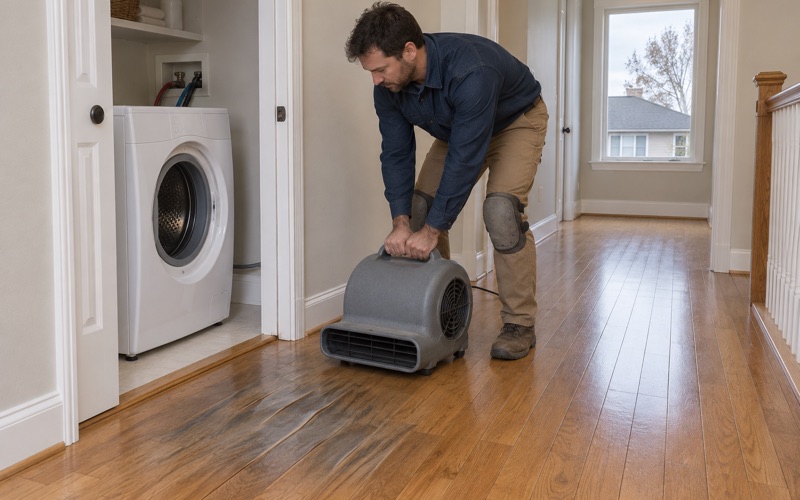
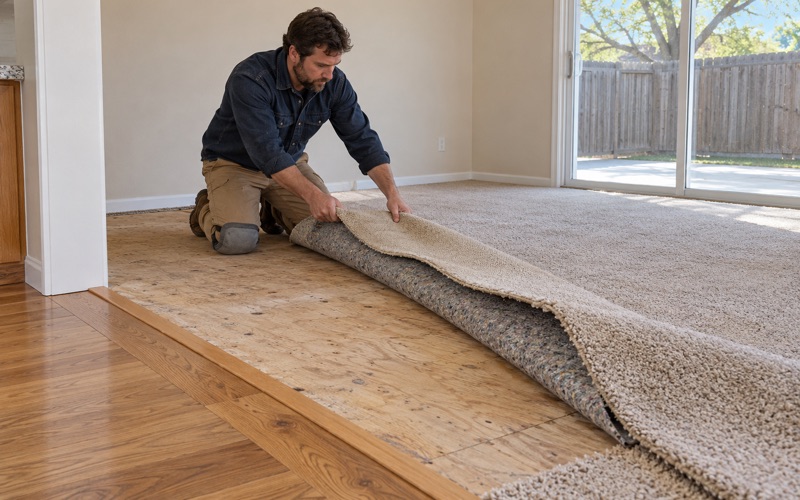
Sometimes replacement wins. A floor sanded down to the tongue, boards that have buckled after a burst pipe, or carpet over a bare subfloor where the owner wants wood for the first time all call for new material. We trace and dry water damage before replacing anything, and measure moisture room by room so an adjuster has documented readings.
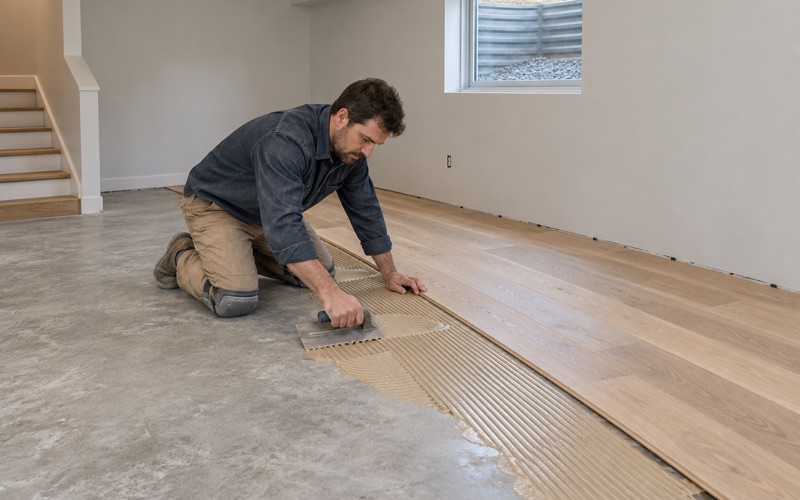
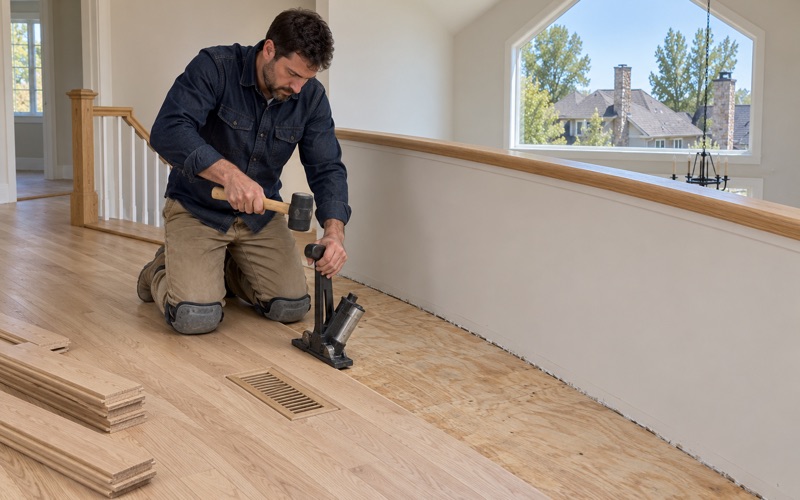
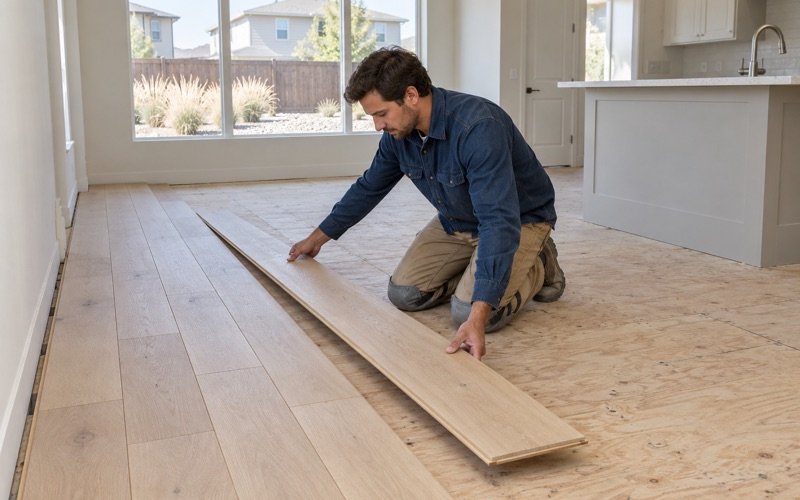
For new installs we choose between solid hardwood and engineered flooring based on the room, and we talk through indoor humidity first, since new boards arrive carrying more moisture than a heated house will let them keep. Acclimation, a proper expansion gap and a whole-house humidifier where it helps keep the new floor steadier through the seasons.
Licenses, Renters and Scheduling Floor Work in Boulder
Who Needs a Boulder Contractor License
The City of Boulder requires a contractor license of anyone who undertakes to build, construct, alter, repair, add to, move or demolish a building or structure for another person within the city. Licensing runs through Planning and Development Services at 1777 Broadway, with general building classes A through C and specialty classes D through G.
Homeowners working on their own residence are exempt, and so are subcontractors working under a licensed contractor’s supervision. If you plan to hire out any floor work, ask the contractor how the city’s rules apply to that job before it starts; we answer that question on our own quotes rather than leaving you to guess.
Refinishing Rental Floors in a Renter-Majority City
Of Boulder’s 44,432 occupied units, 23,455 are renter-occupied, or 52.8 percent, and the University of Colorado Boulder was established here in 1877. For many property owners, that means floor work squeezed between tenants, where a late finish can push back a move-in.
Rental floors take heavy wear, so we often recommend a harder-wearing finish and a screen and recoat schedule that keeps the surface from wearing through between full sandings. For a unit built before 1978, the painted-surface check comes first, and we plan the turnover around cure time so tenants move onto a finish that has had time to harden.
Stairs, Landings and Multi-Unit Buildings
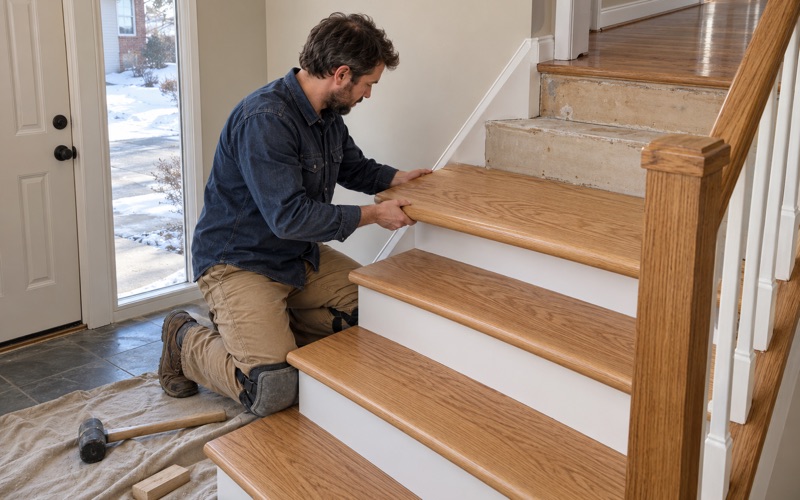
Boulder’s housing includes 3,655 attached single-family units alongside apartments and small multi-unit buildings, and stairs come up often. We quote stair treads, risers and nosing tread by tread, and when a new floor meets a landing we check that the added height does not throw off the riser height at the top or bottom step.
In a condominium or townhome, your association documents may set rules for interior flooring, and those rules come from your own declaration rather than from the city. We read them with you before work starts, so the floor you choose is one the building will accept.
When the plan is set, we give you a written scope that names every room, the stairs, the finish and the expected cure time, so a landlord, an association manager or a household can plan around it.
- 20+ Years on Wood Floors
- Moisture Readings Before Repairs
- Stain Samples on Your Own Floor