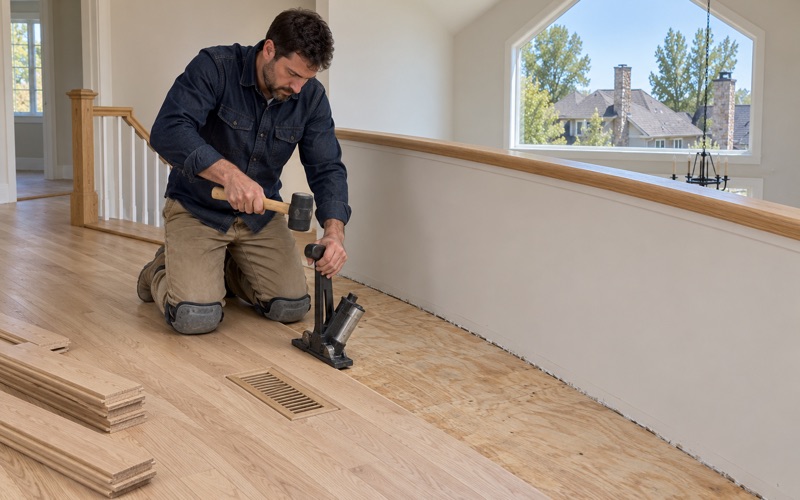
Broomfield Wood Flooring takes on wood-flooring in Berthoud with more than 20 years in the trade, and this town asks for two kinds of judgment. Most jobs are refinishing, board repair or new installation in newer houses. A smaller share sit in the older blocks near downtown, where a floor deserves a slower first look before any machine touches it.
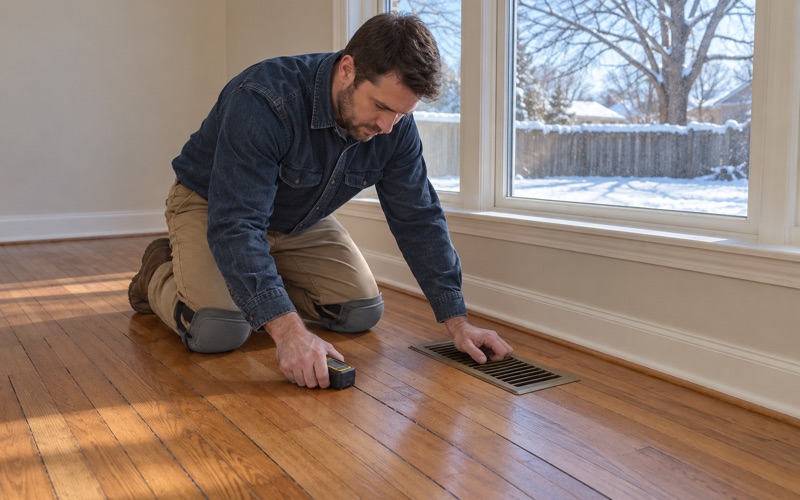
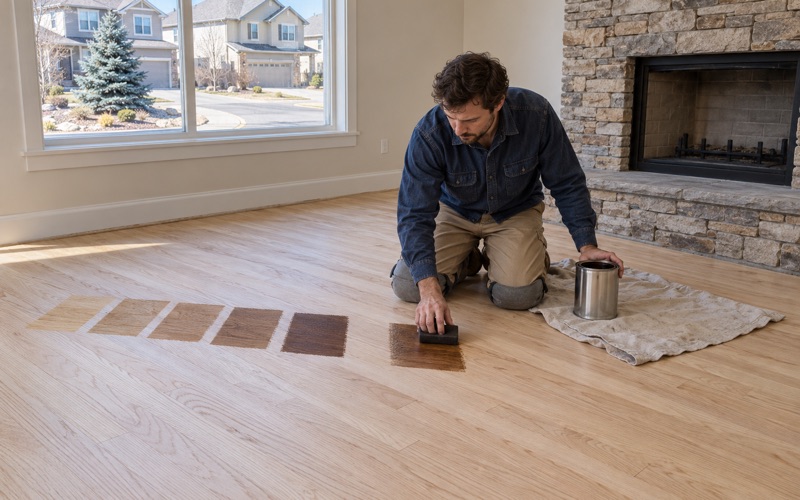
Either way, we start the same. We read the boards with a moisture meter, look at how gaps and cupping behave through the heating season, and lay stain samples on your own floor in your own light. Squeaks, popping boards and cracking get traced to a cause rather than filled over, because a hidden problem usually returns by the next winter.
This page is about the older end of that work: the historic houses Berthoud has chosen to protect, the blocks they stand on, and what that protection does and does not cover. If your home is newer, the same care applies, and the last section explains how the two kinds of house call for different decisions.
Landmarked Homes on 5th, 6th and 7th Streets
Berthoud keeps its historic register house by house. For houses, the Town has individually landmarked homes along 5th, 6th and 7th Streets, 1st Street and Welch, one address at a time. Each listing names a property, an address and the year it was landmarked, which makes the register easy to check before a project starts.
Refinishing Floors in Landmarked Houses
Among the individually landmarked homes are the C.P. Thompson Home at 717 6th Street, landmarked in 2019, the McCarty-Fickel House at 645 7th Street, landmarked in 2007, and the McCormick Brunner Cottage at 631 5th Street, landmarked in 2017. Others on the list include the Culp House on 5th Street and the Ullery House at 648 Welch.
A landmark listing tells us a house matters to the town. It does not tell us what sits under the carpet or what the last finish was, so we find out before quoting. We check how much wood remains above the tongue, look for old board replacement and patching, and note where furniture and foot traffic have worn lanes into the surface.
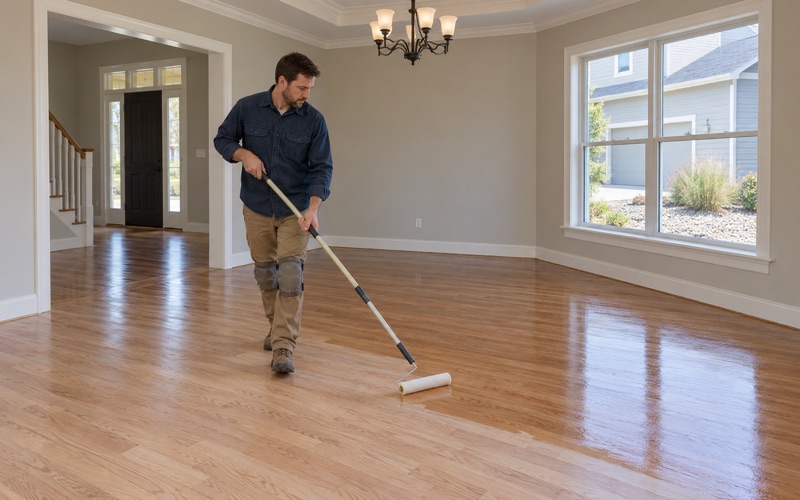
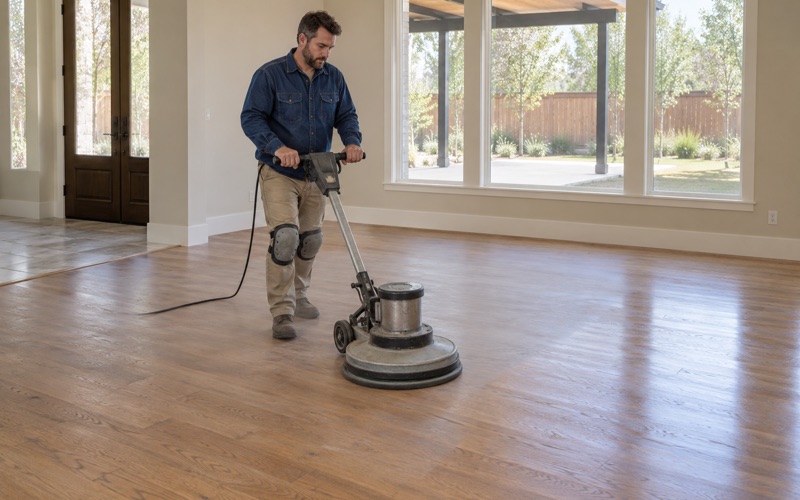
Where the wood is thick enough, a full sand and refinish usually makes more sense than tearing a floor out. Where it is thin, a screen and recoat can refresh the finish without cutting into what is left. Either way, the choice between waterborne polyurethane, oil-modified polyurethane and hardwax oil is made with the owner, not assumed.
The Berthoud Commercial District
Most of the commercial landmarks on the register belong to the Berthoud Commercial district, designated in 2008. The Colorado and Southern Depot at 600 3rd Street is on the register as well. Floors in storefronts and offices usually see heavier traffic than a house, so the finish and sheen level we recommend there lean toward durability first.
Downtown work also brings practical limits a house does not. Hours, dust and access matter when a business stays open next door, so we plan dustless sanding where it fits and stage the job in sections. A shop owner gets a schedule that names which rooms are closed on which days before we unload a drum sander.
Looking for wood-flooring closer to Greenwood Village? See Wood-Flooring Services in Greenwood Village.
A Town Moved to the Bluff
The town sits on its bluff because of a move. The Colorado Central Railroad set a depot here in 1877, named for surveyor Edward L. Berthoud. Then, during the winter of 1883-84, several buildings of the town were loaded on wheels and pulled by teams of draft animals to the bluff one mile north of the Little Thompson River.
The town incorporated on August 28, 1888. The Bimson Blacksmith Shop, built of native Lyons sandstone and listed on the National Register, dates to 1893 and was the first blacksmith shop in Berthoud. Those are the bones of the Old Town that surrounds the landmarked houses today. None of it is ours to repair, but it sets the context for the houses whose floors are.
The Oldest Housing Stock
The census count puts numbers on how small that older layer is. Of Berthoud’s 5,158 housing units, 208 were built in 1939 or earlier, according to the 2024 five-year American Community Survey. That is a small group of houses, and a wood floor in one of them has often been through several owners, finishes and repairs by the time we see it.
We do not assume what species or board width a pre-1940 house holds, and we do not guess its age from the street. We look at the boards themselves, the nailing, the subfloor where it can be seen from a register opening, and any patch where earlier board replacement used a different wood or width.
Board Repair in Pre-1940 Houses
Old floors often carry decades of small fixes. A board cut out for plumbing, a threshold moved, a room joined to the next: each leaves a seam that can open, squeak or sit proud. We trace hollow spots and popping boards to the joist or fastener behind them, then repair from there rather than filling the surface.
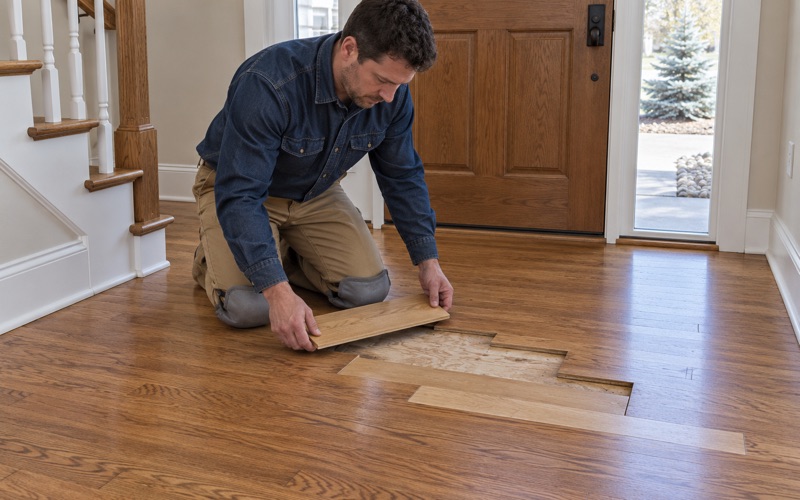
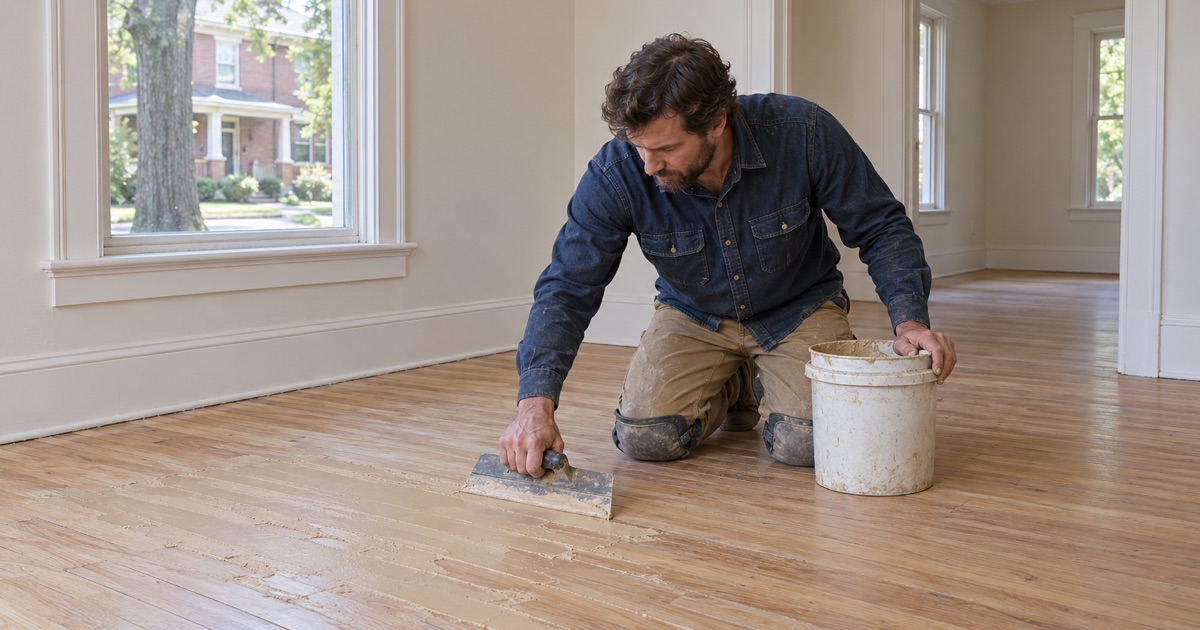
Matching a replacement board is where patience pays. We pull stock close in species, width and grain, weave it into the existing tongue and groove, and sand the patch with the whole room so the repair does not read as a square of newer wood. Stain samples come after, laid beside the old boards so color is judged against what stays.
What the Historic Preservation Committee Reviews
A fair question for the owner of a landmarked house is whether floor work needs the Town’s sign-off. The Town of Berthoud Historic Preservation Advisory Committee, formed in 2002, has a stated duty to review and make decisions on any application for alterations to the exterior of designated historic structures or historic districts. That duty is written around the outside of the building.
The Committee’s Stated Duty
We read that duty as written and do not stretch it in either direction. The committee’s published role speaks to exterior alterations, and we do not tell owners that it reviews floors, nor that it could never have a view on a project. For anything that touches the outside of a landmarked house, the committee is the body to ask.
Floor jobs can brush the exterior in small ways: a new threshold at a front door, a porch step that meets an entry floor, a storm door rehung to clear a thicker floor. When a job touches anything like that, we raise it early so the owner can check with the Town before work starts, not after.
Lead Checks Before Sanding
Age matters more to us inside the house than any listing does. In a home built before 1978, we check the build year and look for painted surfaces before sanding, because old paint on baseboards, stair risers or a painted floor border can hold lead. That check happens before the orbital sander or drum sander comes off the truck.
Where paint that may hold lead is present, the work plan changes to follow the EPA RRP Rule for containment and cleanup. We explain that plan to the owner before the start date, since it can affect cost, schedule and which rooms stay usable. Stair treads and nosing get the same look as the main floor.
Old Floors in a Town of Newer Houses
Most of Berthoud’s homes are far newer than the landmarked houses, and a floor in one of them usually calls for different decisions. The two kinds of house sit a short drive apart, so the same week can bring a hand-matched board repair on 6th Street and a whole-house refinish in a home from the 2000s.
Solid Hardwood Versus an Engineered Wear Layer
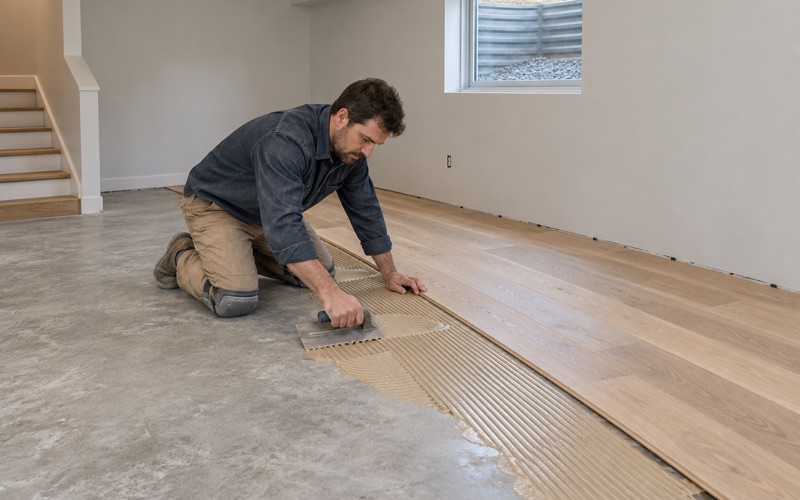
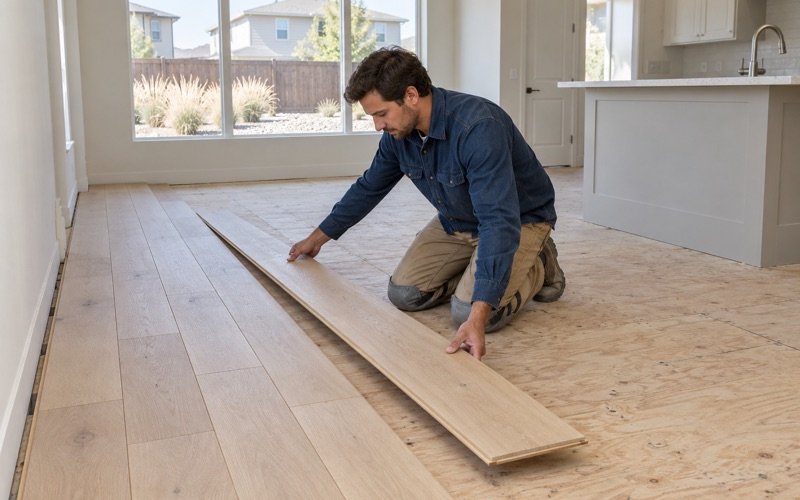
In an older house, solid hardwood that has been sanded before may have limited wood left, and each refinish spends some of it. We measure before we promise a full sand. In a newer house, the floor may be prefinished or engineered, and the thickness of the engineered wear layer decides whether sanding is possible at all.
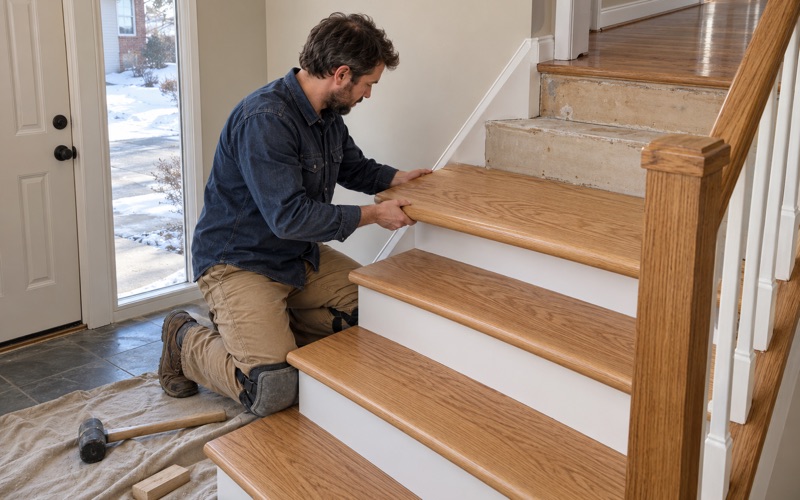
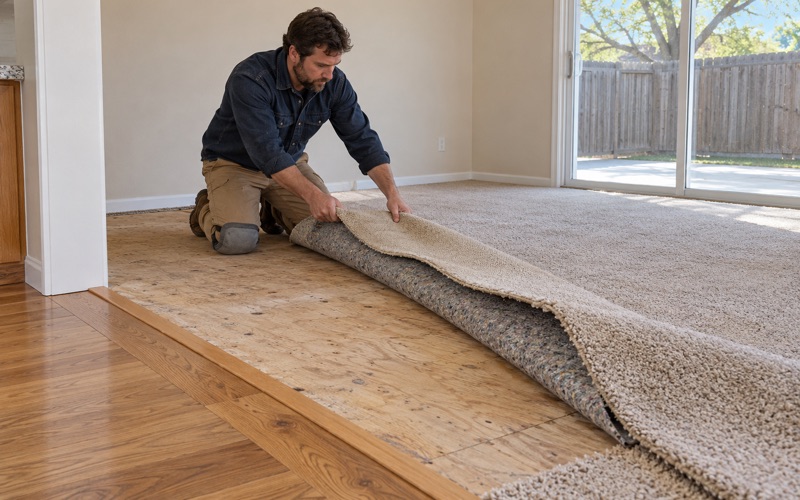
Site-finished oak from the 1990s, 2000s and 2010s often has plenty of wood above the tongue and refinishes well. Where an owner wants to replace carpet or a builder-grade floor with wood, we quote stairs and landings tread by tread, and check that a new floor on a landing does not throw off the riser height.
Humidity and Seasonal Gaps
Old boards and new ones share one condition here: a heated Front Range winter leaves indoor air far drier than the boards were when they arrived. Gaps open in the furnace season and close again by summer. We take moisture readings before filling any seam, because filler packed into a winter gap gets crushed or pushed up once the boards swell.
Before a new floor goes down, we talk through relative humidity in the house, whether a whole-house humidifier is in the picture, and how long the boards should acclimate. In an older house with drafty rooms, that conversation often matters more than the species chosen, since cupping and shrinkage start with the air.
Stain Samples and Sheen Level
Color is the last decision and the easiest to regret. We lay stain samples on the actual boards and leave them to be seen in morning and evening light, since red oak and white oak take the same stain differently and an old floor may already lean toward orange oak or sun fade.
Sheen level follows the same logic. A matte or satin finish hides traffic lanes and pet scratches better than gloss, and in a historic room it tends to sit more quietly beside old trim. We show the sheen on a sample board before the final coat, so nothing about the finished floor is a surprise.
- 20+ Years on Wood Floors
- Moisture Readings Before Repairs
- Stain Samples on Your Own Floor