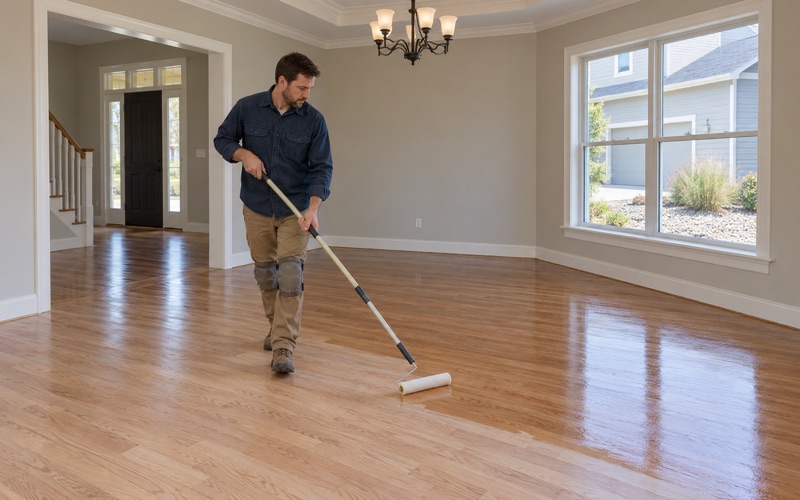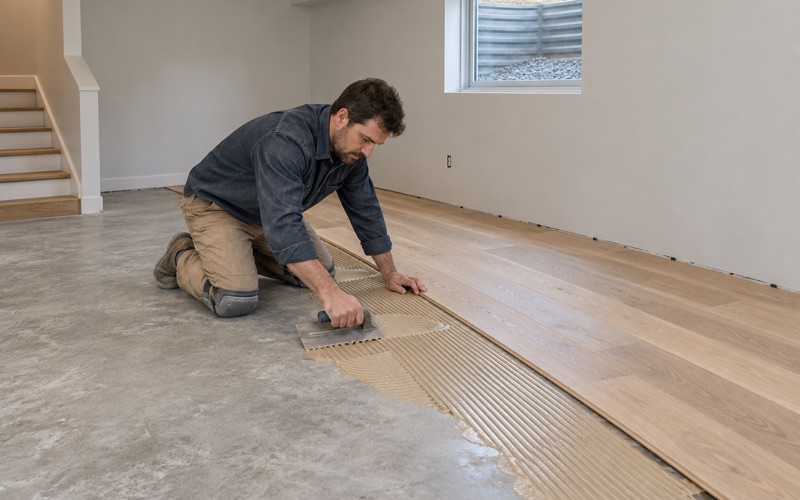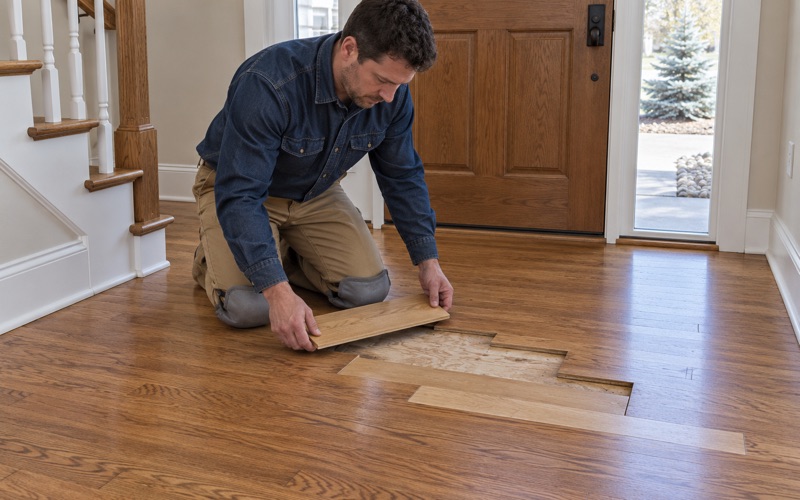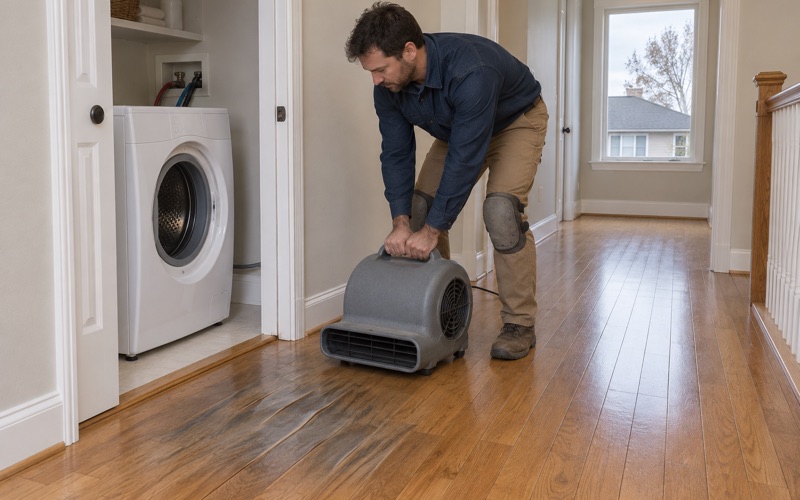
Broomfield Wood Flooring has handled wood-flooring in Arvada for owners and landlords alike, drawing on more than 20 years of work, from sanding tired living rooms back to bare wood to replacing boards a leak ruined. Most of our calls here start with a question about the floor, and a fair number end with a question about who is allowed to do the work.
That second question matters because the answer depends on whether you live in the house. We walk through it before we quote, alongside the usual floor questions: what species and finish are down now, how much wood sits above the tongue, and whether gaps or squeaks point to something underneath that sanding alone will not fix.
This page covers how the city treats contractors, where the owner’s exemption stops, what changes when the house is a rental, and what older floors here tend to need. It ends with the questions we think any Arvada owner should put to a flooring contractor, including us.
How Arvada Licenses Contractors and Who It Exempts
Arvada is a home rule city spread across Jefferson and Adams counties, and it sets its own contractor rules. The City of Arvada requires licensing for all contractors involved in the construction, alteration, remodeling, repairing and equipping of buildings and structures. Floor work alters and repairs the inside of a house, so that rule is where a hiring decision here begins.
What the License Classes Do and Do Not Say
The Building Division sorts licenses into classes. Class A covers any building or structure, Class C covers one- and two-family dwellings and townhouses, and Class D is for single-trade subcontractors such as masonry, framing or concrete. None of the published classes names wood floors, and we would not pretend otherwise.
Most classes call for proof of qualifications, usually by passing ICC tests or holding a license from another Colorado jurisdiction. A license stays valid while work is being conducted and renews when the holder applies for a new project. If a contractor tells you which class applies to a refinish or an installation, ask the Building Division to confirm it rather than taking anyone’s word.
The Owner-Occupant Exemption
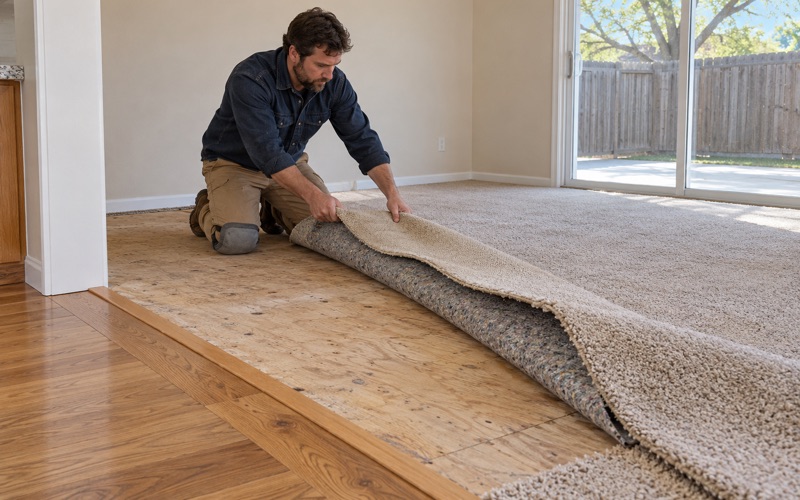
Owners working on the primary residence they live in are exempt from the contractor license. If you live in the house and want to screen and recoat the family room yourself, or pull carpet and tack strip ahead of a new floor, the licensing rule does not stand in your way.
The exemption is about licensing, not about whether a project needs a permit, and it turns on occupancy rather than ownership alone. That is its limit. The same person who can refinish their own home without a license is treated differently the moment the floor belongs to a place they own but do not occupy.
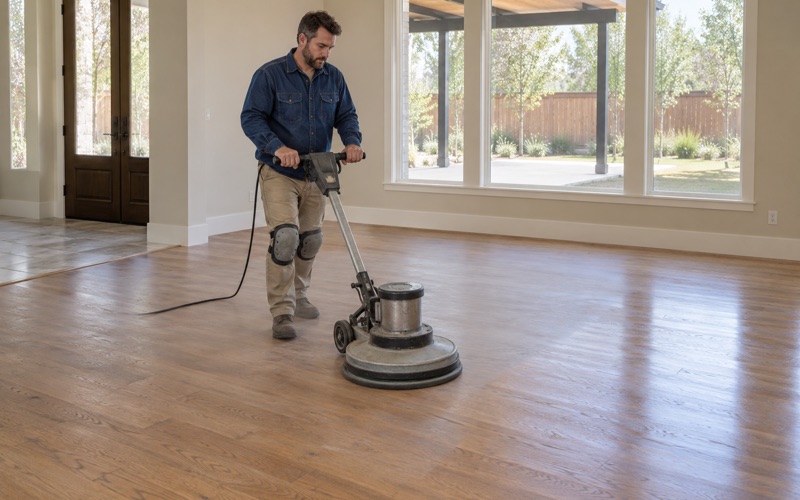
We are glad to talk an owner through a do-it-yourself job, and we often get the call halfway through one. A drum sander left in one spot for a second cuts a dip that shows under every coat of finish, and a grit step skipped too early leaves swirls an orbital sander has to chase. Being allowed to do the work and being ready to do it are separate questions.
Looking for wood-flooring closer to Gunbarrel? See Wood-Flooring Services in Gunbarrel.
Floor Work in a Home You Rent Out
When the Owner Does Not Live There
Homeowners doing work on residences that they own but do not occupy need to be licensed or hire a licensed contractor. For a landlord, that closes the weekend-refinish option most owner-occupants have. Sanding the hallway of your own house is exempt; sanding the same hallway in a house you lease out puts you under the licensing requirement.
Arvada has plenty of owners on both sides of that line. Of 49,881 occupied units, 37,573 are owner-occupied, which works out to 75.3 percent, and 2,928 renter households live in one-unit detached houses. A landlord who once lived in the house and did the floors personally is under a different rule once the keys go to a tenant.
The practical choice for a landlord is simple: get licensed or hire someone who is. We explain the rule up front so an owner can weigh both paths, and we never treat a rental like an owner-occupied home just because the owner is the one who called us.
Turnover Floors Between Tenants
Rental floors take a particular kind of wear. Traffic lanes gray out from the front door to the kitchen, pet urine stains darken the boards near a back door, and a slow leak under a sink can cup a run of planks before anyone reports it. Between tenants is usually the one window when the rooms are empty long enough to sand and cure.
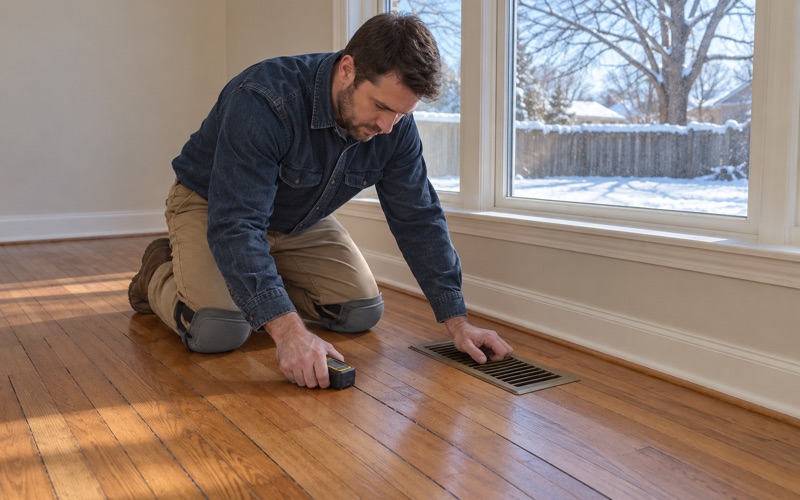
We plan turnover jobs around that window. A screen and recoat can refresh a floor with sound finish in a short visit, while stained or cupped boards need board replacement and a full sand. Where a leak was involved, we trace and dry it and take moisture meter readings room by room, so the paperwork is ready if an insurance adjuster asks.
Choosing a Finish for a Rented Floor
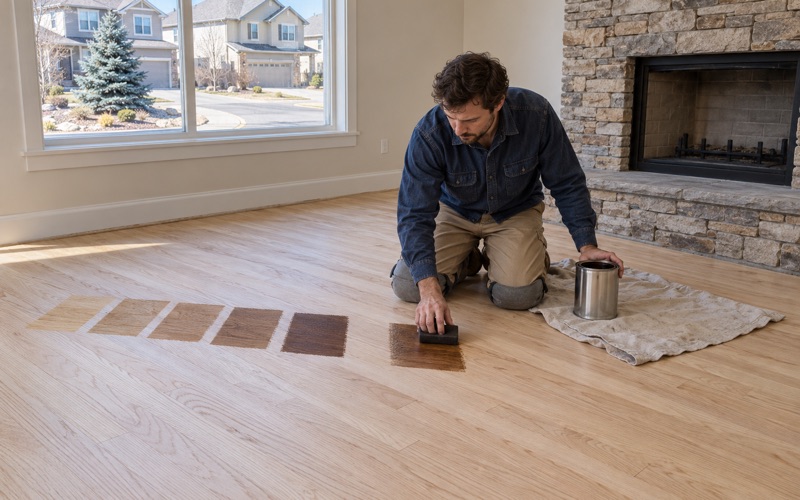
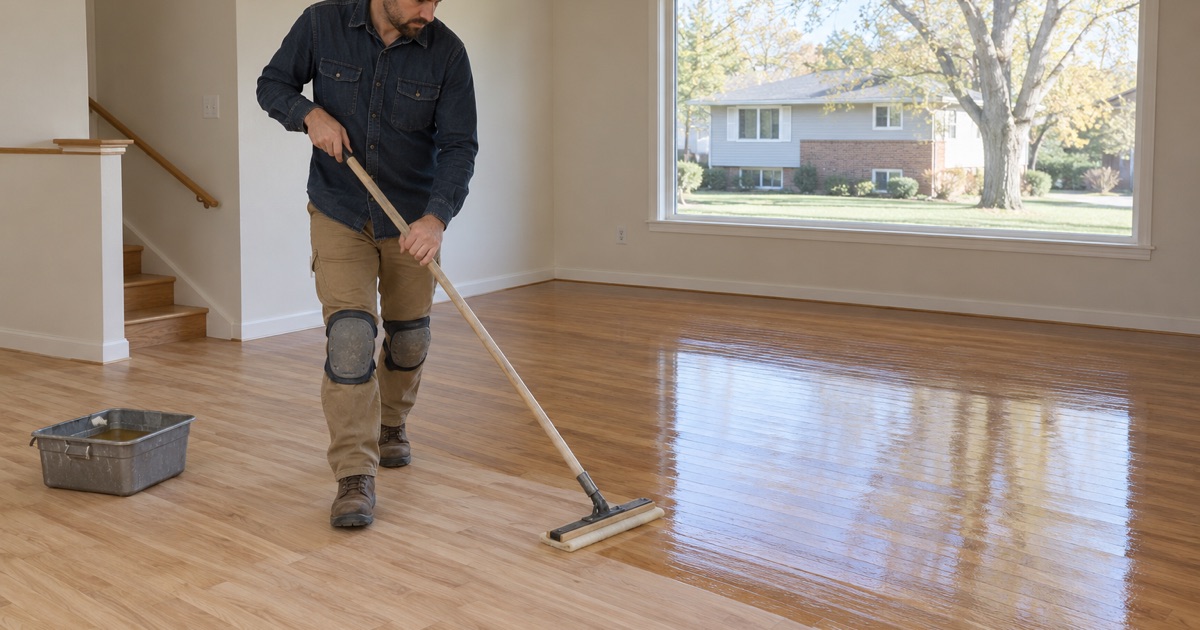
For a landlord, durability and recoat speed usually beat looks. Waterborne polyurethane dries clear and lets tenants back in sooner, oil-modified polyurethane builds a warmer amber tone, and a lower sheen level hides scuffs better than gloss. We lay stain samples on the actual floor so the color you approve is the color the next tenant sees.
Species matters too. Red oak’s open grain hides scratches better than maple, which shows them and takes stain unevenly, and hickory sits high on the Janka hardness scale for homes with large dogs. A floor that has turned orange under old finish usually comes back well with a sand to bare wood and a fresh color.
Refinishing Floors in 1960s and 1970s Arvada Homes
Arvada’s housing tilts toward the 1960s and 1970s. Of 52,169 housing units, 13,331 were built from 1970 to 1979, which is 25.6 percent, and 52.5 percent went up before 1980. Another 8,351 date from the 1960s. Those decades shape a large share of the floors we are asked to look at here.
Wood Under Old Carpet
In homes from these decades we often find wood under wall-to-wall carpet, and we never guess the species before the carpet pad comes up. Once it does, we check the tack strip holes along the walls, pad staples, adhesive and water stains, and we measure how much wood is left above the tongue and groove before promising a sand.
A floor that has been sanded more than once may not have another full sand in it. When the wear layer is thin, a screen and recoat or targeted board replacement keeps the room usable without cutting into the tongue. When there is plenty left, a careful grit sequence and water popping before stain bring the grain back evenly.
Lead-Safe Sanding Before 1978
Any home built before 1978 gets a build-year check and a look at painted surfaces before we sand. Stair skirts, baseboards and old painted borders along a floor can carry lead paint, and a drum sander throws fine dust. Where paint is involved, we talk through containment and cleanup before any work is scheduled.
This matters twice over in a rental, where a tenant moves back into the rooms soon after the floor cures. We would rather spend an extra visit on the painted trim than sand first and ask questions afterward, and we tell you plainly what we found.
Gaps, Squeaks and Dry Winter Air
Older floors here move with the seasons. When the furnace runs through a Front Range winter, indoor relative humidity drops and boards shrink, opening seasonal gaps that close again by summer. We take moisture readings before anyone fills a seam, because filler packed into a winter gap gets crushed or pushed out when the wood swells back.
Squeaks and popping boards get the same treatment. We trace them to the cause, whether that is a loose flooring cleat, a gap over a joist or a dry subfloor, and fix that rather than hiding the noise. A whole-house humidifier often does more for a gapping floor than any product applied to the boards.
Questions to Ask Before You Hire
Whether you live in the house or rent it out, a few questions sort out most of what goes wrong with floor projects. Asking them early costs nothing and saves a second visit.
Who Holds the License, and for Which Property
If the house is a rental, ask any contractor how they meet the city’s licensing requirement and have the Building Division confirm it. If you live in the house, decide first whether you are doing the work under the owner-occupant exemption or hiring it out, because that choice changes who answers for the job.
Ask about permits separately, as their own question for the Building Division. The licensing rule and the permit process are different things, and a contractor who blurs them is worth a second look.
Ask for the scope in writing: which rooms, which finish and how many coats, whether furniture moving and trim work are included, and how long each room stays off limits while the finish cures. A landlord coordinating a turnover needs those dates as much as the price.
Solid Hardwood, Engineered or Refinish
Ask whether the floor should be refinished, repaired or replaced, and why. Solid hardwood can often be sanded several times, while an engineered wear layer allows fewer passes, and a floating floor or glue-down engineered product behaves differently again. A good answer names the species, measures what wood remains and explains the tradeoff in plain terms.
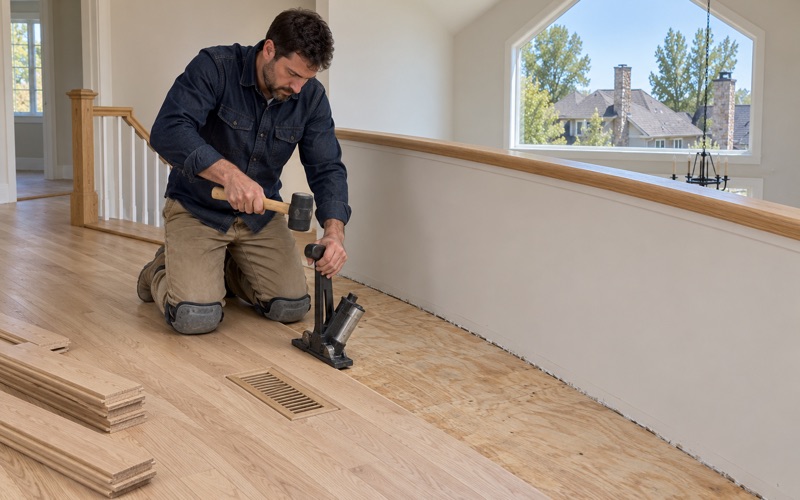
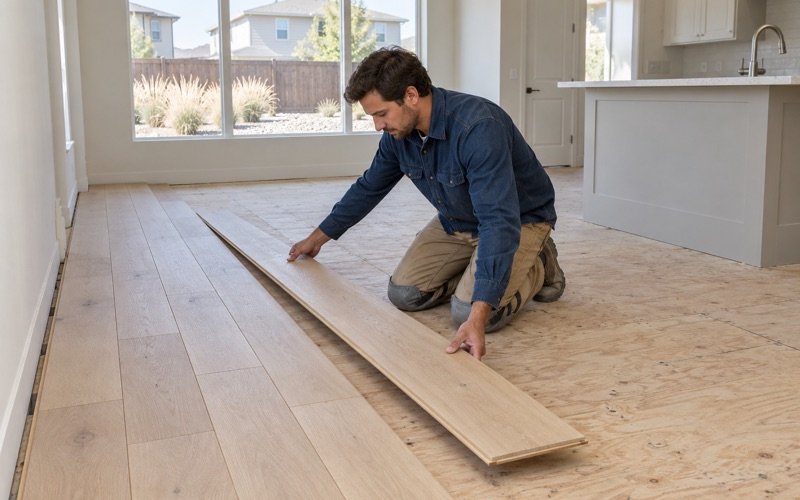
For a new floor, ask about acclimation and moisture. Indoor air in a heated house through an Arvada winter is far drier than the boards were when they arrived, so we talk through indoor humidity, check equilibrium moisture content with a meter and leave a proper expansion gap at the walls before any board is nailed down.
Stairs, Landings and Transitions
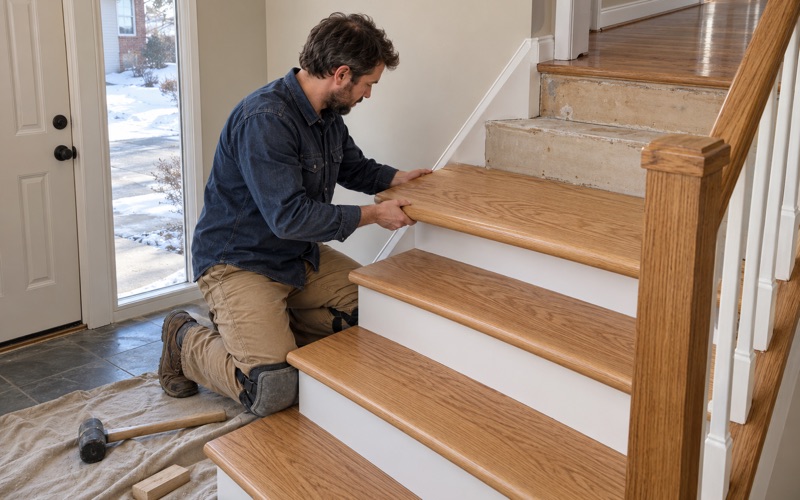
Stairs deserve their own line on a quote. We price them tread by tread, including stair nosing and risers, and when a new floor meets a landing we check that the added height does not throw off the riser height of the top or bottom step. Reducers and quarter round finish the edges where wood meets tile or carpet.
Finally, ask whether your HOA or metro district has rules about interior flooring. Any such rule comes from your own documents, not from the city, so we read them with you before work starts. It is a quick step that keeps a finished floor from turning into a dispute.
- 20+ Years on Wood Floors
- Moisture Readings Before Repairs
- Stain Samples on Your Own Floor