Broomfield Wood Flooring brings more than 20 years of hands-on work to wood-flooring in Applewood, and the houses here reward a careful first look before anyone names a price. We refinish hardwood, lay new solid and engineered floors, rebuild stair treads, and repair boards that have gapped, cupped or begun to squeak. Each of those jobs starts with what is actually underfoot, not with what a listing says.
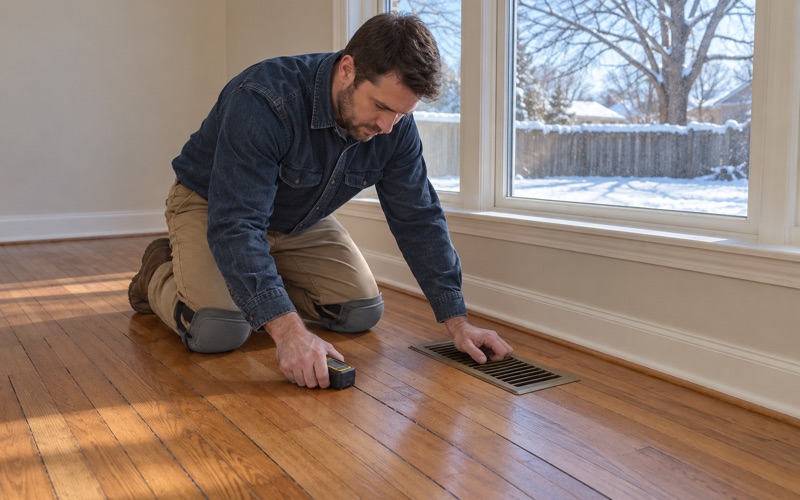
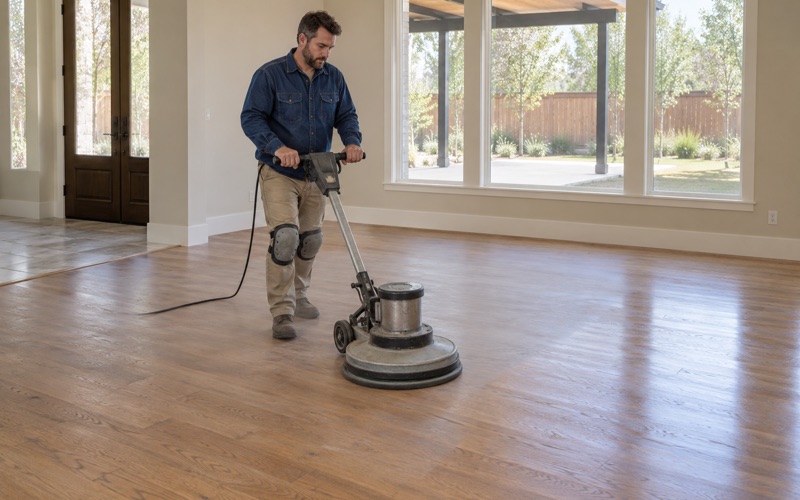
Our first visit is a measurement visit. We take moisture meter readings in several rooms, check how much wear layer is left above the tongue on any board we might sand, and walk the stairs and landings with you. That tells us whether a floor wants a screen and recoat, a full sanding with a drum sander and orbital sander, or new wood altogether.
We also carry the rest of the job through to the end: dustless sanding where the house is occupied, waterborne polyurethane or oil-modified polyurethane chosen for how the room is used, and new quarter round and reducers where one floor meets the next. The sections below explain what shapes that work in this particular community.
Named for an Orchard, Built One Subdivision at a Time
The Bunger Apple Orchard Behind the Name
Applewood is an unincorporated community and census-designated place in Jefferson County, and its name comes straight from a working farm. According to the Jefferson County Historical Commission, the area was named Applewood in 1954, after the Bunger family’s apple orchard at 18th Avenue and Youngfield Street. The 2020 census counted 7,833 residents in the CDP.
The orchard dates to 1938 and held apples alongside pear, peach and cherry trees, and the commission’s 2012 history notes that some of those trees still bear fruit in Applewood Glen. Howard and Mills Bunger were U.S. Bureau of Reclamation water engineers, and they secured water rights and deep wells for the community.
Applewood Mesa’s Half-Acre Home Sites
The first development was Applewood Mesa, west of Youngfield Street. The historical commission records that enough land was originally acquired there for 600 half-acre-plus home sites, laid out with curving roads, spacious lots and bridle paths. Later accounts place the start of construction on the Mesa by 1956, with homes then priced from $25,000 to $85,000.
A price spread that wide points to houses of very different sizes, so we do not assume one Mesa house matches the next. We measure room widths, stair runs and doorway transitions on site before recommending plank widths, a wide plank look, or a pattern such as herringbone, and we plan reducers where rooms change level or material.
Hills, View, Valley, Glen and the Rest
In the commission’s words, the Applewood developments multiplied like seedlings. Applewood Mesa was followed by Applewood Hills, Applewood View, Applewood Valley, Applewood Glen, Applewood Grove, Applewood Heights and Applewood Knolls, and the 2012 history counts nine developments in all. Residents’ mailing addresses fall in Lakewood, Wheat Ridge and unincorporated Jefferson County, so the name on an envelope does not always say Applewood.
North of 20th Avenue and west of Youngfield, the 160-acre Creighton Airport landing field became the site of 450 Hutchinson Homes in the 1950s, with a strip set aside for Interstate 70, finished in 1962. Houses built under one name tend to repeat plans, so what we find under one floor tells us which questions to ask next door.
Looking for wood-flooring closer to Capitol Hill? See Capitol Hill Wood-Flooring.
Floors in 1950s-1970s Applewood Houses
Census Bureau estimates make the building era plain. Of the 3,680 housing units counted in the Applewood CDP, 74 percent were built between 1950 and 1979, and the 1960s alone account for 1,211 of them. Another 874 date from the 1970s and 640 from the 1950s. That concentration shapes nearly every floor decision we make here.
Refinishing an Older Hardwood Floor
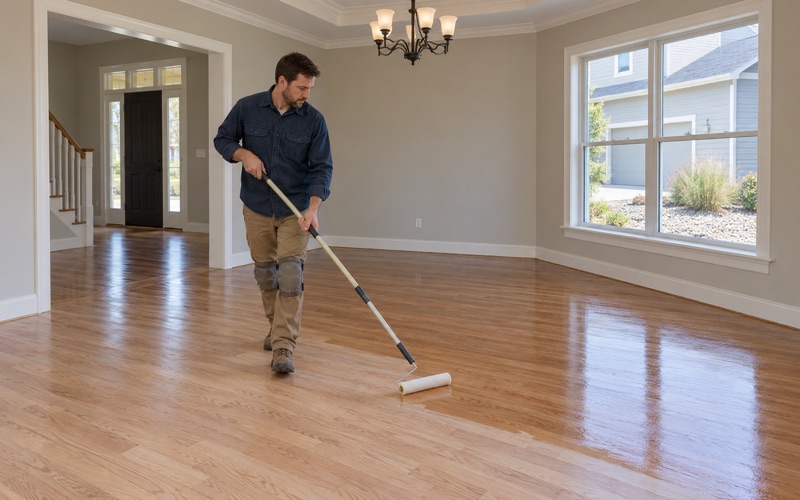
When an older house has site-finished hardwood still in place, our first question is how many sandings it has already survived. We check the wood left above the tongue at a floor register or threshold before quoting, because a floor sanded too many times can expose nail heads and tongues. If there is enough left, a careful grit sequence brings it back.
Refinishing is also the moment to deal with decades of wear: traffic lanes by the kitchen, sun fade near west windows, pet urine stains, and the orange oak tone that older finishes develop. Some stains sand out and some go too deep, so we tell you which boards need board replacement before the finish goes on, not after.
Squeaks, Gaps and Popping Boards
Houses from the 1960s and 1970s have had half a century for fasteners to loosen and subfloors to move. Squeaks and popping boards usually trace back to a gap between subfloor and joist, a loose flooring cleat, or a board that has lost its fastening. We trace the cause before filling anything, since filler hides a squeak without stopping it.
Board gapping is the other common complaint, and in a Front Range winter it is often seasonal. Furnace heat dries the wood, boards shrink and seams open, then they close again as summer humidity returns. We read those seasonal gaps against moisture readings first, because filling a seam in January can lead to cupping or crowning once the boards swell back.
Sanding Floors in Houses Built Before 1978
The same census table shows that 75.2 percent of Applewood’s housing was built before 1980, which puts most of it inside the era when lead-based paint was still in residential use. Before we sand in a home built before 1978, we confirm the build year and check painted surfaces near the work, such as baseboards, thresholds and stair risers.
That check changes how a job is set up rather than whether it happens. Where painted trim will be disturbed, we plan containment and cleanup to match, and we use dustless sanding equipment on the floor itself. Talking it through at the estimate means no one is surprised by the extra steps on the day the sanders arrive.
Owner-Occupied Houses and the Projects They Bring
Most Applewood homes are lived in by the people who own them. Census estimates count 3,592 occupied housing units, and 76.2 percent are owner-occupied, with 2,396 owner households in one-unit detached houses. Owners who plan to stay tend to ask for work that lasts, and that is the work this section covers.
Replacing Carpet With Solid Hardwood
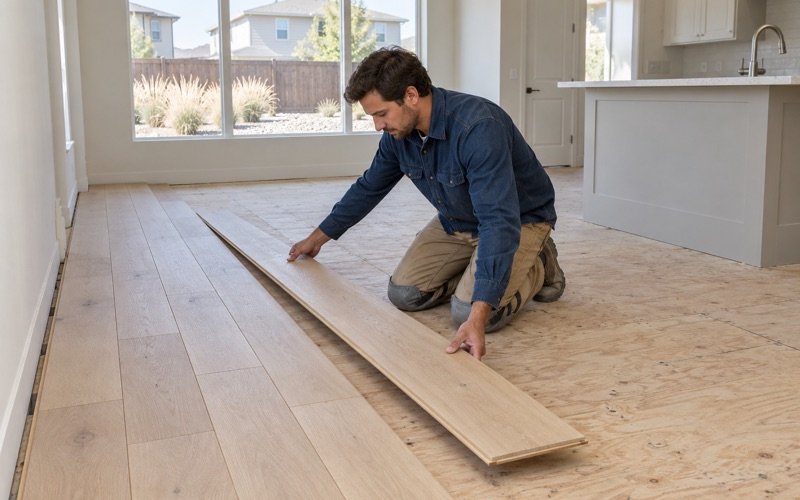
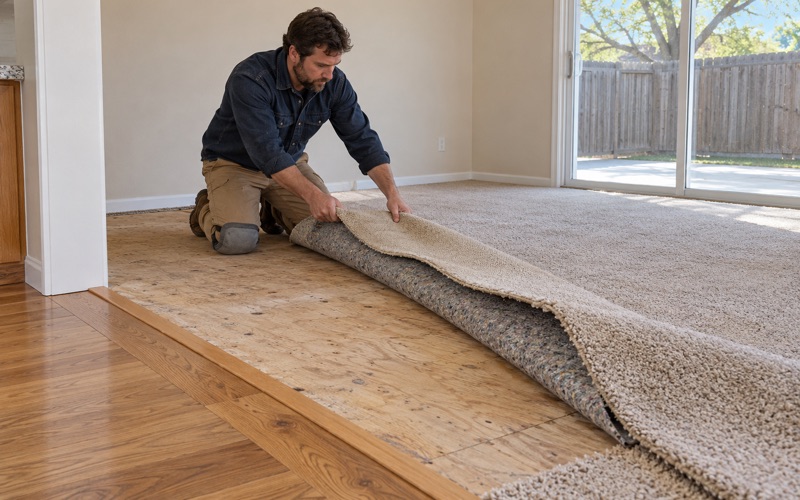
When a project starts with carpet, we pull the carpet, carpet pad and tack strip, then inspect the subfloor for soft spots, old water stains and fastener problems before any new tongue and groove goes down. What turns up under carpet varies from one house to the next, so we confirm the price after we have seen the subfloor itself.
Species choice follows how the room is used. Red oak and white oak remain the familiar options, hickory brings more Janka hardness for busy households with dogs, and engineered flooring with a thick engineered wear layer suits rooms where solid wood would struggle. We explain the trade-offs between prefinished boards and a site-finished floor before you choose.
Stair Treads, Nosing and Landings
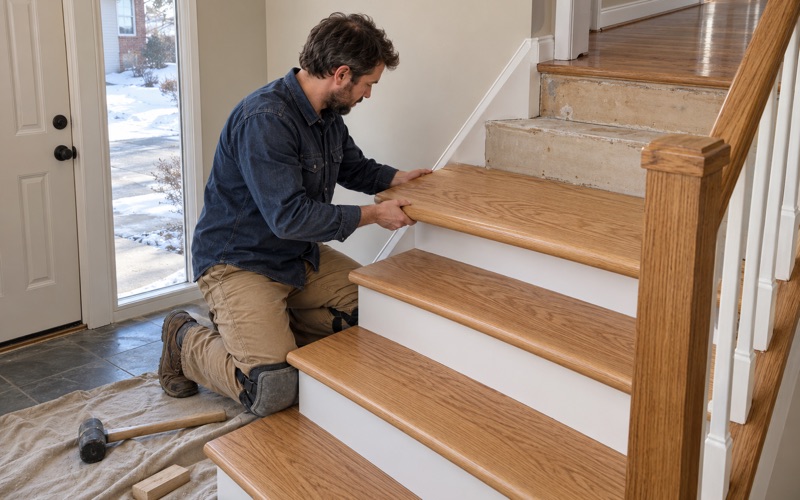
Stairs join the floors of a house, so they often end up inside a flooring project. We quote stairs tread by tread, because each stair tread, stair nosing and stair riser is its own piece of work, and turning carpeted stairs into wood takes more than covering the old surface. Matching the stairs to the new floor keeps the house reading as one.
Landings need their own check. When new flooring goes down on a landing, its added thickness can change the riser height of the top or bottom step, leaving one step taller than the rest. We measure that before ordering material, so the finished stair still climbs evenly and nobody catches a toe on the change.
Stain Samples on Your Own Floor
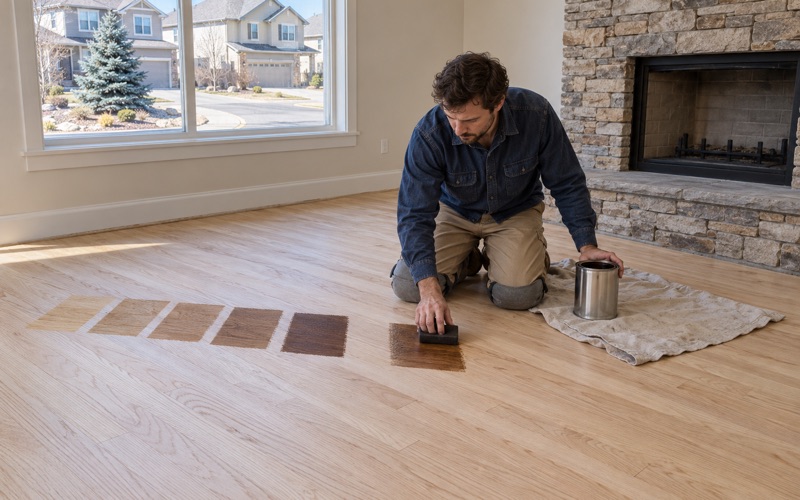
Color is where owners most often change their minds, and a sample board in a showroom rarely looks the way stain looks on a floor in your own light. After sanding, we lay stain samples directly on your floor, in the rooms that matter, and you look at them in morning and evening light before we commit to a color.
Sheen level and finish type are part of the same conversation. Waterborne polyurethane stays clearer and keeps a lighter floor from yellowing, oil-modified polyurethane warms the tone, and hardwax oil gives a softer look that is easy to spot-repair. Water popping before staining helps darker colors take evenly, and we show you that difference on the samples too.
Planning Floor Work in an Established Neighborhood
Because Applewood is unincorporated, there is no city hall behind it; Jefferson County government is the land-use and building authority. If your subdivision has covenants or an HOA, any rule about interior flooring comes from your own documents, so we read them with you before work starts rather than guessing at what a neighbor was told.
Winter Humidity and Acclimation
Applewood sits in the National Weather Service forecast zone for Boulder and Jefferson Counties below 6,000 feet, and a heated Front Range winter leaves indoor air far drier than the boards were when they arrived. We talk through relative humidity in the house before new wood goes down, and whether a whole-house humidifier makes sense.
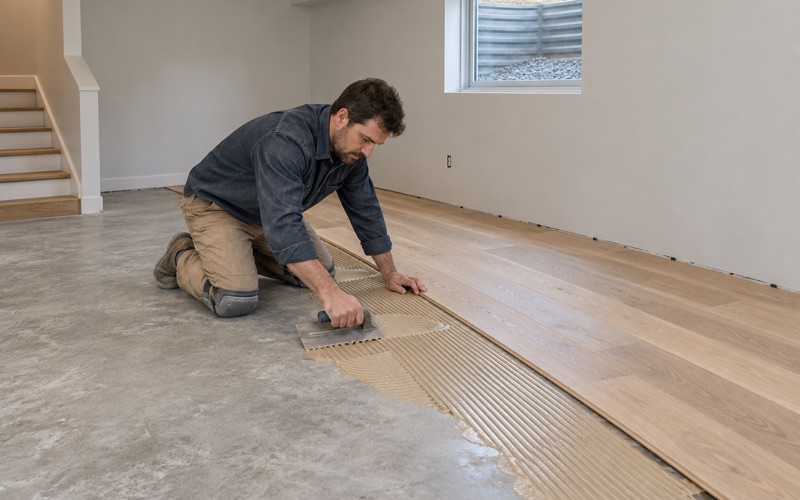
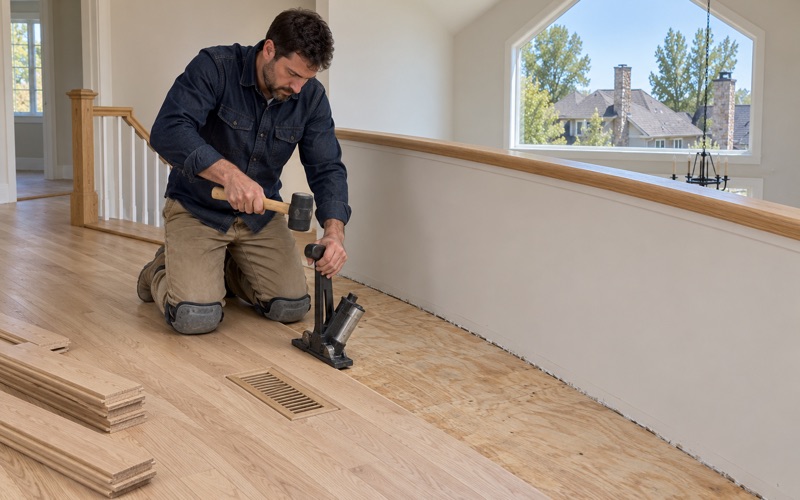
Acclimation follows from that. We check the moisture content of the delivered flooring against the subfloor and the room, aiming for boards that reach equilibrium moisture content with the house before installation, and we leave a proper expansion gap at the walls. Following NWFA Installation Guidelines on those points helps keep a new floor flat through its first full year.
Water Damage and Board Replacement
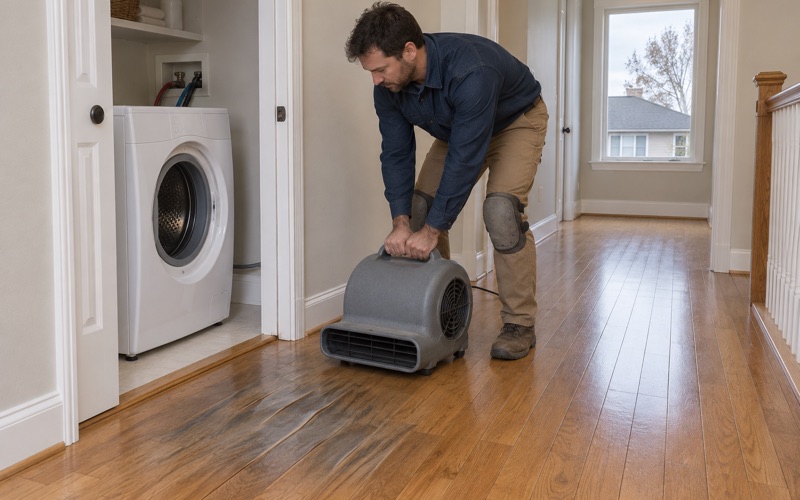
Older plumbing and appliances are a common source of floor damage in established houses. When a supply line, washer, burst pipe or roof leak soaks a floor, we trace the water, dry the area and take moisture readings before replacing a single board, because wood replaced over a wet subfloor can cup or buckle within weeks.
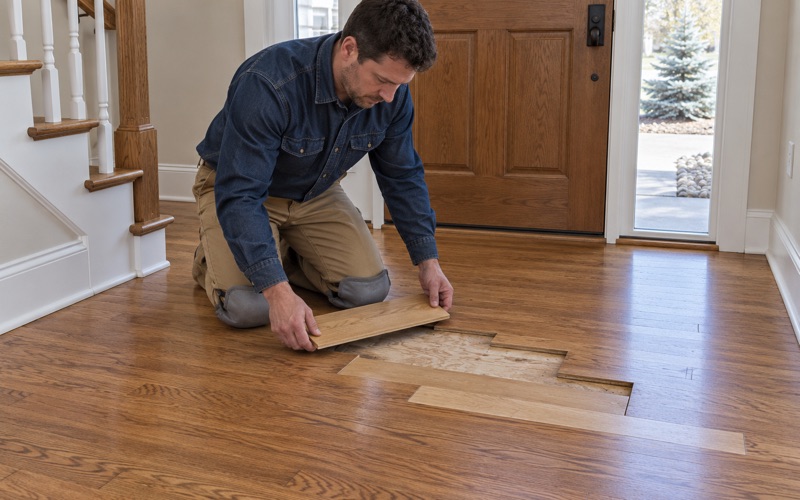
For an insurance claim, we document the damage room by room for the adjuster, with readings and photographs. Where only part of a floor is affected, we weave new boards into the old ones and blend the finish, and where cracking, checking or hollow spots run wider, we tell you plainly whether repair or a new floor is the better use of the money.
- 20+ Years on Wood Floors
- Moisture Readings Before Repairs
- Stain Samples on Your Own Floor